
Catalogue Search | MBRL


Are you sure you want to remove the book from the shelf?

{{itemTitle}}
1,467
result(s) for
"Sephardic"
Sort by:

Tahini and turmeric : 101 Middle Eastern classics - made irresistibly vegan
\"Cofounders of MayIHaveThatRecipe.com share 101 inventive vegan Middle Eastern recipes. Add a dash of Spain, a chunk of Lebanon, a splash of Israel, and a hint of America. Blend until smooth and voila! You may end up with a well-mixed identity crisis, but happily you'll get Vicky Cohen and Ruth Fox, amazingly creative and food-mad sisters raised in Barcelona by Syrian-Lebanese Jewish parents. Since moving to the United States about twenty years ago, they have successfully married comforting Middle Eastern flavors with new healthy ingredients. Their site Mayihavethatrecipe.com features their award-winning recipes, gorgeous food photography, and receives over 110,000 page views a month. In their debut cookbook, Cohen and Fox interpret 101 Middle Eastern dishes in an irresistible--and easy--collection of vegan recipes, creating tempting, healthy dishes that take readers and eaters beyond the conventional and recognizable Middle Eastern staples of baba ghanoush and baklava. Instead, they offer modern, lighter dishes bursting with flavor. Covering breakfast, lunch, dinner, and everything in between--and complete with tips on cooking staples and an introduction to some newer ingredients to keep in your pantry--these recipes are perfect for the health-conscious cook who loves the flavors of the Middle East. Written by experienced recipe developers and bloggers, the recipes are free of time-consuming or complicated techniques and are meant to be served on busy weeknights and during casual gatherings with friends. With simple tricks, like substituting spring roll wrappers or pita bread for from-scratch dough, they've made it easy to prepare delicious, exotic food without an all-day affair in the kitchen\"-- Provided by publisher.
Book

Responsa in a Historical Context
A Winner of the 2024 Association for Jewish Studies' Jordan Schnitzer First Book Publication Award
This book contains a collection of eight annotated translations of responsa, alongside the original Hebrew texts, focusing on the post-expulsion Spanish-Portuguese communities of the sixteenth to seventeenth centuries. This collection will acquaint the reader with Jews who, following their expulsion, settled in the Ottoman Empire, in Palestine under the Mamluks, in Amsterdam and in Brazil. The period of the expulsion of the Jews from the Iberian Peninsula was a tragic time in Jewish history, but the revitalization of the post-expulsion Spanish-Portuguese Jewish communities in new locales is testimony to the human spirit and determination.
The volume includes eight chapters, each built around one responsum from one of the great halakhic authorities of the time. Topics include excommunication in Amsterdam, ʻ
agunot , inheritance rights of a converso son, obligatory contracts and breach of agreement, heresy and humanist scholarship, informing on someone to the Venetian Inquisition, and more
eBook

Jews, Food, and Spain
A fascinating study that will appeal to both culinarians
and readers interested in the intersecting histories of food,
Sephardic Jewish culture, and the Mediterranean world of Iberia and
northern Africa. In the absence of any Jewish cookbook
from the pre-1492 era, it requires arduous research and a creative
but disciplined imagination to reconstruct Sephardic tastes from
the past and their survival and transmission in communities around
the Mediterranean in the early modern period, followed by the even
more extensive diaspora in the New World. In this intricate and
absorbing study, Hélène Jawhara Piñer presents readers with the
dishes, ingredients, techniques, and aesthetic principles that make
up a sophisticated and attractive cuisine, one that has had a
mostly unremarked influence on modern Spanish and Portuguese
recipes.
eBook

Sephardi
In this extraordinary cookbook, chef and scholar Helene Jawhara-Piner combines rich culinary history and Jewish heritage to serve up over fifty culturally significant recipes. Steeped in the history of the Sephardic Jews (Jews of Spain) and their diaspora, these recipes are expertly collected from such diverse sources as medieval cookbooks, Inquisition trials, medical treatises, poems, and literature. Original sources ranging from the thirteenth century onwards and written in Arabic, Spanish, Portuguese, Occitan, Italian, and Hebrew, are here presented in English translation, bearing witness to the culinary diversity of the Sephardim, who brought their cuisine with them and kept it alive wherever they went. Jawhara-Piner provides enlightening commentary for each recipe, revealing underlying societal issues from anti-Semitism to social order. In addition, the author provides several of her own recipes inspired by her research and academic studies. Each creation and bite of the dishes herein are guaranteed to transport the reader to the most deeply moving and intriguing aspects of Jewish history. Jawhara-Piner reminds us that eating is a way to commemorate the past.
eBook

“I Killed Her Because i Loved Her Too Much”: Gender and Violence in the 20th Century Sephardi Diaspora
Thousands of Ottoman Jews emigrated in the early years of the twentieth century to Western Europe and the Americas, disrupting established social, economic, and familial structures. Drawing on an array of press sources, court cases, and correspondence from the expanding Sephardic world, this article argues that violence is a critical lens for understanding connections between gender and migration. For some male Sephardic migrants, gendered physical and verbal violence became a means of responding to the upheaval of migration, of reasserting control, and of reinscribing their masculinity. Meanwhile, some female migrants drew on transnational family networks and migration as a means of extricating themselves from abusive husbands. In doing so, male and female Sephardic migrants alike contributed to shaping conceptions of the relationship between gender and violence in their new geographical contexts while simultaneously creating lateral ties that bound together the transnational Sephardic diaspora.
Journal Article

Botánica Sephardica
This article traces the genealogy of a Jewish-owned botánica located in East Harlem in the 1930s and 1940s. Botánicas are understood to manifest an intricate, transatlantic religious, spiritual, and healing world, offering herbal products, sacramental goods, ritual implements, and counseling to Italian, Latinx, Black, and Caribbean practitioners of folk Catholicism, herbalism, hoodoo, Vodou, Santería, Espiritismo, Curanderismo, Òrìṣà worship and other ethnomedical and spiritual systems. Yet this botánica was owned by an Eastern Mediterranean Jew from the Ottoman/Italian island of Rhodes, and it integrated Sephardic and Mediterranean histories and sources of inspiration. Extraordinarily, this history stands for a greater whole. Jews were pioneering spiritual merchants in the United States. Restoring their history requires journeying globally, beginning with Ottomans’ fidelity to herbalism; tracing émigré Sephardic Jews’ uneven dialogue with Black African men and women in colonial Central and Southern Africa; and delving into the commercial, spiritual, and racial interplay furthered by Jewish-owned pharmacies and botánicas in New York City, Baltimore, Atlanta, Memphis, Charleston, Chicago, and Los Angeles and by Jewish spiritual merchants and their Caribbean, Latinx, and Black patrons. All this introduces an unexpected Jewish and Mediterranean history to the botánica, and an unexpectedly multifarious spiritual, mercantile, and racial dimension to Jewish history.
Journal Article
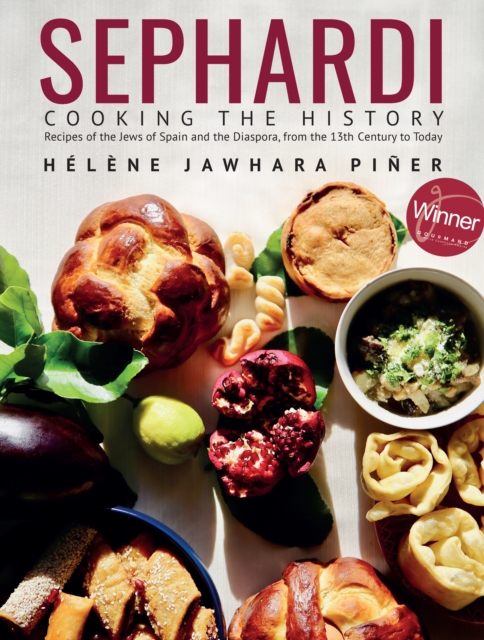
Sephardi: Cooking the History, Recipes of the Jews of Spain and the Diaspora, from the 13th Century Onwards
\"This is no ordinary cookbook. It is a cookbook steeped in the history of the Sephardic Jews, culled from such diverse sources as medieval cookbooks, Inquisition trials, medical treatises, and poems. The recipes it contains follow the history of the Jews of Spain and the Sephardic Diaspora. A culinary story is unearthed thanks to detailed analysis of real sources from the thirteenth century onwards. Whether written in Arabic, Spanish, Portuguese, Occitan, Italian, or Hebrew, the recipes bear witness to the culinary richness of the Sephardim, conversos, who were able to transport and bring their cuisines to life wherever they went. Spain, Morocco, Egypt, Turkey, Italy, Brazil, the Dominican Republic, and Mexico are all countries where the culinary culture of the Sephardim lives on. Each bite transports us to the most deeply moving and intriguing aspects of the history of the Jews. Eating is to re-remember\"--.
eBook

Ḥam Ribi Avram Finci’s Ladino Translation of Selected Texts from the Zohar as a Rare Glimpse into the Methodology of Traditional Bosnian Sephardic Yeshivot (Adult Learning Clubs) and Its Relation to the Local Sufi Islamic Tradition of Ders
In traditional Sephardic culture, theoretical Kabbalah was an exclusive patrimony of the rabbinic elite. From the 17th century onward, many Sephardic laymen found even the Hebrew liturgical, and especially speculative, texts to be impenetrable and incomprehensible. Consequently, the rabbinic elite began to translate liturgical texts and halakhic works into popular JudeoSpanish. However, the Zohar was usually not included in these projects of cultural intermediation. Consequently, a JudeoSpanish translation of the integral text of the Zohar, or even of one of its volumes, does not exist to this day. At the same time, different Sephardic rabbis translated selected excerpts from the Zohar into the vernacular. This paper analyses one such anthology, Avram ben Moshe Finci’s Leket aZoar, published in 5619 (1858/9) in Belgrade. The anthology contains 246 excerpts from the Zohar, 121 of which conclude with Finci’s own reflections and a resumé of the moral of the story. Many of Finci’s discourses are masterpieces of the traditional JudeoSpanish oral genre of darush. Finci was not interested in explaining theoretical kabbalistic terms and concepts. Rather, he reads the Zohar as if it were a work of Mussar. The traditional learning of Bosnian Sephardim seems to resemble, in both methodology and content, the learning traditions of their Muslim neighbours, showing once again that settled communities such as the Ottoman Sephardim cannot be researched only in the context of their affinity to the Jewish world. It is impossible to understand the way the Ottoman Sephardim developed Jewish concepts, practices and institutes without acknowledging the common Ottoman culture they shared with their Muslim and Christian neighbours.
Journal Article

Minority cuisines of Istanbul and their contribution to the formation of Istanbul cuisine
ABSTRACT Istanbul’s rich historical background has given rise to a cosmopolitan culinary culture. The Ottoman Empire played a significant role in shaping the local culinary culture, which was further enriched by the societies that coexisted under its auspices. Alongside the food traditions of Muslim Turks, Istanbul’s cuisine was also influenced by the contributions of minority groups, making it one of the most varied and multi-faceted culinary cultures. This research article delves into the culinary cultures of three specific non-Muslim minority groups—Rums, Istanbul Armenians and Turkish Sephardics— and their influence on Istanbul’s cuisine through content analysis. The introduction illustrates the reasoning behind the selected minority groups, followed by a broad definition and formation of the concept of Istanbul cuisine. The following sections introduce the culinary cultures and hospitality practices of the selected minority groups and their contribution to Istanbul cuisine. The final part demonstrates how the city’s hospitality industry can embrace traditional recipes and contemporary influences and help preserve and celebrate Istanbul’s rich culinary heritage while shaping its future. There is limited research on the role of minority cuisines in enriching Istanbul’s culinary heritage in the context of hospitality. This article aims to fill that research gap.
Journal Article

Balancing Atrocities and Forced Forgetting: Memory Laws as a Means of Social Control in Israel
This article examines memory laws as a new form of social control, demonstrating the significance of cultural memory to law and society scholarship. It focuses on two Israeli laws that seek to control public debate by giving voice to one marginalized group in order to silence another. The article presents two forms of such utilization of the law: forced forgetting and the balancing of atrocities. Forced forgetting validates the memory of one group of people over another group. Balancing atrocities equates victims, pitting the suffering of one group against that of another for the purpose of dismissing the former’s claims for recognition and redress. The 2011 Nakba Law, an example of forced forgetting, dismisses the Palestinian minority’s experience to amplify the memory of the Jewish majority, while the 2014 Jewish Nakba Law creates an analogy between Palestinian redress claims and those of the Mizrahi Jews in order to balance the atrocities that these groups suffered. We show that both forms of control have limitations that create gaps between legislation and implementation, yet their political-symbolic impact is much greater.
Journal Article