
Catalogue Search | MBRL


Are you sure you want to remove the book from the shelf?

{{itemTitle}}
15,175
result(s) for
"Sequences (Mathematics)"
Sort by:

Wild Fibonacci : nature's secret code revealed
Discover the fibonacci sequence as it appears in nature, from the curves of a sundial shell, to a parrot's beak, a hawk's talon, a ram's horn, and even human teeth!
Book

Goodwillie Approximations to Higher Categories
We construct a Goodwillie tower of categories which interpolates between the category of pointed spaces and the category of spectra.
This tower of categories refines the Goodwillie tower of the identity functor in a precise sense. More generally, we construct such a
tower for a large class of
eBook


Pooling designs and nonadaptive group testing
Pooling designs have been widely used in various aspects of DNA sequencing. In biological applications, the well-studied mathematical problem called “group testing” shifts its focus to nonadaptive algorithms while the focus of traditional group testing is on sequential algorithms. Biological applications also bring forth new models not previously considered, such as the error-tolerant model, the complex model, and the inhibitor model. This book is the first attempt to collect all the significant research on pooling designs in one convenient place.
eBook

Rabbits, rabbits everywhere : a Fibonacci tale
Rapidly multiplying rabbits are taking over the village of Chee, and soon there are so many that even the Pied Piper cannot get rid of them, but a girl named Amanda discovers a pattern that leads to a way to make the rabbits leave.
Book
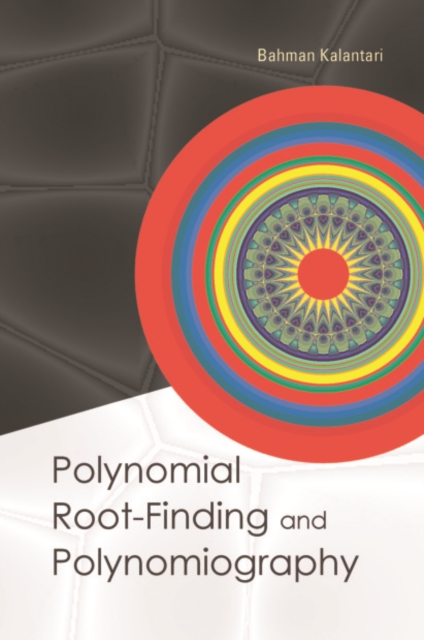
Polynomial root-finding and polynomiography
This book offers fascinating and modern perspectives into the theory and practice of the historical subject of polynomial root-finding, rejuvenating the field via polynomiography, a creative and novel computer visualization that renders spectacular images of a polynomial equation. Polynomiography will not only pave the way for new applications of polynomials in science and mathematics, but also in art and education. The book presents a thorough development of the basic family, arguably the most fundamental family of iteration functions, deriving many surprising and novel theoretical and practical applications such as: algorithms for approximation of roots of polynomials and analytic functions, polynomiography, bounds on zeros of polynomials, formulas for the approximation of Pi, and characterizations or visualizations associated with a homogeneous linear recurrence relation.
eBook

Horrible Harry cracks the code
Horrible Harry must defend his reputation as a detective by cracking the secret code of Mrs. Funderburke's lunch prizes.
Book
Fibonacci and Catalan numbers
\"In this one-of-a-kind book, Ralph Grimaldi uses his extensive experience from the classroom and as a leader of mini-courses to present an accessible, single resource on the topics of Fibonacci Numbers and Catalan Numbers. The book first embarks on a complete treatment of Fibonacci numbers. Starting with a historical background on the topic, the author goes on to present the properties of Fibonacci numbers, a slew of introductory-level examples, and in-depth discussion of related topics including compositions and palindromes; tiling and Fibonacci numbers; solving linear recurrence relations; graph theory; Lucas numbers; and alternate Fibonacci numbers. The second half of the book explores Catalan numbers, and the author builds a complete foundation to the topic using a historical background and introductory examples, along with coverage of partial orders, total orders, topological sorting, graph theory, rooted ordered binary trees, pattern avoidance, and the Narayana numbers. Coverage of both topics are accompanied by interesting, real-world examples from areas such as sports, botany, and computer science. Each section concludes with detailed exercise sets that can also serve as extended examples of the presented material along with selected solutions. An Instructor's Manual featuring complete solutions is available upon written request, and extensive reference sections outline resources for further study of the discussed topics.\"--
eBook

Wave Front Set of Solutions to Sums of Squares of Vector Fields
We study the (micro)hypoanalyticity and the Gevrey hypoellipticity of sums of squares of vector fields in terms of the Poisson–Treves
stratification. The FBI transform is used. We prove hypoanalyticity for several classes of sums of squares and show that our method,
though not general, includes almost every known hypoanalyticity result. Examples are discussed.
eBook
The Goodwillie tower and the EHP sequence
The author studies the interaction between the EHP sequence and the Goodwillie tower of the identity evaluated at spheres at the prime $2$. Both give rise to spectral sequences (the EHP spectral sequence and the Goodwillie spectral sequence, respectively) which compute the unstable homotopy groups of spheres. He relates the Goodwillie filtration to the $P$ map, and the Goodwillie differentials to the $H$ map. Furthermore, he studies an iterated Atiyah-Hirzebruch spectral sequence approach to the homotopy of the layers of the Goodwillie tower of the identity on spheres. He shows that differentials in these spectral sequences give rise to differentials in the EHP spectral sequence. He uses his theory to recompute the $2$-primary unstable stems through the Toda range (up to the $19$-stem). He also studies the homological behavior of the interaction between the EHP sequence and the Goodwillie tower of the identity. This homological analysis involves the introduction of Dyer-Lashof-like operations associated to M. Ching's operad structure on the derivatives of the identity. These operations act on the mod $2$ stable homology of the Goodwillie layers of any functor from spaces to spaces.
eBook