
Catalogue Search | MBRL


Are you sure you want to remove the book from the shelf?

{{itemTitle}}
6
result(s) for
"Serbia Social life and customs 20th century."
Sort by:

On the very edge : modernism and modernity in the arts and architecture of interwar Serbia (1918-1941)
Revealing a vibrant and intertwined artistic scene in the Balkans. 'On the Very Edge' brings together fourteen empirical and comparative essays about the production, perception, and reception of modernity and modernism in the visual arts, architecture, and literature of interwar Serbia (1918-1941). The contributions highlight some idiosyncratic features of modernist processes in this complex period in Serbian arts and society, which emerged 'on the very edge' between territorial and cultural, new and old, modern and traditional identities. With an open methodological framework this book reveals a vibrant and0intertwined artistic scene, which, albeit prematurely, announced interests in pluralism and globalism. 'On the Very Edge' addresses issues of artistic identities and cultural geographies and aims to enrich contextualized studies of modernism and its variants in the Balkans and Europe, while simultaneously re-mapping and adjusting the prevailing historical canon.
Book

Serbian dreambook : national imaginary in the time of Milošević
The central role that the regime of Slobodan Miloevic played in the bloody dissolution of Yugoslavia is well known, but Marko ivkovic explores another side of this time period: the stories people in Serbia were telling themselves (and others) about themselves. ivkovic traces the recurring themes, scripts, and narratives that permeated public discourse in Miloevic's Serbia, as Serbs described themselves as Gypsies or Jews, violent highlanders or peaceful lowlanders, and invoked their own mythologized defeat at the Battle of Kosovo. The author investigates national narratives, the use of tradition for political purposes, and local idioms, paying special attention to the often bizarre and outlandish tropes people employed to make sense of their social reality. He suggests that the enchantments of political life under Miloevic may be fruitfully seen as a dreambook of Serbian national imaginary. Summary reprinted by permission of Indiana University Press
eBook

Metropolitan Belgrade : culture and class in interwar Yugoslavia
\"Metropolitan Belgrade presents a sociocultural history of the city as an entertainment mecca during the 1920s and 1930s. It unearths the ordinary and extraordinary leisure activities that captured the attention of urban residents and considers the broader role of popular culture in interwar society.\"--Provided by publisher.
Book
Serbian Dreambook
The central role that the regime of Slobodan Milo?eviÄ? played in the bloody dissolution of Yugoslavia is well known, but Marko ?ivkoviÄ? explores another side of this time period: the stories people in Serbia were telling themselves (and others) about themselves. ?ivkoviÄ? traces the recurring themes, scripts, and narratives that permeated public discourse in Milo?eviÄ?'s Serbia, as Serbs described themselves as Gypsies or Jews, violent highlanders or peaceful lowlanders, and invoked their own mythologized defeat at the Battle of Kosovo. The author investigates national narratives, the use of tradition for political purposes, and local idioms, paying special attention to the often bizarre and outlandish tropes people employed to make sense of their social reality. He suggests that the enchantments of political life under Milo?eviÄ? may be fruitfully seen as a dreambook of Serbian national imaginary.
eBook

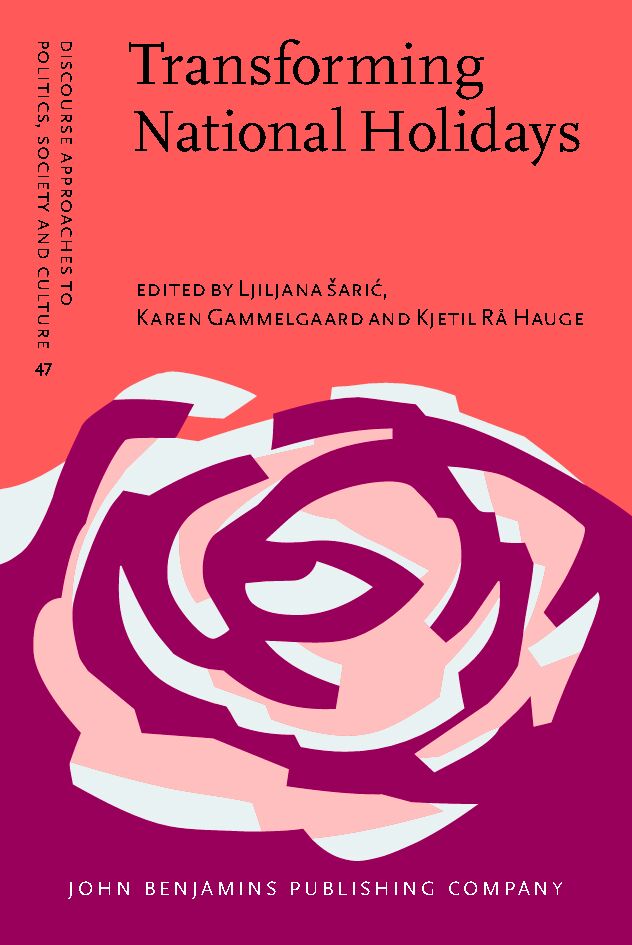
Transforming national holidays : identity discourse in the west and south Slavic countries, 1985-2010
This chapter examines one of Poland's most influential newspapers, Gazeta Wyborcza, and its front-page coverage of what is arguably the country's most popular national holiday, Independence Day. Specific attention is given to how Gazeta's writers discursively constructed a Polishness compatible with European values, both before and after the country's EU admission. Within the newspaper's Euro-Polish identity project, they reinforced the idea of a common past, present, and future, while introducing a concept of European supranationalism that, however, did not replace but instead served to complement Polish nationalism. Insofar as Gazeta gives space to many different voices, including those of its Euro-skeptic adversaries, its predominant strategy is one of inclusion.
eBook