
Catalogue Search | MBRL


Are you sure you want to remove the book from the shelf?

{{itemTitle}}
747
result(s) for
"Serological data"
Sort by:

Antibody selection strategies and their impact in predicting clinical malaria based on multi-sera data
Background
Nowadays, the chance of discovering the best antibody candidates for predicting clinical malaria has notably increased due to the availability of multi-sera data. The analysis of these data is typically divided into a feature selection phase followed by a predictive one where several models are constructed for predicting the outcome of interest. A key question in the analysis is to determine which antibodies should be included in the predictive stage and whether they should be included in the original or a transformed scale (i.e. binary/dichotomized).
Methods
To answer this question, we developed three approaches for antibody selection in the context of predicting clinical malaria: (i) a basic and simple approach based on selecting antibodies via the nonparametric Mann–Whitney-Wilcoxon test; (ii) an optimal dychotomizationdichotomization approach where each antibody was selected according to the optimal cut-off via maximization of the chi-squared (χ
2
) statistic for two-way tables; (iii) a hybrid parametric/non-parametric approach that integrates Box-Cox transformation followed by a t-test, together with the use of finite mixture models and the Mann–Whitney-Wilcoxon test as a last resort. We illustrated the application of these three approaches with published serological data of 36 Plasmodium falciparum antigens for predicting clinical malaria in 121 Kenyan children. The predictive analysis was based on a Super Learner where predictions from multiple classifiers including the Random Forest were pooled together.
Results
Our results led to almost similar areas under the Receiver Operating Characteristic curves of 0.72 (95% CI = [0.62, 0.82]), 0.80 (95% CI = [0.71, 0.89]), 0.79 (95% CI = [0.7, 0.88]) for the simple, dichotomization and hybrid approaches, respectively. These approaches were based on 6, 20, and 16 antibodies, respectively.
Conclusions
The three feature selection strategies provided a better predictive performance of the outcome when compared to the previous results relying on Random Forest including all the 36 antibodies (AUC = 0.68, 95% CI = [0.57;0.79]). Given the similar predictive performance, we recommended that the three strategies should be used in conjunction in the same data set and selected according to their complexity.
Journal Article

Expected endpoints from future chikungunya vaccine trial sites informed by serological data and modeling
In recent decades, there has been an increased interest in developing a vaccine for chikungunya. However, due to its unpredictable transmission, planning for a chikungunya vaccine trial is challenging. To inform decision making on the selection of sites for a vaccine efficacy trial, we developed a new framework for projecting the expected number of endpoint events at a given site. In this framework, we first accounted for population immunity using serological data collated from a systematic review and used it to estimate parameters related to the timing and size of past outbreaks, as predicted by an SIR transmission model. Then, we used that model to project the infection attack rate of a hypothetical future outbreak, in the event that one were to occur at the time of a future trial. This informed projections of how many endpoint events could be expected if a trial were to take place at that site. Our results suggest that some sites may have sufficient transmission potential and susceptibility to support future vaccine trials, in the event that an outbreak were to occur at those sites. In general, we conclude that sites that have experienced outbreaks within the past 10 years may be poorer targets for chikungunya vaccine efficacy trials in the near future. Our framework also generates projections of the numbers of endpoint events by age, which could inform study participant recruitment efforts.
Journal Article

Seroprevalence of Immunoglobulin G against measles and rubella over a 12-year period (2009–2021) in Kilifi, Kenya and the impact of the Measles-Rubella (MR) vaccine campaign of 2016
Measles and rubella have been targeted for elimination by the World Health Organization. Age-specific population immunity to measles and rubella is important to assess progress towards elimination but data are scarce. We conducted seroprevalence surveys to identify disease-specific population immunity profiles in children and adults in Kilifi.
Sera from cross-sectional surveys in the Kilifi Health Demographic Surveillance System (2009–2021) were analysed using a fluorescent bead-based multiplex immunoassay. Bayesian multilevel regression with post stratification was used to obtain seroprevalence estimates adjusted for the underlying population and assay performance. Associations between seropositivity and age, sex, location and ethnic group were assessed using a mixed effects logistic regression.
Measles-adjusted seroprevalence showed a significant increase from 88 % in 2009 to 93 % in 2021 (τ = 0.875, P = 0.01). Seropositivity was significantly higher in all age groups compared to those under 9 months. Seroprevalence among children ineligible for the first measles vaccine dose (MCV1) remained low (10–57 %), whereas MCV1-eligible children (9–17 months) had higher seroprevalence (68–91 %). Adult measles seroprevalence exceeded 96 %. Rubella seroprevalence followed a similar pattern, with adults above 88 %. Following the MR campaign, measles seroprevalence increased from 92 % to 96 % in eligible children, while rubella seroprevalence rose from 45 % to 82 %.
Population immunity for measles significantly increased over the 12-year period suggesting improvement in immunisation program performance. To reduce reliance on frequent SIAs, efforts should focus on optimizing both the timing and coverage of routine doses, particularly ensuring higher coverage of MCV2. The introduction of rubella vaccination has positively impacted immunity in children. Sustaining this immunity is essential to prevent potential gaps in older age groups, which could increase the risk of Congenital Rubella Syndrome (CRS) in infants.
•Measles population immunity significantly increased over 12 years.•SIAs remain essential, with higher seroprevalence observed post-campaigns.•Optimizing routine dose timing and coverage is key to reducing reliance on SIAs.•Rubella vaccination successfully increased seroprevalence in children from 45 % to 82 %.•Sustaining high immunity is crucial to prevent gaps in older age groups and reduce CRS risk.
Journal Article

Seventy-five years of estimating the force of infection from current status data
The force of infection, describing the rate at which a susceptible person acquires an infection, is a key parameter in models estimating the infectious disease burden, and the effectiveness and cost-effectiveness of infectious disease prevention. Since Muench formulated the first catalytic model to estimate the force of infection from current status data in 1934, exactly 75 years ago, several authors addressed the estimation of this parameter by more advanced statistical methods, while applying these to seroprevalence and reported incidence/case notification data. In this paper we present an historical overview, discussing the relevance of Muench's work, and we explain the wide array of newer methods with illustrations on pre-vaccination serological survey data of two airborne infections: rubella and parvovirus B19. We also provide guidance on deciding which method(s) to apply to estimate the force of infection, given a particular set of data.
Journal Article

Estimating dengue transmission intensity in China using catalytic models based on Serological data
In recent decades, the global incidence of dengue has risen sharply, with more than 75% of infected people showing mild or no symptoms. Since the year 2000, dengue in China has spread quickly. At this stage, there is an urgent need to fully understand its transmission intensity and spread in China. Serological data provide reliable evidence for symptomatic and recessive infections. Through a literature search, we included 23 studies that collected age-specific serological dengue data released from 1980 to 2021 in China. Fitting four catalytic models to these data, we distinguished the transmission mechanisms by deviation information criterion and estimated force of infection and basic reproduction number (R0), important parameters for quantifying transmission intensity. We found that transmission intensity varies over age in most of the study populations, and attenuation of antibody protection is identified in some study populations; the R0 of dengue in China is between 1.04-2.33. Due to the scarceness of the data, the temporal trend cannot be identified, but data shows that transmission intensity weakened from coastal to inland areas and from southern to northern areas in China if assuming it remained temporally steady during the study period. The results should be useful for the effective control of dengue in China.
Journal Article
Identifying immunity gaps for measles using Belgian serial serology data
•Measles incidence peaks despite well-established vaccination and high vaccine uptake.•Closing immunity gaps is important to improve rapid responsiveness to outbreaks.•Investigation of age-specific humoral immunity levels using seroprevalence data.
Vaccine-preventable diseases, such as measles, have been re-emerging in countries with moderate to high vaccine uptake. It is increasingly important to identify and close immunity gaps and increase coverage of routine childhood vaccinations, including two doses of the measles-mumps-rubella vaccine (MMR). Here, we present a simple cohort model relying on a Bayesian approach to evaluate the evolution of measles seroprevalence in Belgium using the three most recent cross-sectional serological survey data collections (2002, 2006 and 2013) and information regarding vaccine properties. We find measles seroprevalence profiles to be similar for the different regions in Belgium. These profiles exhibit a drop in seroprevalence in birth cohorts that were offered vaccination at suboptimal coverages in the first years after routine vaccination has been started up. This immunity gap is observed across all cross-sectional survey years, although it is more pronounced in survey year 2013. At present, the COVID-19 pandemic could negatively impact the immunization coverage worldwide, thereby increasing the need for additional immunization programs in groups of children that are impacted by this. Therefore, it is now even more important to identify existing immunity gaps and to sustain and reach vaccine-derived measles immunity goals.
Journal Article

Cost and quality of life analysis of HIV self-testing and facility-based HIV testing and counselling in Blantyre, Malawi
Background
HIV self-testing (HIVST) has been found to be highly effective, but no cost analysis has been undertaken to guide the design of affordable and scalable implementation strategies.
Methods
Consecutive HIV self-testers and facility-based testers were recruited from participants in a community cluster-randomised trial (
ISRCTN02004005
) investigating the impact of offering HIVST in addition to facility-based HIV testing and counselling (HTC). Primary costing studies were undertaken of the HIVST service and of health facilities providing HTC to the trial population. Costs were adjusted to 2014 US$ and INT$. Recruited participants were asked about direct non-medical and indirect costs associated with accessing either modality of HIV testing, and additionally their health-related quality of life was measured using the EuroQol EQ-5D.
Results
A total of 1,241 participants underwent either HIVST (n = 775) or facility-based HTC (n = 446). The mean societal cost per participant tested through HIVST (US$9.23; 95 % CI: US$9.14-US$9.32) was lower than through facility-based HTC (US$11.84; 95 % CI: US$10.81-12.86). Although the mean health provider cost per participant tested through HIVST (US$8.78) was comparable to facility-based HTC (range: US$7.53-US$10.57), the associated mean direct non-medical and indirect cost was lower (US$2.93; 95 % CI: US$1.90-US$3.96). The mean health provider cost per HIV positive participant identified through HIVST was higher (US$97.50) than for health facilities (range: US$25.18-US$76.14), as was the mean cost per HIV positive individual assessed for anti-retroviral treatment (ART) eligibility and the mean cost per HIV positive individual initiated onto ART. In comparison to the facility-testing group, the adjusted mean EQ-5D utility score was 0.046 (95 % CI: 0.022-0.070) higher in the HIVST group.
Conclusions
HIVST reduces the economic burden on clients, but is a costlier strategy for the health provider aiming to identify HIV positive individuals for treatment. The provider cost of HIVST could be substantially lower under less restrictive distribution models, or if costs of oral fluid HIV test kits become comparable to finger-prick kits used in health facilities.
Journal Article
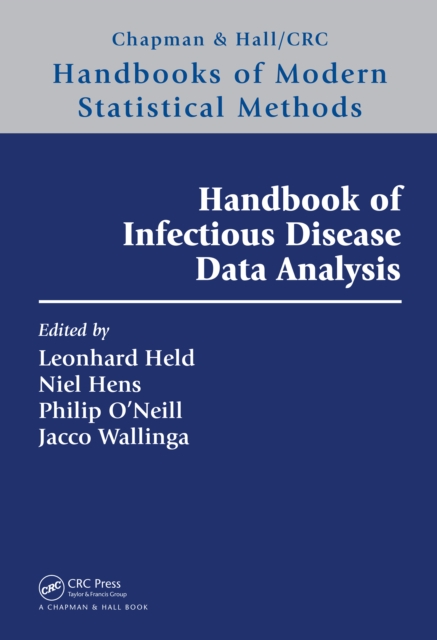
Handbook of Infectious Disease Data Analysis
Recent years have seen an explosion in new kinds of data on infectious diseases, including data on social contacts, whole genome sequences of pathogens, biomarkers for susceptibility to infection, serological panel data, and surveillance data. The Handbook of Infectious Disease Data Analysis provides an overview of many key statistical methods that have been developed in response to such new data streams and the associated ability to address key scientific and epidemiological questions. A unique feature of the Handbook is the wide range of topics covered.
Key features
Contributors include many leading researchers in the field
Divided into four main sections: Basic concepts, Analysis of Outbreak Data, Analysis of Seroprevalence Data, Analysis of Surveillance Data
Numerous case studies and examples throughout
Provides both introductory material and key reference material
I Introduction
1. Introduction Leonhard Held, Niel Hens, Philip O’Neill, Jacco Wallinga
II Basic Concepts
2. Population dynamics of pathogens Ottar Bjornstad
3. Infectious disease data from surveillance, outbreak investigation and epidemiological studies Susan Hahné, Richard Pebody
4. Key concepts in infectious disease epidemiology Nick Jewell
5. Key parameters in infectious disease epidemiology Laura White
6. Contact patterns for contagious diseases Jacco Wallinga, Jan van de Kassteele, Niel Hens
7. Basic stochastic transmission models and their inference Tom Britton
8. Analysis of vaccine studies and causal inference Betz Halloran
III Analysis of Outbreak Data
9. Markov chain Monte Carlo methods for outbreak data Philip O’Neill, Theodore Kypraios
10. Approximate Bayesian Computation methods for epidemic models Peter Neal
11. Iterated filtering methods for Markov process epidemic models Theresa Stocks
12. Pairwise survival analysis of infectious disease transmission data Eben Kenah
13. Methods for outbreaks using genomic data Don Klinkenberg, Caroline Colijn, Xavier Didelot
IV Analysis of Seroprevalence Data
14. Persistence of passive immunity, natural immunity (and vaccination) Amy Winter, Jess Metcalf
15. Inferring the time of infection from serological data Maciej Boni, Kåre Mølbak, Karen Angeliki Krogfelt
16. The use of seroprevalence data to estimate cumulative incidence of infection Ben Cowling, Jessica Wong
17. The analysis of serological data with transmission models Marc Baguelin
18. The analysis of multivariate serological data Steven Abrams
19. Mixture modelling Emanuele Del Fava, Ziv Shkedy
V Analysis of Surveillance Data
20. Modeling infectious diseases distributions: applications of point process methods Peter J Diggle
21. Prospective detection of outbreaks Benjamin Allevius, Michael Höhle
22. Underreporting and reporting delays Angela Noufaily
23. Spatio-temporal analysis of surveillance data Jon Wakefield, Tracy Q Dong, Vladimir N Minin
24. Analysing multiple epidemic data sources Daniela De Angelis, Anne Presanis
25. Forecasting based on surveillance data Leonhard Held, Sebastian Meyer
26. Spatial mapping of infectious disease risk Ewan Cameron
\"One of the editors of the book, Jacco Wallinga, is heading the group at the Dutch Institute of Public Health and the Environment that does all of the statistical analyses to feed their director with information. The latter has had a strong influence on the policy our government chose . . . The book is well produced . . . \" ~Paul Eilers, ISCB News
Leonhard Held is Professor of Biostatistics at the University of Zurich.
Niel Hens is Professor of Biostatistics at Hasselt University and the University of Antwerp.
Philip O’Neill is Professor of Applied Probability at the University of Nottingham.
Jacco Wallinga is Professor of Mathematical Modelling of Infectious Diseases at the Leiden University Medical Center.
eBook

Age-specific mortality and immunity patterns of SARS-CoV-2
Estimating the size of the coronavirus disease 2019 (COVID-19) pandemic and the infection severity of severe acute respiratory syndrome coronavirus 2 (SARS-CoV-2) is made challenging by inconsistencies in the available data. The number of deaths associated with COVID-19 is often used as a key indicator for the size of the epidemic, but the observed number of deaths represents only a minority of all infections
1
,
2
. In addition, the heterogeneous burdens in nursing homes and the variable reporting of deaths of older individuals can hinder direct comparisons of mortality rates and the underlying levels of transmission across countries
3
. Here we use age-specific COVID-19-associated death data from 45 countries and the results of 22 seroprevalence studies to investigate the consistency of infection and fatality patterns across multiple countries. We find that the age distribution of deaths in younger age groups (less than 65 years of age) is very consistent across different settings and demonstrate how these data can provide robust estimates of the share of the population that has been infected. We estimate that the infection fatality ratio is lowest among 5–9-year-old children, with a log-linear increase by age among individuals older than 30 years. Population age structures and heterogeneous burdens in nursing homes explain some but not all of the heterogeneity between countries in infection fatality ratios. Among the 45 countries included in our analysis, we estimate that approximately 5% of these populations had been infected by 1 September 2020, and that much higher transmission rates have probably occurred in a number of Latin American countries. This simple modelling framework can help countries to assess the progression of the pandemic and can be applied in any scenario for which reliable age-specific death data are available.
The relative risk of COVID-19-associated death for younger individuals (under 65) is consistent across countries and can be used to robustly compare the underlying number of infections in each country.
Journal Article

Clinical outcomes of syphilis in HIV-negative and HIV-positive MSM: occurrence of repeat syphilis episodes and non-treponemal serology responses
ObjectivesHIV-positive men who have sex with men (MSM) may be at a higher risk of repeat syphilis, have different clinical manifestations and have a different serological response to treatment compared with HIV-negative MSM. The objective of this study was to assess whether HIV-negative and HIV-positive MSM with infectious syphilis (primary, secondary or early latent) differed in history of previous syphilis episodes, disease stage and non-treponemal titre of initial and repeat episodes, and the titre response 6 and 12 months after treatment. Furthermore, determinants associated with an inadequate titre response after treatment were explored.MethodsThis retrospective analysis used data of five longitudinal studies (four cohorts; one randomised controlled trial) conducted at the STI clinic in Amsterdam, the Netherlands. Participants were tested for syphilis and completed questionnaires on sexual risk behaviour every 3–6 months. We included data of participants with ≥1 syphilis diagnosis in 2014–2019. Pearson’s χ² test was used to compare HIV-negative and HIV-positive MSM in occurrence of previous syphilis episodes, disease stage of initial and repeat syphilis episode and non-treponemal titre treatment responses.ResultsWe included 355 participants with total 459 syphilis episodes. HIV-positive MSM were more likely to have a history of previous syphilis episodes compared with HIV-negative MSM (68/90 (75.6%) vs 96/265 (36.2%); p<0.001). Moreover, HIV-positive MSM with repeat syphilis were less often diagnosed with primary syphilis (7/73 (9.6%) vs 36/126 (28.6%)) and more often diagnosed with secondary syphilis (16/73 (21.9%) vs 17/126 (13.5%)) and early latent syphilis (50/73 (68.5%) vs 73/126 (57.9%)) (p=0.005). While not significantly different at 12 months, HIV-negative MSM were more likely to have an adequate titre response after 6 months compared with HIV-positive MSM (138/143 (96.5%) vs 66/74 (89.2%); p=0.032).ConclusionsIn repeat syphilis, HIV infection is associated with advanced syphilis stages and with higher non-treponemal titres. HIV infection affects the serological outcome after treatment, as an adequate titre response was observed earlier in HIV-negative MSM.
Journal Article