
Catalogue Search | MBRL


Are you sure you want to remove the book from the shelf?

{{itemTitle}}
3,646
result(s) for
"Seventeenth Century"
Sort by:

Until the day arrives
A fast moving middle grade novel set in the 17th century about two Portuguese orphans who are sent to Brazil, where they encounter slaves from Africa. The novel opens when Bento is wrongly thrown into Lisbon's prison, leaving his younger sibling, Manu, to fend for himself. Fortunately, a nobleman's family reunites the siblings--although they will have be exiled to Brazil. They keep secret the fact that Manu is a girl in disguise so that she can accompany her brother aboard ship. The story shifts to the African savannah, where a young boy, Odjigi, is hunting gazelle with his father and other men. But the hunters are kidnapped by slave traders, as are the women and children of the village. In Brazil the siblings adapt to their new lives, but they are shocked by the treatment of African slaves. Manu befriends an aboriginal boy, Caiubi, and a slave, Didi, who has been separated from his father. Meanwhile Bento falls in love with Rosa, a beautiful young slave who is also searching for her family. When Manu learns about quilombos--villages hidden deep in the forest where slaves live in freedom--she is determined to help Didi and Rosa escape.
Book

Ordering Customs
Ordering Customs explores how Renaissance Venetians sought to make sense of human difference in a period characterized by increasing global contact and a rapid acceleration of the circulation of information. Venice was at the center of both these developments. The book traces the emergence of a distinctive tradition of ethnographic writing that served as the basis for defining religious and cultural difference in new ways. Taylor draws on a trove of unpublished sources-diplomatic correspondence, court records, diaries, and inventories-to show that the study of customs, rituals, and ways of life not only became central in how Venetians sought to apprehend other peoples, but also had a very real impact at the level of policy, shaping how the Venetian state governed minority populations in the city and its empire. In contrast with the familiar image of ethnography as the product of overseas imperial and missionary encounters, the book points to a more complicated set of origins.
eBook

Grantville Gazette VIII
\"When a cosmic disturbance hurls your town from 20th century West Virginia back to 17th century Europe--and into the middle of the Thirty Years War--you have to adapt to survive. And the natives of that time period, faced with American technology and politics, need to be equally adaptable. Here's a generous helping of more stories of Grantville, the American town lost in time, and its impact on the people and societies of a tumultous age.\"--Publisher's description.
Book
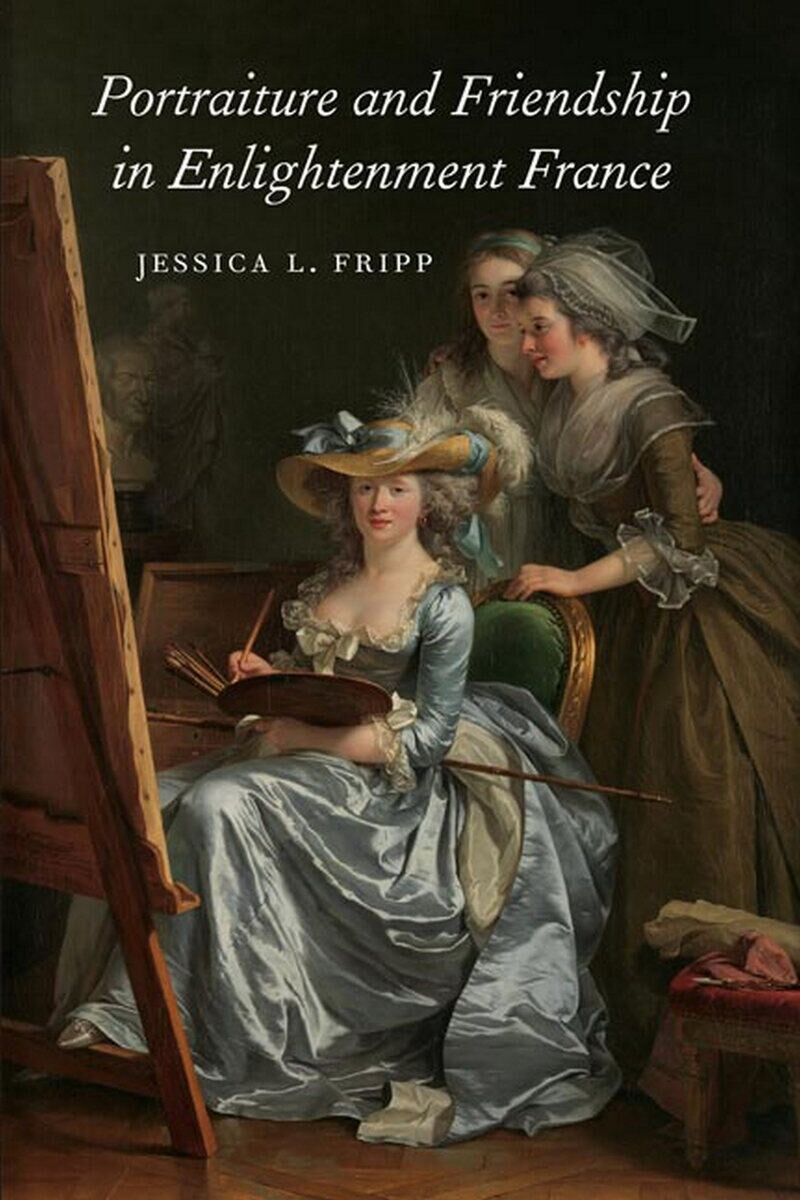
Portraiture and Friendship in Enlightenment France
Portraiture and Friendship in Enlightenment France examines how new and often contradictory ideas about friendship were enacted in the lives of artists in the eighteenth century. It demonstrates that portraits resulted from and generated new ideas about friendship by analyzing the creation, exchange, and display of portraits alongside discussions of friendship in philosophical and academic discourse, exhibition criticism, personal diaries, and correspondence. This study provides a deeper understanding of how artists took advantage of changing conceptions of social relationships and used portraiture to make visible new ideas about friendship that were driven by Enlightenment thought.
eBook

1636 : Seas of Fortune
\"A cosmic catastrophe, the Ring of Fire strands the West Virginia town of Grantville in the middle of Europe during the Thirty Years War. By 1636, it's impact is felt across two great oceans. The United States of Europe seeks out resources (oil, rubber and even aluminum) to help it wage war against the foes of freedom. Daring pioneers cross the Atlantic and found a new colony in South Africa hoping with up-time knowledge to prosper in the tropics and avoid Indian and African Slavery. In the west, the wave of change has reached Japan and intrigued the Shogun. But learning what fate has in store for them, Japan pulls back from a policy of isolation to stake its own claim in the new world\"-- Provided by publisher.
Book

Foul Bodies
A nation's standards of private cleanliness reveal much about its ideals of civilization, fears of disease, and expectations for public life, says Kathleen Brown in this unusual cultural history. Starting with the shake-up of European practices that coincided with Atlantic expansion, she traces attitudes toward \"dirt\" through the mid-nineteenth century, demonstrating that cleanliness-and the lack of it-had moral, religious, and often sexual implications. Brown contends that care of the body is not simply a private matter but an expression of cultural ideals that reflect the fundamental values of a society.
The book explores early America's evolving perceptions of cleanliness, along the way analyzing the connections between changing public expectations for appearance and manners, and the backstage work of grooming, laundering, and housecleaning performed by women. Brown provides an intimate view of cleanliness practices and how such forces as urbanization, immigration, market conditions, and concerns about social mobility influenced them. Broad in historical scope and imaginative in its insights, this book expands the topic of cleanliness to encompass much larger issues, including religion, health, gender, class, and race relations.
eBook

The age of genius : the seventeenth century and the birth of the modern mind
\"Explores the eventful intertwining of outward event and inner intellectual life to tell, in all its richness and depth, the story of the 17th century in Europe. It was a time of creativity unparalleled in history before or since, from science to the arts, from philosophy to politics ... Grayling points to three primary factors [behind this epochal shift]: the rise of vernacular (popular) languages in philosophy, theology, science, and literature; the rise of the individual as a general and not merely an aristocratic type; and the invention and application of instruments and measurement in the study of the natural world\"--Amazon.com.
Book
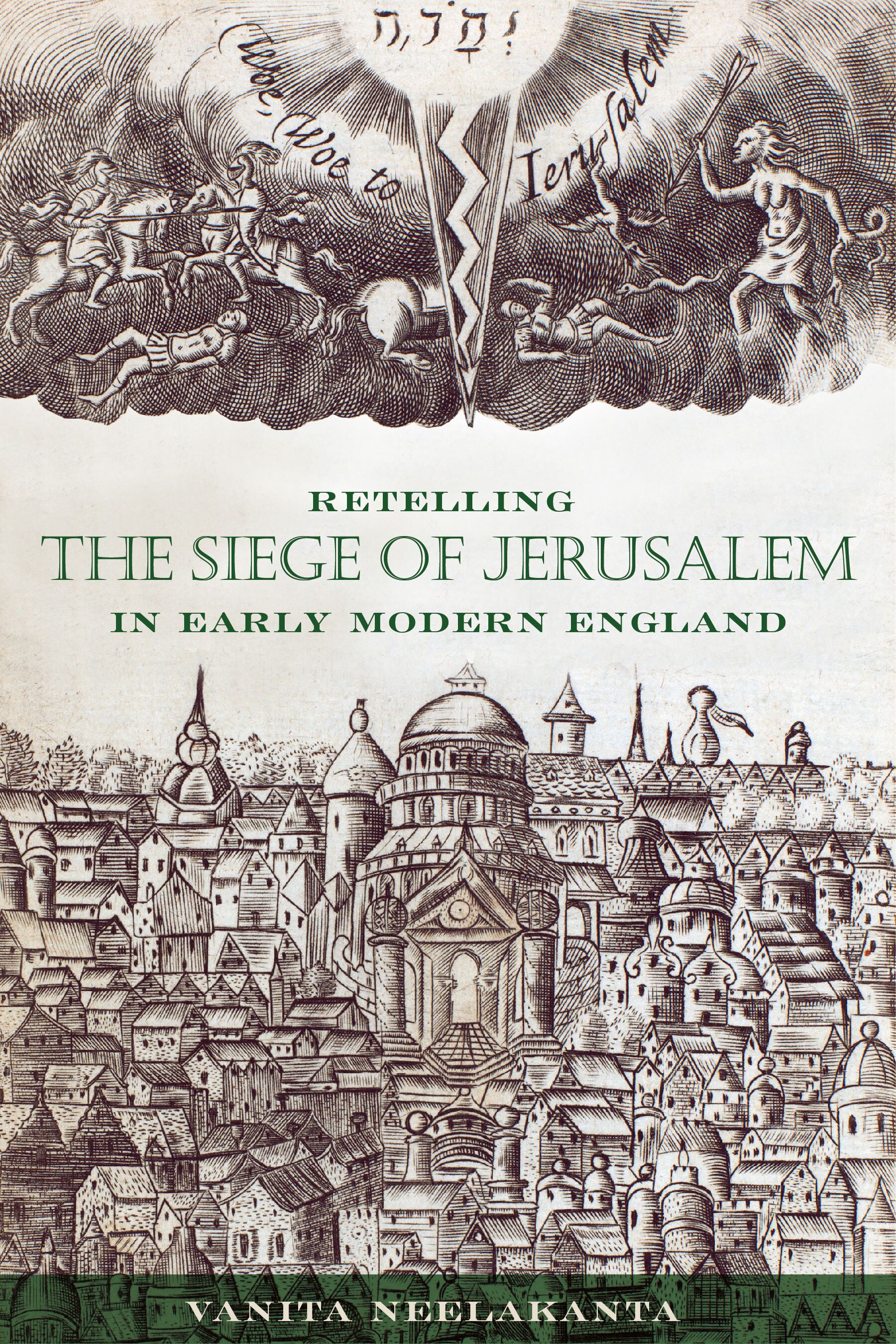
Retelling the Siege of Jerusalem in Early Modern England
This compelling book explores sixteenth- and seventeenth-century English retellings of the Roman siege of Jerusalem and the way they informed and were informed by religious and political developments. The siege featured prominently in many early modern English sermons, ballads, plays, histories, and pamphlets, functioning as a touchstone for writers who sought to locate their own national drama of civil and religious tumult within a larger biblical and post-biblical context. Reformed England identified with besieged Jerusalem, establishing an equivalency between the Protestant church and the ancient Jewish nation but exposing fears that a displeased God could destroy his beloved nation. As print culture grew, secular interpretations of the siege ran alongside once-dominant providentialist narratives and spoke to the political anxieties in England as it was beginning to fashion a conception of itself as a nation. Published by University of Delaware Press. Distributed worldwide by Rutgers University Press.
eBook

From Body to Community
Using the sole surviving admissions book for Toledo, Spain's Hospital de Santiago, Cristian Berco reconstructs the lives of men and women afflicted with the pox by tracing their experiences before, during, and after their hospitalization.
eBook

Commodities and the Acting Profession: A Newly Discovered Inventory for William and Susanna Mountfort’s “India Shop” (1692)
The discovery of the postmortem inventory of the estate of William Mountfort sheds new light on how Restoration actors managed their incomes during the off-season. Mountfort was killed in 1692 by a teenaged Captain Richard Hill, who believed the actor was his rival for the attentions of the actor Anne Bracegirdle. William wrote his will on his deathbed, leaving everything to his actor-wife Susanna and their two-year-old daughter. The inventory, compiled two months later, reveals details of the Mountforts’ day-to-day domestic life in their new house on Norfolk Street in the parish of St Clement Danes, London. The second part of the document is the surprise: it contains a list of the “Trading Goods” found in the shop and storage rooms on the first two floors of the house, which suggests that the Mountforts not only engaged successfully in the acting trade, but also ran a retail business, selling luxury fabrics, decorative objects, and tableware. The first play the United Company (to which the Mountforts belonged) performed after the murder was Thomas Southerne’s Maid’s Last Prayer , a dark comedy that incidentally features an India shop, and provides a useful contemporary context for the Mountforts’ business.
Journal Article