
Catalogue Search | MBRL


Are you sure you want to remove the book from the shelf?

{{itemTitle}}
453
result(s) for
"Sewage disposal History."
Sort by:

The other dark matter : the science and business of turning waste into wealth and health
\"In the world today, we face considerable challenges, and while new ones pile on, the old standbys of fossil fuel overuse, greenhouse gas emissions, resource scarcity, food security, and weather and water extremes like droughts and floods remain. Fortunately, scientists are studying myriad ways human waste can help. Science journalist Lina Zeldovich argues in The Other Dark Matter that human excrement is a resource, cheap and widely available, that can be converted into a sustainable energy source, act as an organic fertilizer, provide effective medicinal therapy for resistant bacterial infection, and much more. Zeldovich profiles the pioneers of this repurposing, including startups in remote African villages and those in American cities that convert sewage into crude oil and collect specimens from volunteers to treat patients battling superbugs. The Other Dark Matter begins with a broad overview of our history of excrement disposal. The author's vignettes touch on ancient Roman sewage systems, Medieval latrines, and other methods used around the world to distance people from their excrement. Today's immense, computerized treatment plants are only the latest in a long line of engineering marvels that have distanced us from disease, she shows, but, importantly, they have also caused considerable damage to our earth's ecology. Zeldovich explains the massive redistribution of nutrients and sanitation inequities across the globe, drawing on her research and many interviews\"-- Provided by publisher.
Book
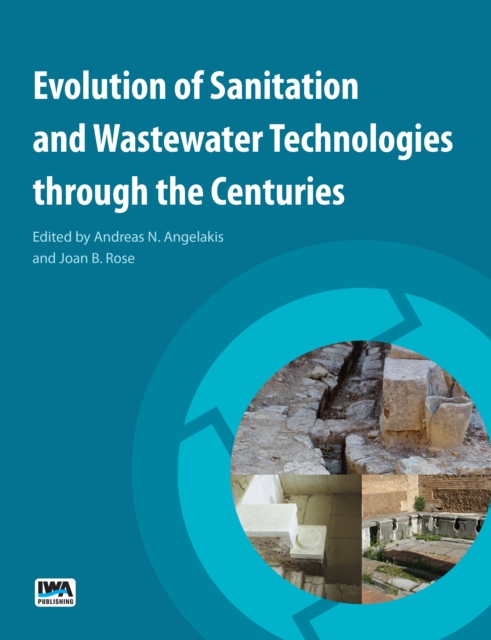
Evolution of sanitation and wastewater technologies through the centuries
Most of the technological developments relevant to water supply and wastewater date back to more than to five thousand years ago. These developments were driven by the necessity to make efficient use of natural resources, to make civilizations more resistant to destructive natural elements, and to improve the standards of life, both at public and private level.
Rapid technological progress in the 20th century created a disregard for past sanitation and wastewater and stormwater technologies that were considered to be far behind the present ones. A great deal of unresolved problems in the developing world related to the wastewater management principles, such as the decentralization of the processes, the durability of the water projects, the cost effectiveness, and sustainability issues, such as protection from floods and droughts were intensified to an unprecedented degree. New problems have arisen such as the contamination of surface and groundwater. Naturally, intensification of unresolved problems has led to the reconsideration of successful past achievements.
This retrospective view, based on archaeological, historical, and technical evidence, has shown two things: the similarity of physicochemical and biological principles with the present ones and the advanced level of wastewater engineering and management practices. Evolution of Sanitation and Wastewater Technologies through the Centuries presents and discusses the major achievements in the scientific fields of sanitation and hygienic water use systems throughout the millennia, and compares the water technological developments in several civilizations. It provides valuable insights into ancient wastewater and stormwater management technologies with their apparent characteristics of durability, adaptability to the environment, and sustainability. These technologies are the underpinning of modern achievements in sanitary engineering and wastewater management practices. It is the best proof that \"the past is the key for the future\".
Evolution of Sanitation and Wastewater Technologies through the Centuries is a textbook for undergraduate and graduate courses of Water Resources, Civil Engineering, Hydraulics, Ancient History, Archaeology, Environmental Management and is also a valuable resource for all researchers in the these fields.
Authors: Andreas N. Angelakis, Institute of Iraklion, Iraklion, Greece and Joan B. Rose, Michigan State University, East Lansing, MI, USA
eBook
Effects of the Deletion of Chemical Agent Washout on Operations at the Blue Grass Chemical Agent Destruction Pilot Plant
The United States manufactured significant quantities of chemical weapons during the Cold War and the years prior. Because the chemical weapons are aging, storage constitutes an ongoing risk to the facility workforces and to the communities nearby. In addition, the Chemical Weapons Convention treaty stipulates that the chemical weapons be destroyed. The United States has destroyed approximately 90 percent of the chemical weapons stockpile located at seven sites.
As part of the effort to destroy its remaining stockpile, the Department of Defense is building the Blue Grass Chemical Agent Destruction Pilot Plant (BGCAPP) on the Blue Grass Army Depot (BGAD), near Richmond, Kentucky. The stockpile stored at BGAD consists of rockets and projectiles containing the nerve agents GB and VX and the blister agent mustard. Continued storage poses a risk to the BGAD workforce and the surrounding community because these munitions are several decades old and are developing leaks.
Due to public opposition to the use of incineration to destroy the BGAD stockpile, Congress mandated that non- incineration technologies be identified for use at BGCAPP. As a result, the original BGCAPP design called for munitions to be drained of agent and then for the munition bodies to be washed out using high-pressure hot water. However as part of a larger package of modifications called Engineering Change Proposal 87 (ECP-87), the munition washout step was eliminated. Effects of the Deletion of Chemical Agent Washout on Operations at the Blue Grass Chemical Agent Destruction Pilot Plant examines the impacts of this design change on operations at BGCAPP and makes recommendations to guide future decision making.
eBook

The community compositions of three nitrogen removal wastewater treatment plants of different configurations in Victoria, Australia, over a 12-month operational period
Amplicon sequence fingerprinting of communities in activated sludge systems have provided data revealing the true level of their microbial biodiversity and led to suggestions of which intrinsic and extrinsic parameters might affect the dynamics of community assemblage. Most studies have been performed in China and Denmark, and comparatively little information is available for plants in other countries. This study looked at how the communities of three plants in Victoria, Australia, treating domestic sewage changed with season. All were designed to remove nitrogen microbiologically. They were all located close together to minimise any influence that climate and demographics might have on their operation, and samples were taken at weekly intervals for 12 months. 16S rRNA amplicon sequencing revealed that each plant community was distinctively different to the others and changed over the 12-month sampling period. Many of the factors suggested in other similar studies to be important in determining community composition in activated sludge systems could not explain the changes noted here. The most likely influential factors were considered to be temperature and influent composition reflecting changes in dietary intake by the populations served by each plant, since in all three, the most noticeable changes corresponded to seasonal shifts.Key points• Monitoring microbial communities in 3 wastewater treatment plants removing nitrogen• Temperature is the most influential factor in dynamic changes in community composition.
Journal Article

Reconstructing the historical expansion of industrial swine production from Landsat imagery
In the USA, historical data on the period over which industrial swine farms have operated are usually only available at the county scale and released every 5 years via the USDA Census of Agriculture, leaving the history of the swine industry and its potential legacy effects on the environment poorly understood. We developed a changepoint-based workflow that recreates the construction timelines of swine farms, specifically by identifying the construction years of swine manure lagoons from historical Landsat 5 imagery for the period of 1984 to 2012. The study focused on the Coastal Plain of North Carolina, a major pork-producing state in the USA. The algorithm successfully predicted the year of swine waste lagoon construction (+ /− 1 year) with an accuracy of approximately 94% when applied to the study area. By estimating the year of construction of 3405 swine waste lagoons in NC, we increased the resolution of available information on the expansion of swine production from the county scale to spatially-explicit locations. We further analyzed how the locations of swine waste lagoons changed in proximity to water resources over time, and found a significant increase in swine waste lagoon distances to the nearest water feature across the period of record.
Journal Article

An Impact-Control Study to Assess the Potential Accumulation of Metals and Metalloids from Sewage Effluent and Biosolids to Sydney Rock Oysters, Saccostrea glomerata
Sewage effluent has been identified as a potential source of metal(loid) contamination in the aquatic environment. The Sydney rock oyster, Saccostrea glomerata, can accumulate most metals and is well established as a biomonitor of metals in the marine environment. To determine if Burwood Beach wastewater treatment works (WWTW) is a source of metal(loid) contamination, S. glomerata was deployed for 6 weeks in effluent receiving waters (Burwood Beach near and Burwood Beach far) and at reference locations (Redhead, Fingal Island 1 and Fingal Island 2) at depths 4, 8 and 12 m. In dried oyster tissue, inductively coupled plasma mass spectrometry (ICPMS) was employed to measure concentrations of a suite of metal(loid)s including aluminium, arsenic, cadmium, copper, lead, iron, manganese, mercury, nickel, selenium, silver and zinc. It was found that for all metal(loid)s, S. glomerata tissue concentrations were not significantly higher at Burwood Beach locations in comparison to all reference locations. Concentrations of metal(loid)s were similar to those which have been detected in previous studies of background locations in New South Wales (NSW). Further, all metals fell below National Food Authority maximum residue levels (MRLs), except for arsenic and this does not appear uncommon for concentrations in biota within NSW. Comparisons to historical data suggested that concentrations of metal(loid)s in sewage effluent from Burwood Beach WWTW, assessed via concentrations in oyster tissue, are similar or lower, suggesting that changes in treatment processes initiated in the intervening time have lowered metallic inputs.
Journal Article

Risky Cities
Over half the world’s population lives in urban regions, and increasingly disasters are of great concern to city dwellers, policymakers, and builders. However, disaster risk is also of great interest to corporations, financiers, and investors. Risky Cities is a critical examination of global urban development, capitalism, and its relationship with environmental hazards. It is about how cities live and profit from the threat of sinkholes, garbage, and fire. Risky Cities is not simply about post-catastrophe profiteering. This book focuses on the way in which disaster capitalism has figured out ways to commodify environmental bads and manage risks. Notably, capitalist city-building results in the physical transformation of nature. This necessitates risk management strategies –such as insurance, environmental assessments, and technocratic mitigation plans. As such capitalists redistribute risk relying on short-term fixes to disaster risk rather than address long-term vulnerabilities.
eBook

ANTIBIOTIC-RESISTANT GRAM-NEGATIVE BACTERIA IN A LOCAL WASTEWATER TREATMENT PLANT IN NORTH GEORGIA
Antibiotics are some of the most essential lifesaving drugs currently available to us against infectious diseases. Several pathogens are developing resistance to these drugs and many have become resistant to multiple antibiotics. Such multi-drug resistance is becoming a global issue and has been found in many environments including wastewater treatment plants (WWTPs). In this study, we sampled a local WWTP for antibiotic-resistant bacteria. This WWTP is in North Georgia and runs directly into Lake Lanier, which is the main source of drinking water for the Atlanta area as well as a popular spot for water recreation. We obtained treated and raw sewage water samples. These water samples were filtered, grown in an enrichment media and plated on selective media containing antibiotics that yielded the isolation of antibiotic-resistant bacteria. These isolates were further characterized for antibiotic resistance using disk diffusion method and identified using 16s rRNA gene sequencing. All isolates obtained from both raw sewage and treated water samples were multi-drug resistant. Further analysis using PCR revealed all isolates possessed at least one bla gene and hence were identified to be ESBL-producing bacteria. Our results are consistent with other findings reported worldwide suggesting multi-drug resistant bacteria persist in treated water.
Journal Article

Prevalence and risk factors of Hepatitis C virus infection in Brazil, 2005 through 2009: a cross-sectional study
Background
Hepatitis C chronic liver disease is a major cause of liver transplant in developed countries. This article reports the first nationwide population-based survey conducted to estimate the seroprevalence of HCV antibodies and associated risk factors in the urban population of Brazil.
Methods
The cross sectional study was conducted in all Brazilian macro-regions from 2005 to 2009, as a stratified multistage cluster sample of 19,503 inhabitants aged between 10 and 69 years, representing individuals living in all 26 State capitals and the Federal District. Hepatitis C antibodies were detected by a third-generation enzyme immunoassay. Seropositive individuals were retested by Polymerase Chain Reaction and genotyped. Adjusted prevalence was estimated by macro-regions. Potential risk factors associated with HCV infection were assessed by calculating the crude and adjusted odds ratios, 95% confidence intervals (95% CI) and p values. Population attributable risk was estimated for multiple factors using a case–control approach.
Results
The overall weighted prevalence of hepatitis C antibodies was 1.38% (95% CI: 1.12%–1.64%). Prevalence of infection increased in older groups but was similar for both sexes. The multivariate model showed the following to be predictors of HCV infection: age, injected drug use (OR = 6.65), sniffed drug use (OR = 2.59), hospitalization (OR = 1.90), groups socially deprived by the lack of sewage disposal (OR = 2.53), and injection with glass syringe (OR = 1.52, with a borderline p value). The genotypes 1 (subtypes 1a, 1b), 2b and 3a were identified. The estimated population attributable risk for the ensemble of risk factors was 40%. Approximately 1.3 million individuals would be expected to be anti-HCV-positive in the country.
Conclusions
The large estimated absolute numbers of infected individuals reveals the burden of the disease in the near future, giving rise to costs for the health care system and society at large. The known risk factors explain less than 50% of the infected cases, limiting the prevention strategies. Our findings regarding risk behaviors associated with HCV infection showed that there is still room for improving strategies for reducing transmission among drug users and nosocomial infection, as well as a need for specific prevention and control strategies targeting individuals living in poverty.
Journal Article

The Engineer as Economist: Sewers and the Making of the Water Consumer in Colonial Cairo, 1890
Modern sewage systems were once a cutting-edge innovation that transformed how people consumed water. This article examines a debate among a group of British engineers involved in a sewage system scheme in late nineteenth-century Cairo, when Egypt was under British colonial rule. Assessing the project's economic feasibility, the engineers came to different conclusions regarding the future users of the system and, by extension, future consumers of water. Reconstructing the debate sets up a dialogue between engineering and economics to show that engineers could be economists too. This debate represents a type of economic analysis that public works engineers pioneered in the mid-nineteenth century. The engineers reached novel conclusions by centering consumers as the foundation for calculating economic realities.
Journal Article