
Catalogue Search | MBRL


Are you sure you want to remove the book from the shelf?

{{itemTitle}}
692
result(s) for
"Sewerage History."
Sort by:

An underground guide to sewers, : or, Down, through & out in Paris, London, New York, &c.
Lose yourself in the vast sewer networks that lie beneath the world's great cities - past and present. Let detailed archival plans, maps and photographs guide you through these subterranean labyrinths - previously accessible only to their builders, engineers and, perhaps, the odd rogue explorer. This execrable exploration traces the evolution of waste management from the ingenious infra-structures of the ancient world to the seeping cesspits and festering open sewers of the medieval period. It investigates and celebrates the work of the civil engineers whose pioneering integrated sewer systems brought to a close the devastating cholera epidemics of the mid-19th century and continue to serve a vastly increased population today. And let's not forget those giant fatbergs clogging our underground arteries, or the storm-surge super-structures of tomorrow.
Book
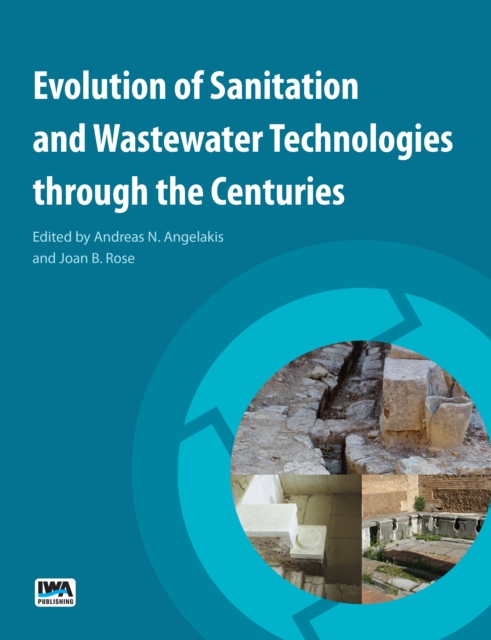
Evolution of sanitation and wastewater technologies through the centuries
Most of the technological developments relevant to water supply and wastewater date back to more than to five thousand years ago. These developments were driven by the necessity to make efficient use of natural resources, to make civilizations more resistant to destructive natural elements, and to improve the standards of life, both at public and private level.
Rapid technological progress in the 20th century created a disregard for past sanitation and wastewater and stormwater technologies that were considered to be far behind the present ones. A great deal of unresolved problems in the developing world related to the wastewater management principles, such as the decentralization of the processes, the durability of the water projects, the cost effectiveness, and sustainability issues, such as protection from floods and droughts were intensified to an unprecedented degree. New problems have arisen such as the contamination of surface and groundwater. Naturally, intensification of unresolved problems has led to the reconsideration of successful past achievements.
This retrospective view, based on archaeological, historical, and technical evidence, has shown two things: the similarity of physicochemical and biological principles with the present ones and the advanced level of wastewater engineering and management practices. Evolution of Sanitation and Wastewater Technologies through the Centuries presents and discusses the major achievements in the scientific fields of sanitation and hygienic water use systems throughout the millennia, and compares the water technological developments in several civilizations. It provides valuable insights into ancient wastewater and stormwater management technologies with their apparent characteristics of durability, adaptability to the environment, and sustainability. These technologies are the underpinning of modern achievements in sanitary engineering and wastewater management practices. It is the best proof that \"the past is the key for the future\".
Evolution of Sanitation and Wastewater Technologies through the Centuries is a textbook for undergraduate and graduate courses of Water Resources, Civil Engineering, Hydraulics, Ancient History, Archaeology, Environmental Management and is also a valuable resource for all researchers in the these fields.
Authors: Andreas N. Angelakis, Institute of Iraklion, Iraklion, Greece and Joan B. Rose, Michigan State University, East Lansing, MI, USA
eBook


The culture of flushing : a social and legal history of sewage
Iinvestigates and clarifies the murky evolution of waste treatment - in a time when community water quality can no longer be taken for granted.
eBook

Toilets tank! : their inner workings
\"Get ready for some literal bathroom reading. Discover the story behind their home's most under appreciated feature. From facts on how much bodily waste the average person releases a day to information on what the first \"toilets\" were like. Readers will learn about why we need sanitation and where our waste goes when we flush.\"-- Provided by publisher.
Book

Hybrid Nature
Biological sewage treatment, like electricity, power generation, telephones, and mass transit, has been a key technology and a major part of the urban infrastructure since the late nineteenth century. But sewage treatment plants are not only a ubiquitous component of the modern city, they are also ecosystems--a hybrid variety that incorporates elements of both nature and industry and embodies multiple contradictions. In Hybrid Nature, Daniel Schneider offers an environmental history of the biological sewage treatment plant in the United States and England, viewing it as an early and influential example of an industrial ecosystem. The sewage treatment plant relies on microorganisms and other plants and animals but differs from a natural ecosystem in the extent of human intervention in its creation and management. Schneider explores the relationship between society and nature in the industrial ecosystem and the contradictions that define it[: the naturalization of industry versus the industrialization of nature; the public interest versus private (patented) technology; engineers versus bacterial and human labor; and purification versus profits in the marketing of sewage fertilizer.] Schneider also describes biotechnology's direct connections to the history of sewage treatment, and how genetic engineering is extending the reaches of the industrial ecosystem to such \"natural\" ecosystems as oceans, rivers, and forests. In a conclusion that shows how industrial ecosystems continue to evolve, Schneider discusses John Todd's Living Machine, a natural purification method of sewage treatment, as the embodiment of the contradictions of the industrial ecosystem.The hardcover edition does not include a dust jacket.
eBook

The archaeology of sanitation in Roman Italy : toilets, sewers, and water systems
\"The Romans developed sophisticated methods for managing hygiene, including aqueducts for moving water from one place to another, sewers for removing used water from baths and runoff from walkways and roads, and public and private latrines. Through the archeological record, graffiti, sanitation-related paintings, and literature, Ann Olga Koloski-Ostrow explores this little-known world of bathrooms and sewers, offering unique insights into Roman sanitation, engineering, urban planning and development, hygiene, and public health. Focusing on the cities of Pompeii, Herculaneum, Ostia, and Rome, Koloski-Ostrow's work challenges common perceptions of Romans' social customs, beliefs about health, tolerance for filth in their cities, and attitudes toward privacy. In charting the complex history of sanitary customs from the late republic to the early empire, Koloski-Ostrow reveals the origins of waste removal technologies and their implications for urban health, past and present\"--Provided by publisher.
Book

The Draining of the Fens
How landowners, drainage projectors, and investors worked with the Crown to transform England's waterlogged Fens.
2017 Choice Outstanding Academic Title
The draining of the Fens in eastern England was one of the largest engineering projects in seventeenth-century Europe. A series of Dutch and English \"projectors, \" working over several decades and with the full support of the Crown, transformed hundreds of thousands of acres of putatively barren wetlands into dry, arable farmland. The drainage project was also supposed to reform the sickly, backward fenlanders into civilized, healthy farmers, to the benefit of the entire commonwealth. As projectors reconstructed entire river systems, these new, artificial channels profoundly altered both the landscape and the lives of those who lived on it.
In this definitive account, historian Eric H. Ash provides a detailed history of this ambitious undertaking. Ash traces the endeavor from the 1570s, when draining the whole of the Fens became an imaginable goal for the Crown, through several failed efforts in the early 1600s. The book closes in the 1650s, when, in spite of the project's enormous difficulty and expense, the draining of the Great Level of the Fens was finally completed. Ash ultimately concludes that the transformation of the Fens into fertile farmland had unintended ecological consequences that created at least as many problems as it solved.
Drawing on painstaking archival research, Ash explores the drainage from the perspectives of political, social, and environmental history. He argues that the efficient management and exploitation of fenland natural resources in the rising nation-state of early modern England was a crucial problem for the Crown, one that provoked violent confrontations with fenland inhabitants, who viewed the drainage (and accompanying land seizure) as a grave threat to their local landscape, economy, and way of life. The drainage also reveals much about the political flash points that roiled England during the mid–seventeenth century, leading up to the violence of the English Civil War. This is compelling reading for British historians, environmental scholars, historians of technology, and anyone interested in state formation in early modern Europe.
eBook

Water Reuse: From Ancient to Modern Times and the Future
Domestic wastewater (sewage) has been used for irrigation and aquaculture since the Bronze Age (ca. 3,200-1,100 BC) by prehistoric civilizations (e.g. Chinese, Egyptian, Indus Valley, Mesopotamian, and Minoan). In historic times (ca. 1,000 BC-330 AD), wastewater was disposed of or used for irrigation and fertilization purposes by the Greek civilization and later by the Romans in areas surrounding cities (e.g. Athens and Rome). In more recent history, the practice of land application of wastewater for disposal and agricultural use was utilized first in European cities and later in USA. Today, the planning and implementation of water reclamation and reuse projects is occurring throughout the world. Recycled water is now used for almost any purpose including potable use. This paper provides a brief overview of the evolution of water reuse over the last ca. 5,000 years. Understanding the practices and solutions of the past, provides a lens with which to view present and future challenges in a highly-urbanized world.
Journal Article

An Impact-Control Study to Assess the Potential Accumulation of Metals and Metalloids from Sewage Effluent and Biosolids to Sydney Rock Oysters, Saccostrea glomerata
Sewage effluent has been identified as a potential source of metal(loid) contamination in the aquatic environment. The Sydney rock oyster, Saccostrea glomerata, can accumulate most metals and is well established as a biomonitor of metals in the marine environment. To determine if Burwood Beach wastewater treatment works (WWTW) is a source of metal(loid) contamination, S. glomerata was deployed for 6 weeks in effluent receiving waters (Burwood Beach near and Burwood Beach far) and at reference locations (Redhead, Fingal Island 1 and Fingal Island 2) at depths 4, 8 and 12 m. In dried oyster tissue, inductively coupled plasma mass spectrometry (ICPMS) was employed to measure concentrations of a suite of metal(loid)s including aluminium, arsenic, cadmium, copper, lead, iron, manganese, mercury, nickel, selenium, silver and zinc. It was found that for all metal(loid)s, S. glomerata tissue concentrations were not significantly higher at Burwood Beach locations in comparison to all reference locations. Concentrations of metal(loid)s were similar to those which have been detected in previous studies of background locations in New South Wales (NSW). Further, all metals fell below National Food Authority maximum residue levels (MRLs), except for arsenic and this does not appear uncommon for concentrations in biota within NSW. Comparisons to historical data suggested that concentrations of metal(loid)s in sewage effluent from Burwood Beach WWTW, assessed via concentrations in oyster tissue, are similar or lower, suggesting that changes in treatment processes initiated in the intervening time have lowered metallic inputs.
Journal Article