
Catalogue Search | MBRL


Are you sure you want to remove the book from the shelf?

{{itemTitle}}
2,736
result(s) for
"Sex and sexuality, social aspects"
Sort by:

Human Trafficking in Medieval Europe
Human trafficking has become a global concern over the last twenty years, but its violence has terrorized and traumatized its victims and survivors for millennia. This study examines the deep history of human trafficking from Late Antiquity to the Early Modern Period. It traces the evolution of trafficking patterns: the growth and decline of trafficking routes, the everchanging relationships between traffickers and authorities, and it examines the underlying causes that lead to vulnerability and thus to exploitation. As the reader will discover, the conditions that lead to human trafficking in the modern world, such as poverty, attitudes of entitlement, corruption, and violence, have a long and storied past. When we understand that past, we can better anticipate human trafficking’s future, and then we are better able to fight it.
eBook

My Name is Not Natasha
This book challenges every common presumption that exists about the trafficking of women for the sex trade. It is a detailed account of an entire population of trafficked Albanian women whose varied experiences, including selling sex on the streets of France, clearly demonstrate how much the present discourse about trafficked women is misplaced and inadequate. The heterogeneity of the women involved and their relationships with various men is clearly presented as is the way women actively created a panoptical surveillance of themselves as a means of self-policing. There is no artificial divide between women who were deceived and abused and those who \"choose\" sex work; in fact the book clearly shows how peripheral involvement in sex work was to the real agenda of the women involved. Most of the women described in this book were not making economic decisions to escape desperate poverty nor were they the uneducated naïve entrapped into sexual slavery. The women's success in transiting trafficking to achieve their own goals without the assistance of any outside agency is a testimony to their resilience and resolve.
Dit boek is een gedetaillerd onderzoek naar een groep Albanese vrouwen werkzaam in de seksindustrie in Parijs. My Name is Not Natasha laat zien hoe deze vrouwen, gedwongen of bewust 'gekozen' voor het beroep, allerminst het slachtoffer zijn van een economisch uitzichtloze situatie. Ze zijn evenmin naïve laagopgeleide vrouwen, onder valse voorwendselen de seksslavernij ingelokt. Dit boek laat zien dat ze zonder hulp van buitenaf weerbaar zijn en hun eigen doelen weten te bereiken. Het is een getuigenis van hun veerkracht en zelfredzaamheid.
eBook

Sex, Love, and Migration
A common image of migration in the early twenty-first century features young women from poor countries who are drawn into low paid, and often intimate, labor in wealthy countries. While aligning with scholarship critical of such inequalities, From Istanbul with Love traces how new mobilities are fundamentally reshaping emotional worlds and social ties between women and men, women and work, women and their households of origin, and women and children in the region. Based on ethnographic fieldwork spanning over a decade carried out primarily in Istanbul, but also in Russia and southern Moldova, Alexia Bloch moves between the lives of post-Soviet migrant women employed in three distinct spheres—sex work, the garment trade, and domestic work—to consider how they negotiate emotion, intimate relationships, and unpredictable state power shaping their labor and their relationships.
eBook

Sex, Power, and Slavery
Sexual exploitation was and is a critical feature of enslavement. Across many different societies, slaves were considered to own neither their bodies nor their children, even if many struggled to resist. At the same time, paradoxes abound: for example, in some societies to bear the children of a master was a potential route to manumission for some women. Sex, Power, and Slavery is the first history of slavery and bondage to take sexuality seriously. Twenty-six authors from diverse scholarly backgrounds look at the vexed, traumatic intersections of the histories of slavery and of sexuality. They argue that such intersections mattered profoundly and, indeed, that slavery cannot be understood without adequate attention to sexuality. Sex, Power, and Slavery brings into conversation historians of the slave trade, art historians, and scholars of childhood and contemporary sex trafficking. The book merges work on the Atlantic world and the Indian Ocean world and enables rich comparisons and parallels between these diverse areas. Contributors: David Brion Davis, Martin Klein, Richard Hellie, Abdul Sheriff, Griet Vankeerberghen, E. Ann McDougall, Matthew S. Hopper, Marie Rodet, George La Rue, Ulrike Schmieder, Tara Iniss, Mariana Candido, James Francis Warren, Johanna Ransmeier, Roseline Uyanga with Marie-Luise Ermisch, Francesca Ann Louise Mitchell, Shigeru Sato, Gabeba Baderoon, Charmaine Nelson, Ana Lucia Araujo, Brian Lewis, Ronaldo Vainfas, Salah Trabelsi, Joost Coté, Sandra Evers, and Subho Basu
eBook

Street Sex Work and Canadian Cities
“Our voices scrubbed out and forgotten. There are those who research and write about sex workers who often forget we are human.” —Amy Lebovitch Shawna Ferris gives a voice to sex workers who are often pushed to the background, even by those who fight for them. In the name of urban safety and orderliness, street sex workers face stigma, racism, and ignorance. Their human rights are ignored, and some even lose their lives. Ferris aims to reveal the cultural dimensions of this discrimination through literary and art-critical theory, legal and sociological research, and activist intervention. Canadian cities are striving for high safety ratings by eliminating crime, which includes “cleaning” urban areas of the street sex industry. Ironically, sex workers also want to live and work in a safe environment. Ferris questions these sanitizing political agendas, reviews exclusionary legislative and police initiatives, and examines media representations of sex workers. This book has much to offer to educators and activists, sex workers and anti-violence organizations, and academics studying women, cultural, gender, or indigenous issues. Foreword by Amy Lebovitch.
eBook
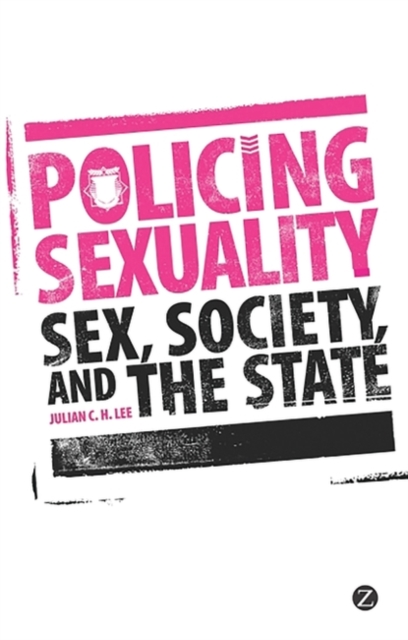
Policing sexuality
Policing Sexuality explores the regulation of sexual behaviour and identity, asking how and why nation-states have sought to influence and control the sexuality of their citizens. Julian C. H. Lee presents both theoretical and ethnographic literature, distilling common themes and causes, such as the influence of colonialism, class, religion, and national identity. Featuring crucial case studies from India, the US, Malaysia, Turkey, and Britain, this engaging comparative account examines the coercive control state authority exerts over sexuality.
eBook

Sexuality and the Unnatural in Colonial Latin America
Sexuality and the Unnatural in Colonial Latin Americabrings together a broad community of scholars to explore the history of illicit and alternative sexualities in Latin America's colonial and early national periods. Together the essays examine how \"the unnatural\" came to inscribe certain sexual acts and desires as criminal and sinful, including acts officially deemed to be \"against nature\"-sodomy, bestiality, and masturbation-along with others that approximated the unnatural-hermaphroditism, incest, sex with the devil, solicitation in the confessional, erotic religious visions, and the desecration of holy images. In doing so, this anthology makes important and necessary contributions to the historiography of gender and sexuality. Amid the growing politicized interest in broader LGBTQ movements in Latin America, the essays also show how these legal codes endured to make their way into post-independence Latin America.
eBook

Gendered Migrations and Global Social Reproduction
Eleonore Kofman and Parvati Raghuram argue for the benefits of social reproduction as a lens through which to understand gendered transformations in global migration. They highlight the range of sites, sectors, and skills in which migrants are employed and how migration is both a cause and an outcome of depletion in social reproduction.
eBook

The sexual state
This is the first scholarly study of Scotland's sexual coming-of-age in the post-war period, charting its political growth from a deeply moralistic policy framework towards a less judgmental, global and scientific context. On the way, Davidson and Davis lead us through the Scottish sexual landscape leading up to the global crisis of HIV/AIDS, analysing post-war state policy towards issues such as prostitution, abortion, homosexuality, gender roles, contraception, censorship, pornography and sexual health education.There are few resources for the student of Scotland's sexual history and its political and social context. This will be the first dedicated work to collate the findings of two important and respected scholars in Scottish Social History, publishing new research in an under-published area of 20th Century cultural history.
eBook

Gender, Sexuality, and the Cold War
As Marko Dumančić writes in his introduction to Gender,
Sexuality, and the Cold War , \"despite the centrality of gender
and sexuality in human relations, their scholarly study has played
a secondary role in the history of the Cold War. . . . It is not an
exaggeration to say that few were left unaffected by Cold War
gender politics; even those who were in charge of producing,
disseminating, and enforcing cultural norms were called on to live
by the gender and sexuality models into which they breathed life.\"
This underscores the importance of this volume, as here scholars
tackle issues ranging from depictions of masculinity during the
all-consuming space race, to the vibrant activism of Indian peasant
women during this period, to the policing of sexuality inside the
militaries of the world. Gender, Sexuality, and the Cold
War brings together a diverse group of scholars whose combined
research spans fifteen countries across five continents, claiming a
place as the first volume to examine how issues of gender and
sexuality impacted both the domestic and foreign policies of
states, far beyond the borders of the United States, during the
tumult of the Cold War.
eBook