
Catalogue Search | MBRL


Are you sure you want to remove the book from the shelf?

{{itemTitle}}
1,299
result(s) for
"Sex discrimination in employment United States."
Sort by:

Race and work : persistent inequality
\"This book provides a reasoned, unflinching analysis of how race and paid work are linked in U.S. society. It offers readers the rich conceptual and empirical foundation needed to understand key issues surrounding both race and work. Loscocco traces current patterns to their historical roots, showing that the work lives of people from different race and ethnic groups have always been interrelated. Chapters document the U.S.'s multicultural labor history, discuss how labor markets and jobs became segregated, and explain key racial-ethnic patterns in work opportunities. The book also addresses common misconceptions about why women and men from some racial-ethnic groups end up with better jobs than others. It closes with a look at contemporary developments and suggests a future in which race-ethnicity no longer affects work opportunities and experiences. Race and Work deepens understanding and elevates the discussion of race, racism, and work in an engaging, accessible style. It will be an essential resource for anyone interested in work, race-ethnicity, social inequality, or intersections among race, gender, and class\"-- Provided by publisher.
Book

Equality on Trial
In 1964, as part of its landmark Civil Rights Act, Congress outlawed workplace discrimination on the basis of such personal attributes as sex, race, and religion. This provision, known as Title VII, laid a new legal foundation for women's rights at work. Though President Kennedy and other lawmakers expressed high hopes for Title VII, early attempts to enforce it were inconsistent. In the absence of a consensus definition of sex equality in the law or society, Title VII's practical meaning was far from certain.The first history to foreground Title VII's sex provision, Equality on Trial examines how the law's initial promise inspired a generation of Americans to dispatch expansive notions of sex equality. Imagining new solidarities and building a broad class politics, these workers and activists engaged Title VII to generate a pivotal battle over the terms of democracy and the role of the state in all labor relationships. But the law's ambiguity also allowed for narrow conceptions of sex equality to take hold. Conservatives found ways to bend Title VII's possible meanings to their benefit, discovering that a narrow definition of sex equality allowed businesses to comply with the law without transforming basic workplace structures or ceding power to workers. These contests to fix the meaning of sex equality ultimately laid the legal and cultural foundation for the neoliberal work regimes that enabled some women to break the glass ceiling as employers lowered the floor for everyone else.Synthesizing the histories of work, social movements, and civil rights in the postwar United States, Equality on Trial recovers the range of protagonists whose struggles forged the contemporary meanings of feminism, fairness, and labor rights.
eBook


Women Who Opt Out
pIn a much-publicized and much-maligned 2003 New York Times article, “The Opt-Out Revolution,” the journalist Lisa Belkin made the controversial argument that highly educated women who enter the workplace tend to leave upon marrying and having children. Women Who Opt Out is a collection of original essays by the leading scholars in the field of work and family research, which takes a multi-disciplinary approach in questioning the basic thesis of “the opt-out revolution.” The contributors illustrate that the desire to balance both work and family demands continues to be a point of unresolved concern for families and employers alike and women’s equity within the workforce still falls behind. Ultimately, they persuasively make the case that most women who leave the workplace are being pushed out by a work environment that is hostile to women, hostile to children, and hostile to the demands of family caregiving, and that small changes in outdated workplace policies regarding scheduling, flexibility, telecommuting and mandatory overtime can lead to important benefits for workers and employers alike. strongContributors:/strong Kerstin Aumann, Jamie Dolkas, Ellen Galinsky, Lisa Ackerly Hernandez, Susan J. Lambert, Joya Misra, Maureen Perry-Jenkins, Peggie R. Smith, Pamela Stone, and Joan C. Williams. Listen to Bernie D. Jones on WPYR Radio: Mothers and the delicate work-family balance/p
eBook

Organizational obliviousness : entrenched resistance to gender integration in the military
\"Exploring efforts to integrate women into combat forces in the military, this book investigates how resistance to equity becomes entrenched, ultimately excluding women from being full participants in the workplace. Based on focus groups and surveys with members of Special Operations, we found most of the resistance is rooted in traditional gender stereotypes that are often bolstered through organizational policies and practices\"-- Provided by publisher.
Book
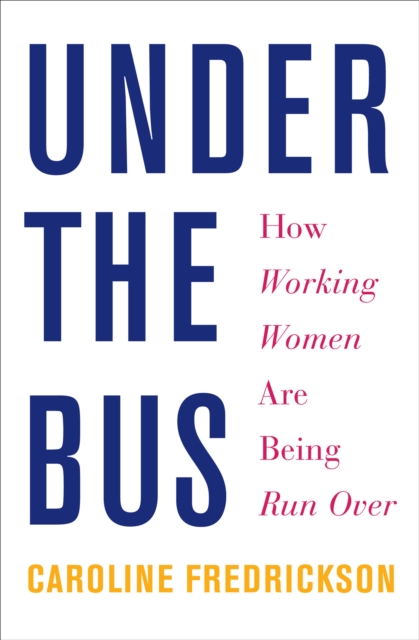
Under the bus
Most Americans think that our country has done quite a lot to protect women and ensure gender equity in the workplace. After all, we have banned discrimination against women, required equal pay for equal work, and adopted family-leave legislation. But the fact is that we have a two-tiered system, where some working women have a full panoply of rights while others have few or none at all. We allow blatant discrimination by small employers. Domestic workers are cut out of our wage and overtime laws. Part-time workers, disproportionately women, are denied basic benefits. Laws are written through a process of compromise and negotiation, and in each case vulnerable workers were the bargaining chip that was sacrificed to guarantee the policy's enactment. For these workers, the system that was supposed to act as a safety net has become a sieve—and they are still falling through. Caroline Fredrickson is a powerful advocate and D.C. insider who has witnessed the legislative compromises that leave out temps, farmworkers, employees of small businesses, immigrants, and other workers who fall outside an intentionally narrow definition of \"employees.\" The women in this fast-growing part of the workforce are denied minimum wage, maternity leave, health care, the right to unionize, and protection from harassment and discrimination—all within the bounds of the law. If current trends continue, their fate will be the future of all American workers.
eBook

Women at work : rhetorics of gender and labor
\"Women at Work presents the field of rhetorical studies with fifteen chapters that center on gender, rhetoric, and work in the US in the nineteenth and twentieth centuries. Feminist scholars explore women's labor evangelism in the textile industry, the rhetorical constructions of leadership within women's trade unions, the rhetorical branding of a twentieth-century female athlete, the labor activism of an African American blues singer, and the romantic, same-sex collaborations that supported pedagogical labor. Women at Work also introduces readers to rhetorical methods and approaches possible for the study of gender and work. Contributors name and explore a specific rhetorical concern that animates their study and in so doing, readers learn about such concepts as professional proof, rhetorical failure, epideictic embodiment, rhetorics of care, and cross-racial coalition building\"-- Provided by publisher.
Book

Transgender Employment Experiences
Brings together the workplace experiences of transgender people with an assessment of current policy protections. The complex and changing state of policy protections for transgender communities practically requires trans people to become legal experts just to navigate their everyday lives. It also simultaneously offers a window of opportunity for legal advocates to shape new laws and policies based on the lived experiences of trans people. Using personal interviews, legal case histories, and transgender theory, Transgender Employment Experiences combines policy analysis with the lived experiences of twenty transgender-identified employees, showing how worker protections that should exist under the Civil Rights Act are instead systematically undermined in the case of many transgender employees. Rather than focusing solely on negative experiences, however, Kyla Bender-Baird also highlights the positive experiences her respondents had coming out at work, illustrating examples of best practices in response to transitioning. Bender-Baird covers many forms of discrimination that transgender workers face, such as harassment, gender-based dress codes, income-related inequities, bathroom policies, and background checks. Drawing from this analysis, she argues for protections for gender expression in policy decisions, legislative efforts, and for a multipronged approach to workplace discrimination. With its effective balance of personal stories and legal guidance, this book is a much-needed resource for those in the field of gender and employment, from policy analysts to human resource managers to queer studies scholars.
eBook


Documenting Desegregation
Enacted nearly 50 years ago, the Civil Rights Act codified a new vision for American society by formally ending segregation and banning race and gender discrimination in the workplace. But how much change did the legislation actually produce? As employers responded to the law, did new and more subtle forms of inequality emerge in the workplace? In an insightful analysis that combines history with a rigorous empirical analysis of newly available data, Equal Opportunity at Work? offers the most comprehensive account to date of what has happened to equal opportunity in America—and what more needs to be done in order to achieve a truly integrated workforce. Weaving strands of history, cognitive psychology, and demography, Equal Opportunity at Work? provides a compelling exploration of the ways legislation can affect employer behavior and produce change. Authors Kevin Stainback and Donald Tomaskovic-Devey use a remarkable historical record—data from more than six million workplaces collected by the U.S. Equal Employment Opportunity Commission (EEOC) since 1966—to present a sobering portrait of race and gender in the American workplace. Progress has been decidedly uneven: black men, black women, and white women have prospered in firms that rely on educational credentials when hiring, though white women have advanced more quickly. And white men have hardly fallen behind—they now hold more managerial positions than they did in 1964. The authors argue that the Civil Rights Act’s equal opportunity clauses have been most effective when accompanied by social movements demanding changes. EEOC data show that African-American men made rapid gains in the 1960s, at the height of the civil rights movement. Similarly, white women gained access to more professional and managerial jobs in the 1970s as regulators and policymakers began to enact and enforce gender discrimination laws. By the 1980s, however, racial desegregation had stalled, reflecting the dimmed status of the civil rights agenda. Race and gender employment segregation remain high today, and alarmingly, many firms, particularly in high-wage industries, seem to be moving in the wrong direction and have shown signs of resegregating since the 1980s. To counter this worrying trend, the authors propose new methods to increase diversity by changing industry norms, holding human resources managers to account, and exerting renewed government pressure on large corporations to make equal employment opportunity a national priority. At a time of high unemployment and rising inequality, Equal Opportunity at Work? provides an incisive reexamination of America’s tortured pursuit of equal employment opportunity. This important new book will be an indispensable guide for those seeking to understand where America stands in fulfilling its promise of a workplace free from discrimination.
eBook