
Catalogue Search | MBRL


Are you sure you want to remove the book from the shelf?

{{itemTitle}}
5,353
result(s) for
"Sexual minorities -- Psychology"
Sort by:


Body Battlegrounds
Body Battlegrounds explores the rich and complex lives of
society's body outlaws-individuals from myriad social locations who
oppose hegemonic norms, customs, and conventions about the body.
Original research chapters (based on textual analysis, qualitative
interviews, and participant observation) along with personal
narratives provide a window into the everyday lives of people
rewriting the norms of embodiment in sites like schools, sporting
events, and doctors' offices. Table of Contents
Introduction | Chris Bobel and Samantha Kwan Part I:
Going \"Natural\" • Body Hair Battlegrounds: The
Consequences, Reverberations, and Promises of Women Growing Their
Leg, Pubic, and Underarm Hair | Breanne Fahs • Radical
Doulas, Childbirth Activism, and the Politics of Embodiment |
Monica Basile • Caring for the Corpse: Embodied Transgression
and Transformation in Home Funeral Advocacy | Anne Esacove
Living Resistance: • Deconstructing Reconstructing: Challenging
Medical Advice Following Mastectomy | Joanna Rankin • My
Ten-Year Dreadlock Journey: Why I Love the \"Kink\" in My Hair . . .
Today | Cheryl Thompson • Living My Full Life: My
Rejecting Weight Loss as an Imperative for Recovery from Binge
Eating Disorder | Christina Fisanick • Pretty Brown:
Encounters with My Skin Color | Praveena Lakshmanan Part II:
Representing Resistance • Blood as Resistance:
Photography as Contemporary Menstrual Activism | Shayda Kafai
• Am I Pretty Enough for You Yet?: Resistance through Parody in
the Pretty or Ugly YouTube Trend | Katherine Phelps • The
Infidel in the Mirror: Mormon Women's Oppositional Embodiment
| Kelly Grove and Doug Schrock Living Resistance: • A Cystor's
Story: Polycystic Ovarian Syndrome and the Disruption of Normative
Femininity | Ledah McKellar • Old Bags Take a Stand: A
Face Off with Ageism in America | Faith Baum and Lori Petchers
• Making Up with My Body: Applying Cosmetics to Resist
Disembodiment | Haley Gentile • I Am a Person Now: Autism,
Indistinguishability, and (Non)optimal Outcome | Alyssa
Hillary Part III: Creating Community, Disrupting
Assumptions • Yelling and Pushing on the Bus: The
Complexity of Black Girls' Resistance | Stephanie D. Sears and
Maxine Leeds Craig • Big Gay Men's Performative Protest Against
Body Shaming: The Case of Girth and Mirth | Jason Whitesel
• \"What's Love Got to Do with It?\": The Embodied Activism of
Domestic Violence Survivors on Welfare | Sheila M. Katz Living
Resistance: • \"Your Signing Is So Beautiful!\": The Radical
Invisibility of ASL Interpreters in Public | Rachel Kolb •
Two Shakes | Rev. Adam Lawrence Dyer • \"Showing Our
Muslim\": Embracing the Hijab in the Era of Paradox | Sara
Rehman • \"Doing Out\": A Black Dandy Defies Gender Norms in the
Bronx | Mark Broomfield • Everybody: Making Fat Radio for
All of Us | Cat Pausé Part IV: Transforming Institutions
and Ideologies • Embodying Nonexistence: Encountering
Mono- and Cisnormativities in Everyday Life | J. E. Sumerau
• Freeing the Nipple: Encoding the Heterosexual Male Gaze into
Law | J. Shoshanna Ehrlich • Give Us a Twirl: Male Baton
Twirlers' Embodied Resistance in a Feminized Terrain | Trenton
M. Haltom • \"That Gentle Somebody\": Rethinking Black Female
Same-Sex Practices and Heteronormativity in Contemporary South
Africa | Taylor Riley Living Resistance:
eBook

¡Ay, Mija! : my bilingual summer in Mexico
\"In this memoir, Christine Suggs explores a trip they took to Mexico to visit family, as Christine embraces and rebels against their heritage and finds a sense of belonging\"--Provided by publisher.
Book
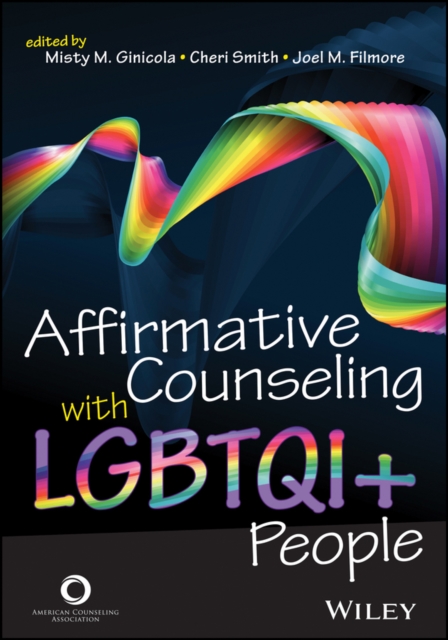
Affirmative counseling with LGBTQI+ people
“This is an excellent text for master’s and doctoral program multicultural/diversity courses. It is time that mental health professionals reach out to further understand the LGBTQI+ community, and this book, written with empathy, knowledge, and wisdom, is a strong addition to the field.” —Catherine B. Roland, EdD, LPC, NCC
President, American Counseling Association 2016–2017
“This is the logical ‘next’ book on counseling with LGBTQI+ people written by a new generation of LGBTQI+ authors and researchers. These new voices offer a fresh vision of where the LGBTQI+ community is at this point in history, and give a road map to current issues and interventions that are being used to help LGBTQI+ people.” —Mark Pope, EdD
Former President, American Counseling Association Curators’ Distinguished Professor, University of Missouri–Saint Louis
eBook

The Modern Clinician’s Guide to Working with LGBTQ+ Clients
The Modern Clinician’s Guide to Working with LGBTQ+ Clients is a ground-breaking resource for therapists working with LGBTQ+ clients whose identity expressions span all gender-, sex-, and relationship-diverse groups.
Combining the author’s extensive clinical experience with contemporary evidence-based research, the chapters of this book explore the origins and development of sexual minority groups, going beyond lesbian women and gay men to include transgender and gender nonbinary people, kink and polyamory, bisexuality and pansexuality, and those who identify as asexual or aromantic. The text also offers in-depth coverage of clinical work with transgender, gender-nonconforming, and nonbinary clients of all ages. With a wealth of therapeutic strategies and case studies, this resource helps professionals respond to this ‘Big Tent’ community in an informed and empathetic way.
Spanning sexuality, gender, relationships, and age groups, The Modern Clinician’s Guide to Working with LGBTQ+ Clients is an invaluable reference for psychotherapists in a broad range of clinical settings.
eBook

Intimate partner violence, depression, and sexual behaviour among gay, bisexual and other men who have sex with men in the PROUD trial
Background
Little is known about the prevalence and correlates of intimate partner violence (IPV) among gay, bisexual and other men who have sex with men (GBMSM) in the UK. The aim of this study was to investigate the prevalence of IPV, associations of socio-economic and psychosocial factors with IPV, and the association of IPV with depression and sexual behaviour, among GBMSM in the PROUD trial of pre-exposure prophylaxis (PrEP).
Methods
PROUD enrolled 544 HIV-negative participants in England from 2012 to 2014; participants were randomised to immediate or deferred PrEP. This analysis included 436 GBMSM who had IPV data at month-12 and/or 24. Prevalence of IPV victimization and perpetration (lifetime, and in the past year) was assessed at these time-points. Generalized estimating equations were used to investigate associations with IPV, using pooled data from both time-points.
Results
At month-12 (
N
= 410), 44.9% of men reported ever being a victim of IPV, 15.6% in the last year, and 19.5% reported ever perpetrating IPV, 7.8% in the last year. At month-24 (
N
= 333), the corresponding prevalence was 40.2 and 14.7% for lifetime and past year IPV victimization and 18.0 and 6.9% for lifetime and past year IPV perpetration. IPV prevalence did not differ by randomised arm. Men reporting internalized homophobia and sexualized drug use were more likely to report IPV. Lifetime and last year experience of IPV victimization and perpetration were strongly associated with depressive symptoms (PHQ-9 ≥ 10) (adjusted for socio-demographics: lifetime IPV victimization PR 2.57 [95% CI: 1.71, 3.86]; past year IPV victimization PR 2.93 [95% CI: 1.96, 4.40]; lifetime IPV perpetration PR 2.87 [95% CI: 1.91, 4.32]; past year IPV perpetration PR 3.47 [95% CI: 2.13, 5.64],
p
< 0.001 for all); IPV was not consistently associated with measures of condomless anal sex or high partner numbers.
Conclusions
GBMSM at high-risk of HIV who are seeking/taking PrEP may experience a high burden of IPV, which may be linked to depression. Training on awareness of and enquiry for IPV among GBMSM in sexual health clinics is recommended.
Trial registration
ClinicalTrials.gov identifier:
NCT02065986
. Registered 19 February 2014 (retrospectively registered).
Journal Article
Project ESTEEM protocol: a randomized controlled trial of an LGBTQ-affirmative treatment for young adult sexual minority men’s mental and sexual health
Background
Young gay and bisexual men disproportionately experience depression, anxiety, and substance use problems and are among the highest risk group for HIV infection in the U.S. Diverse methods locate the source of these health disparities in young gay and bisexual men’s exposure to minority stress. In fact, minority stress, psychiatric morbidity, substance use, and HIV risk fuel each other, forming a synergistic threat to young gay and bisexual men’s health. Yet no known intervention addresses minority stress to improve mental health, substance use problems, or their joint impact on HIV risk in this population. This paper describes the design of a study to test the efficacy of such an intervention, called ESTEEM (Effective Skills to Empower Effective Men), a 10-session skills-building intervention designed to reduce young gay and bisexual men’s co-occurring health risks by addressing the underlying cognitive, affective, and behavioral pathways through which minority stress impairs health.
Methods
This study, funded by the National Institute of Mental Health, is a three-arm randomized controlled trial to examine (1) the efficacy of ESTEEM compared to community mental health treatment and HIV counseling and testing and (2) whether ESTEEM works through its hypothesized cognitive, affective, and behavioral minority stress processes. Our primary outcome, measured 8 months after baseline, is condomless anal sex in the absence of PrEP or known undetectable viral load of HIV+ primary partners. Secondary outcomes include depression, anxiety, substance use, sexual compulsivity, and PrEP uptake, also measured 8 months after baseline.
Discussion
Delivering specific stand-alone treatments for specific mental, behavioral, and sexual health problems represents the current state of evidence-based practice. However, dissemination and implementation of this one treatment-one problem approach has not been ideal. A single intervention that reduces young gay and bisexual men’s depression, anxiety, substance use, and HIV risk by reducing the common minority stress pathways across these problems would represent an efficient, cost-effective alternative to currently isolated approaches, and holds great promise for reducing sexual orientation health disparities among young men.
Trial registration
Registered October 10, 2016 to ClinicalTrials.gov Identifier:
NCT02929069
.
Journal Article

Loneliness and self-rated physical health among gay, bisexual and other men who have sex with men in Vancouver, Canada
BackgroundDue to stigma and discrimination, gay, bisexual and other men who have sex with men (gbMSM) potentially carry a heightened burden of loneliness. This analysis investigates loneliness among gbMSM and its relationship with self-rated physical health, along with the mediating effect of depression.MethodsParticipants were recruited using respondent-driven sampling into the Momentum Health Study (February 2012–February 2015) with follow-up visits occurring every 6 months till February 2018. Using computer-assisted self-interviews, measures of loneliness were assessed using a 6-item Loneliness Scale for Emotional and Social Loneliness (lonely vs not lonely). Current physical health was self-assessed (poor, fair, good, very good or excellent). A multivariable generalised linear-mixed model with a logit link function was used to examine the relationship between loneliness and self-rated physical health. We further investigated the mediating effect of depressive symptomatology on this relationship via the Hospital Anxiety and Depression Scale.ResultsOf the 770 participants included, we found that 61% (n=471) experienced loneliness at baseline. Of the 674 (88%) who reported good/very good/excellent physical health, 59% (n=391) reported loneliness, compared with 87% (n=80) of those in poor/fair self-rated physical health who reported feeling lonely. After adjustment for confounding, loneliness was associated with poor self-rated physical health (adjusted OR 1.71; 95% CI 1.13 to 2.60). Depressive symptomatology was found to partially mediate this relationship.CONCLUSIONThere may be a need for the integration of social, mental and physical health programming, targeted towards gbMSM, to alleviate the degree of loneliness experienced and its co-occurrence with poor self-rated physical health.
Journal Article

Racism-related stress, health outcomes, substance use, and PrEP attitudes among Asian sexual minority men
Racial discrimination has been linked to decreased psychological well-being and physical health. Most Asian Americans in the United States reported discrimination against Asians as a major problem and that inadequate attention is given to racial inequities affecting Asians living in the US. We described the association of racism-related stress and health outcomes among Asian American sexual minority men. We hypothesized that greater racism-related stress is associated with poor general and oral health, increased substance use, and unfavorable attitudes about PrEP. We conducted a secondary analysis of data collected in 2017–2019 through the HIV Oral Self-Testing Infographic Experiment study, a pilot behavioral randomized controlled trial testing effects of an HIV self-testing infographic in 322 emerging adult ethnic and racial sexual minority men. We examined secondary data on racism-related stress and health outcomes in 62 participants using questions derived from the Behavioral Risk Factor Surveillance System, National Survey on Drug Use and Health, PrEP Familiarity and Attitudes Questionnaire, and the Asian American Racism-related Stress Inventory (AARRSI). To describe association between AARRSI scores and health outcomes, we calculated mean total AARRSI scores across categorical variables and assessed differences between groups using one-way ANOVA, and we assessed correlation between continuous variables with scores using Spearman correlation. Findings suggested that greater racism-related stress is linked to increased substance use. More research is needed to confirm these observed trends with larger, more diverse samples, explore intersectional factors such as sexual minority identity and societal discrimination against Asians, and how the current political climate has contributed to negative experiences that amplify health risks.
Journal Article

Parents’ Reproductive Concerns and Negativity Toward Their Child Disclosing a Minoritized Sexual Orientation
Parents often respond negatively when a child discloses their minoritized sexual orientation. We propose that parents’ negativity in this context may be shaped by evolutionary concerns regarding their children’s reproductive outcomes. We tested relevant hypotheses in a correlational study (Study 1) and two randomized experiments (Studies 2 and 3) that recruited parents with children under age 6 as participants. Study 1 (
N
= 386; 192 mothers and 194 fathers; 84.68% non-Hispanic White) revealed associations between parents’ concerns regarding their children’s reproductive outcomes and views toward a child disclosing a lesbian, gay, or bisexual (LGB) orientation in the future. The most negative views were reported by parents with elevated reproductive concerns and pessimistic beliefs about the possibility of reproduction for LGB individuals. Studies 2 (
N
= 327 mothers; 84.10% non-Hispanic White) and 3 (
N
= 279 fathers; 81.00% non-Hispanic White) tested whether information about reproductive assistance available to same-gender couples might promote more favorable views toward a child’s hypothetical LGB orientation disclosure relative to control information. Parents who received reproductive versus control information reported more positive attitudes toward having an LGB child and toward the LGB community. These effects were statistically mediated by their more optimistic beliefs about the possibility of LGB reproduction. Taken together, this work suggests that reproductive concerns may influence parents’ views toward their children’s sexual orientation disclosures, and alleviating these concerns may be one way to improve parents’ relationships with their sexually diverse children.
Journal Article