
Catalogue Search | MBRL


Are you sure you want to remove the book from the shelf?

{{itemTitle}}
22
result(s) for
"Shīʻah -- Customs and practices"
Sort by:

Partners of Zaynab
How do pious Shia Muslim women nurture and sustain their religious lives? How do their experiences and beliefs differ from or overlap with those of men? What do gender-based religious roles and interactions reveal about the Shia Muslim faith? In Partners of Zaynab, Diane D’Souza presents a rich ethnography of urban Shia women in India, exploring women’s devotional lives through the lens of religious narrative, sacred space, ritual performance, leadership, and iconic symbols. Religious scholars have tended to devalue women’s religious expressions, confining them to the periphery of a male-centered ritual world. This viewpoint often assumes that women’s ritual behaviors are the unsophisticated product of limited education and experience and even a less developed female nature. By illuminating vibrant female narratives within Shia religious teachings, the fascinating history of a shrine led by women, the contemporary lives of dynamic female preachers, and women’s popular prayers and rituals of petition, Partners of Zaynab demonstrates that the religious lives of women are not a flawed approximation of male-defined norms and behaviors, but a vigorous, authentic affirmation of faith within the religious mainstream. D’Souza questions the distinction between normative and popular religious behavior, arguing that such a categorization not only isolates and devalues female ritual expressions, but also weakens our understanding of religion as a whole. Partners of Zaynab offers a compelling glimpse of Muslim faith and practice and a more complete understanding of the interplay of gender within Shia Islam.
eBook

Living Shiʿ ism : instances of ritualisation among Islamist men in contemporary Iran
This book is about Iranian Islamism on grass-roots level. It provides a vivid, near-life portrait of young activist men who uphold this movement through their zealous support of revolutionary ideals and the present regime. It is based on interviews with a group of volunteers in the Iranian home guard movement known as basij during a period of four years. By focusing on beliefs and rituals of individual persons, it gives a unique picture of the shifting motifs behind Islamist engagement in today's Iran. The book contextualises the interviewed individuals within the wider framework of Iranian society and relates their stories to a discussion on ritual, emotion, embodiment and authority. It is of interest to anyone who seeks to understand the multifaceted driving forces behind Shi'ite Islamism today.
eBook

Global Dynamics of Shi'a Marriages
Muslim marriages have been the focus of considerable public debate in Europe and beyond, in Muslim-majority countries as well as in settings where Muslims are a minority. Most academic work has focused on how the majority Sunni Muslims conclude marriages. This volume, in contrast, focuses on Twelver Shi'a Muslims in Iran, Pakistan, Oman, Indonesia, Norway, and the Netherlands. The volume makes an original contribution to understanding the global dynamics of Shi'a marriage practices in a wide range of contexts--not only its geographical spread but also by providing a critical analysis of the socio-economic, religious, ethnic, and political discourses of each context. The book sheds light on new marriage forms presented through a bottom up approach focusing on the lived experiences of Shi'a Muslims negotiating a diverse range of relationships and forms of belonging.
eBook

The Martyrs of Karbala
This innovative study examines patterns of change in Shi'i symbols and rituals over the past two centuries to reveal how modernization has influenced the societal, political, and religious culture of Iran. Shi'is, who support the Prophet Mohammad's progeny as his successors in opposition to the Sunni caliphate tradition, make up 10 to 15 percent of the world's Muslim population, roughly half of whom live in Iran. Throughout the early history of the Islamic Middle East, the Sunnis have been associated with the state and the ruling elite, while Shi'is have most often represented the political opposition and have had broad appeal among the masses. Moharram symbols and rituals commemorate the Battle of Karbala in 680 CE, in which the Prophet Mohammad's grandson Hoseyn and most of his family and supporters were massacred by the troops of the Umayyad caliph Yazid.
Moharram symbols and rituals are among the most pervasive and popular aspects of Iranian culture and society. This book traces patterns of continuity and change of Moharran symbols and rituals in three aspects of Iranian life: the importance of these rituals in promoting social bonds, status, identities, and ideals; ways in which the three major successive regimes (Qujars, Pahlavis, and the Islamic Republic), have either used these rituals to promote their legitimacy, or have suppressed them because they viewed them as a potential political threat; and the uses of Moharram symbolism by opposition groups interested in overthrowing the regime.
While the patterns of government patronage have been radically discontinuous over the past two centuries, the roles of these rituals in popular society and culture have been relatively continuous or have evolved independently of the state. The political uses of modern-day rituals and the enduring symbolism of the Karbala narratives continue today.
eBook

Hosay Trinidad
The multivocalic rite known as Hosay in the Caribbean developed out of earlier practices originating in Iraq and Iran which diffused to Trinidad by way of South Asian indentured laborers brought to the Caribbean by the British from the mid-1800s to the early decades of the twentieth century. The rituals are important as a Shi'i religious observance, but they also are emblems of ethnic and national identity for Indo-Trinidadians. Frank Korom investigates the essential role of Hosay in the performance of multiple identities by historically and ethnographically situating the event in Middle Eastern, South Asian, and Caribbean contexts.Hosay Trinidad: Muharram Performances in an Indo-Caribbean Diasporais the first detailed historical and ethnographic study of Islamic muharram rituals performed on the island of Trinidad. Korom's central argument is that the annual rite is a polyphonic discourse that is best understood by employing multiple levels of interpretation. On the symbolic level the observance provides esoteric meaning to a small community of Indo-Trinidadian Muslims. On another level, it is perceived to be representative of \"transplanted\" Indian culture as a whole. Finally, the rituals are becoming emblematic of Trinidad's polyethnic population. Addressing strategies used to resist integration and assimilation,Hosay Trinidadis engaged with theories concerning the notion of cultural creolization in the Caribbean as well as in the general study of global diasporas.
eBook

Gender, Sainthood, and Everyday Practice in South Asian Shi’ism
In this study of devotional hagiographical texts and contemporary ritual performances of the Shi'a of Hyderabad, India, Karen Ruffle demonstrates how traditions of sainthood and localized cultural values shape gender roles. Ruffle focuses on the annual mourning assemblies held on 7 Muharram to commemorate the battlefield wedding of Fatimah Kubra and her warrior-bridegroom Qasem, who was martyred in 680 C.E. at the battle of Karbala, Iraq, before their marriage was consummated.Ruffle argues that hagiography, an important textual tradition in Islam, plays a dynamic role in constructing the memory, piety, and social sensibilities of a Shi'i community. Through the Hyderabadi rituals that idealize and venerate Qasem, Fatimah Kubra, and the other heroes of Karbala, a distinct form of sainthood is produced. These saints, Ruffle explains, serve as socioethical role models and religious paragons whom Shi'i Muslims aim to imitate in their everyday lives, improving their personal religious practice and social selves. On a broader community level, Ruffle observes, such practices help generate and reinforce group identity, shared ethics, and gendered sensibilities. By putting gender and everyday practice at the center of her study, Ruffle challenges Shi'i patriarchal narratives that present only men as saints and brings to light typically overlooked women's religious practices.
eBook
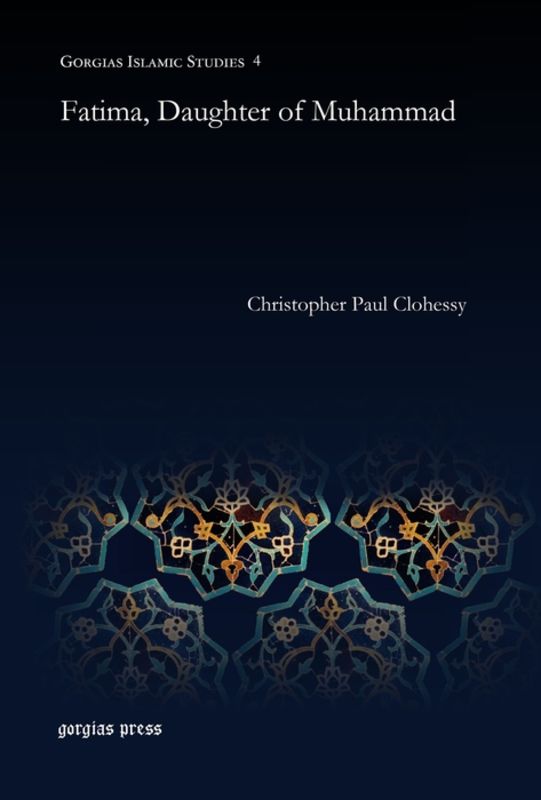
Fatima, Daughter of Muhammad
The only child of Muhammad to survive him, Fatima was from early times taken up by Shî'a Islam, for whose adherents she is the virgin mother, the heavenly intercessor with untold power before God's throne, and the grieving mother of al-Husayn, the Shi'a's most important martyr. During her life she was impoverished and weak, neglected, marginalized, and divested of justice: but her reward in heaven comprises incalculable riches, all those in heaven will bow their heads to her, and her company will be the angels and the friends of God. Here, for the first time, her story is told.
eBook

The martyrs of Karbala : Shiʿi symbols and rituals in modern Iran
No detailed description available for \"The Martyrs of Karbala\".
eBook


Reliving Karbala : martyrdom in South Asian memory
In 680 C.E., a small band of the Prophet Muhammads family and their followers, led by his grandson, Husain, rose up in a rebellion against the ruling caliph, Yazid. The family and its supporters, hopelessly outnumbered, were massacred at Karbala, in modern-day Iraq. The story of Karbala is the cornerstone of institutionalized devotion and mourning for millions of Shii Muslims. Apart from its appeal to the Shii community, invocations of Karbala have also come to govern mystical and reformist discourses in the larger Muslim world. Indeed, Karbala even serves as the archetypal resistance and devotional symbol for many non-Muslims. Until now, though, little scholarly attention has been given to the widespread and varied employment of the Karbala event. In Reliving Karbala, Syed Akbar Hyder examines the myriad ways that the Karbala symbol has provided inspiration in South Asia, home to the worlds largest Muslim population. Rather than a unified reading of Islam, Hyder reveals multiple, sometimes conflicting, understandings of the meaning of Islamic religious symbols like Karbala. He ventures beyond traditional, scriptural interpretations to discuss the ways in which millions of very human adherents express and practice their beliefs. By using a panoramic array of sources, including musical performances, interviews, nationalist drama, and other literary forms, Hyder traces the evolution of this story from its earliest historical origins to the beginning of the twenty-first century. Today, Karbala serves as a celebration of martyrdom, a source of personal and communal identity, and even a tool for political protest and struggle. Hyder explores how issues related to gender, genre, popular culture, class, and migrancy bear on the cultivation of religious symbols. He assesses the manner in which religious language and identities are negotiated across
contexts and continents. At a time when words like martyrdom, jihad, and Shiism are being used and misused for political reasons, this book provides much-needed scholarly redress. Through his multifaceted examination of this seminal event in Islamic history, Hyder offers an original, complex, and nuanced view of religious symbols.
eBook