
Catalogue Search | MBRL


Are you sure you want to remove the book from the shelf?

{{itemTitle}}
52
result(s) for
"Shīʻah -- Doctrines"
Sort by:


Twelver Shiism : unity and diversity in the life of Islam, 632 to 1722
Charts the history of Twelver Shi`ism and the processes underlying the development of its key distinctive doctrines and practices, which ensured its survival in the face of repeated internal and external challenges.
eBook


Partners of Zaynab
How do pious Shia Muslim women nurture and sustain their religious lives? How do their experiences and beliefs differ from or overlap with those of men? What do gender-based religious roles and interactions reveal about the Shia Muslim faith? In Partners of Zaynab, Diane D’Souza presents a rich ethnography of urban Shia women in India, exploring women’s devotional lives through the lens of religious narrative, sacred space, ritual performance, leadership, and iconic symbols. Religious scholars have tended to devalue women’s religious expressions, confining them to the periphery of a male-centered ritual world. This viewpoint often assumes that women’s ritual behaviors are the unsophisticated product of limited education and experience and even a less developed female nature. By illuminating vibrant female narratives within Shia religious teachings, the fascinating history of a shrine led by women, the contemporary lives of dynamic female preachers, and women’s popular prayers and rituals of petition, Partners of Zaynab demonstrates that the religious lives of women are not a flawed approximation of male-defined norms and behaviors, but a vigorous, authentic affirmation of faith within the religious mainstream. D’Souza questions the distinction between normative and popular religious behavior, arguing that such a categorization not only isolates and devalues female ritual expressions, but also weakens our understanding of religion as a whole. Partners of Zaynab offers a compelling glimpse of Muslim faith and practice and a more complete understanding of the interplay of gender within Shia Islam.
eBook

Moral rationalism and Sharīʻa : independent rationality in modern Shīʻī uṣūl al-fiqh
\"Moral rationalism and Sharīʻa is the first attempt at outlining the scope for a theological reading of Sharīʻa, based on a critical examination of why the ʻadliyā theological ethics hasn't significantly impacted Shīʻī readings of Shariʻa and how these resources may come to do so.\"-- Provided by publisher.
Book
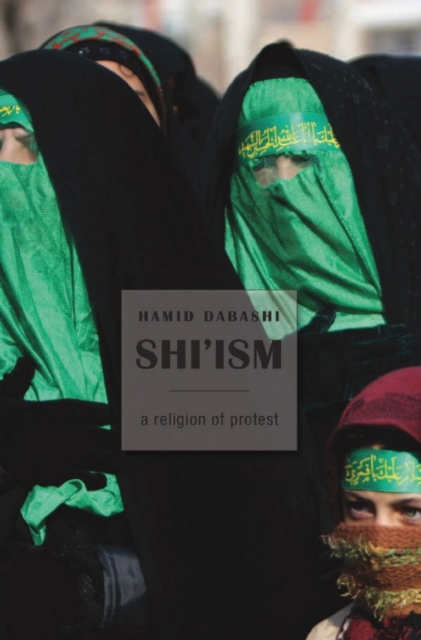
Shi’ism
For a Western world anxious to understand Islam and, in particular, Shi’ism, this book arrives with urgently needed information and critical analysis. Hamid Dabashi exposes the soul of Shi’ism as a religion of protest—successful only when in a warring position, and losing its legitimacy when in power.
eBook

Chosen among women : Mary and Fatima in medieval Christianity and Shi'ite Islam
Chosen among Women: Mary and Fatima in Medieval Christianity and Shi`ite Islam combines historical analysis with the tools of gender studies and religious studies to compare the roles of the Virgin Mary in medieval Christianity with those of Fatima, daughter of the prophet Muhammad, in Shi`ite Islam. The book explores the proliferation of Marian imagery in Late Antiquity through the Church fathers and popular hagiography. It examines how Merovingian authors assimilated powerful queens and abbesses to a Marian prototype to articulate their political significance and, at the same time, censure holy women's public charisma. Mary Thurlkill focuses as well on the importance of Fatima in the evolution of Shi`ite identity throughout the Middle East. She examines how scholars such as Muhammad Baqir al-Majlisi advertised Fatima as a symbol of the Shi`ite holy family and its glorified status in paradise, while simultaneously binding her as a mother to the domestic sphere and patriarchal authority. This important comparative look at feminine ideals in both Shi`ite Islam and medieval Christianity is of relevance and value in the modern world. It will be welcomed by scholars and students of Islam, comparative religion, medieval Christianity, and gender studies.
eBook
What is Shi'i Islam?
For the public at large Shi'ism often implies a host of confused representations, suggesting more often than not obscurantism, intolerance, political violence and other ignominies running hot or cold in response to world events. In fact for many people, Shi'ism stands for \"radical Islam\", or - worse - \"Islamic terrorism\". In some respects, nothing is more familiar than Shi'ism, and yet nothing is more misunderstood. For some twenty years the media have increased their coverage of the phenomenon. Never, or only rarely, do they formulate the question we ask here: what is Shi'ism? What is this belief that inspires millions of people dispersed throughout the world?
This book provides a broad-based introduction to Shi'i Islam. It examines what the Shi'i believe, how they see themselves and how they view the world. It includes a thorough examination of doctrine, philosophy, the Shi'i approach to the Qur'an and the historical evolution of Shi'ism as a branch of Islam. Too often, and too quickly, the conclusion is drawn that Shi'ism is a marginal heretical sect, fundamentally alien to the deeper truth of the great religion of Islam, thrust by historical accident onto the political stage. Shi'ism either speaks the truth of Islam, meaning that it is a truth of terror, or it is entirely foreign to Islam and, therefore, merits outright rejection, as Islamic fundamentalists and some individuals repeatedly claim. This book intends to explain why such common misunderstandings of Shi'ism have taken root.
Written in an accessible format and providing a thorough overview of Shi'ism, this book will be an essential text for students and scholars of Islamic Studies or Iranian Studies.
eBook

Visualizing Belief and Piety in Iranian Shiism
The representation of prophets and saints in Islam is erroneously considered nonexistent by many scholars of Islam, Muslims, and the general public. The issue is often dealt with superficially without attention to its deep roots in piety and religiosity. Visualizing Belief and Piety in Iranian Shiism offers new understanding of Islamic iconography and Muslim perspectives on the use of imageries in ritual contexts and devotional life. Combining iconographic and ethnographic approaches, Ingvild Flaskerud introduces and analyzes imageries (tile-paintings, posters and wall-hangings), ritual contexts and interviews with male and female local viewers to discuss the representation, reception and function of imageries in contemporary Iranian Shia environments. This book presents the argument that images and decorative programmes have stimulating qualities to mentally evoke the saints in the minds of devotees and inspire their recollection, transforming emotions and stimulating cultic behaviours. Visualization and seeing are significant to the dissemination of religious knowledge, the understanding of spiritual and ethical values, the promotion of personal piety, and functions as modes of venerating God and the saints.
eBook
