
Catalogue Search | MBRL


Are you sure you want to remove the book from the shelf?

{{itemTitle}}
10,297
result(s) for
"Shīʻah."
Sort by:


Muslim Sectarianism versus the De-escalation of Sectarianism in Malaysia
Malaysia was initially lauded for its ability to combat the first few waves of COVID-19 but infection spikes since the Sabah state elections in September 2020 and subsequent exponential increases in both infections and deaths in 2021 left the nation reeling. Nationwide vaccination is seen as the only way out of the pandemic.Malaysia's COVID-19 communication strategy was hampered by political machinations and myriad changes in government. The need to shore up favour among the electorate resulted in inconsistent messaging and regular U-turns whenever there was public outrage at arbitrary restrictions. This resulted in confusion on the ground, preventing successful COVID-19 management and containment.Under the current regime, claims to more accessible data have been disputed and doubts have surfaced over data transparency and accuracy. There is an urgent need to ensure convincingly reliable information, as well as to use more engaging messaging on more suitable media.A holistic and effective COVID-19 communication strategy should adopt principles from several communication approaches, resulting in messages that are clear, simple and accessible as well as consistent and credible. Audiences should be segmented so that messages can be better tailored to their needs, with adequate information on the necessary steps to prevent infection and spread. Fake news, misinformation, and disinformation should be constantly tackled and debunked.The Gerai OA and OA Lindungi Komuniti Facebook pages are outstanding examples of grassroots information dissemination channels that effectively provide fact-checked, coherent and accessible information to local communities in languages and on media best-suited to their audiences.
eBook


Global Dynamics of Shi'a Marriages
Muslim marriages have been the focus of considerable public debate in Europe and beyond, in Muslim-majority countries as well as in settings where Muslims are a minority. Most academic work has focused on how the majority Sunni Muslims conclude marriages. This volume, in contrast, focuses on Twelver Shi'a Muslims in Iran, Pakistan, Oman, Indonesia, Norway, and the Netherlands. The volume makes an original contribution to understanding the global dynamics of Shi'a marriage practices in a wide range of contexts--not only its geographical spread but also by providing a critical analysis of the socio-economic, religious, ethnic, and political discourses of each context. The book sheds light on new marriage forms presented through a bottom up approach focusing on the lived experiences of Shi'a Muslims negotiating a diverse range of relationships and forms of belonging.
eBook
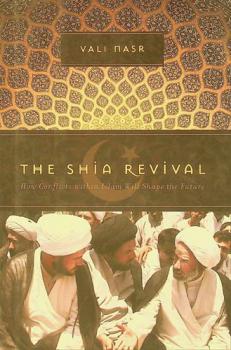
The Shia revival : how conflicts within Islam will shape the future
Considers the ways in which struggles between the Shia and Sunni in the Middle East will affect the region's future, offering insight into the power conflicts between Iran and Saudi Arabia for political and spiritual leadership of the Muslim world.
Book

The martyrs of Karbala : Shiʿi symbols and rituals in modern Iran
No detailed description available for \"The Martyrs of Karbala\".
eBook


In a Pure Muslim Land
Centering Pakistan in a story of transnational Islam stretching from South Asia to the Middle East, Simon Wolfgang Fuchs offers the first in-depth ethnographic history of the intellectual production of Shi'is and their religious competitors in this \"Land of the Pure.\" The notion of Pakistan as the pinnacle of modern global Muslim aspiration forms a crucial component of this story. It has empowered Shi'is, who form about twenty percent of the country's population, to advance alternative conceptions of their religious hierarchy while claiming the support of towering grand ayatollahs in Iran and Iraq. Fuchs shows how popular Pakistani preachers and scholars have boldly tapped into the esoteric potential of Shi'ism, occupying a creative and at times disruptive role as brokers, translators, and self-confident pioneers of contemporary Islamic thought. They have indigenized the Iranian Revolution and formulated their own ideas for fulfilling the original promise of Pakistan. Challenging typical views of Pakistan as a mere Shi'i backwater, Fuchs argues that its complex religious landscape represents how a local, South Asian Islam may open up space for new intellectual contributions to global Islam. Yet religious ideology has also turned Pakistan into a deadly battlefield: sectarian groups since the 1980s have been bent on excluding Shi'is as harmful to their own vision of an exemplary Islamic state.
eBook

A concise history of Sunnis & Shiʻis
\"The 1400-year-old schism between Sunnis and Shi'is is currently reflected in the destructive struggle for hegemony between Saudi Arabia and Iran -- with no apparent end in sight. But how did this conflict begin, and why is it now the focus of so much attention? John McHugo charts the history of Islam from the lifetime of the Prophet Muhammad to the present day. He describes the conflicts that raged over the succession to the Prophet, how Sunnism and Shi'ism evolved as different sects during the Abbasid caliphate, and how the rivalry between the empires of the Sunni Ottomans and Shi'i Safavids ensured that the split would continue into the modern age. In recent decades, this centuries old divide has acquired a new toxicity resulting in violence across the Arab and Muslim world\"--Page 4 of cover.
BOOK

Hosay Trinidad
The multivocalic rite known as Hosay in the Caribbean developed out of earlier practices originating in Iraq and Iran which diffused to Trinidad by way of South Asian indentured laborers brought to the Caribbean by the British from the mid-1800s to the early decades of the twentieth century. The rituals are important as a Shi'i religious observance, but they also are emblems of ethnic and national identity for Indo-Trinidadians. Frank Korom investigates the essential role of Hosay in the performance of multiple identities by historically and ethnographically situating the event in Middle Eastern, South Asian, and Caribbean contexts.Hosay Trinidad: Muharram Performances in an Indo-Caribbean Diasporais the first detailed historical and ethnographic study of Islamic muharram rituals performed on the island of Trinidad. Korom's central argument is that the annual rite is a polyphonic discourse that is best understood by employing multiple levels of interpretation. On the symbolic level the observance provides esoteric meaning to a small community of Indo-Trinidadian Muslims. On another level, it is perceived to be representative of \"transplanted\" Indian culture as a whole. Finally, the rituals are becoming emblematic of Trinidad's polyethnic population. Addressing strategies used to resist integration and assimilation,Hosay Trinidadis engaged with theories concerning the notion of cultural creolization in the Caribbean as well as in the general study of global diasporas.
eBook