
Catalogue Search | MBRL


Are you sure you want to remove the book from the shelf?

{{itemTitle}}
3
result(s) for
"Shīrāz (Iran) -- Intellectual life"
Sort by:

City of Knowledge in Twentieth Century Iran
This book presents a cultural history of modern Iran from the point of view of Shiraz, a city famous for its poetry and its traditions of scholarship. Exploring the relationship among history, poetry and politics, the book analyses how Shiraz came to be defined as the country's cultural capital, and explains how Iranians have used the concept of culture as a way of thinking about themselves, their past and their relationship with the rest of the world.
Weaving together a theoretical approach with extensive ethnographic research, the book suggests a model to integrate broad concerns with a nuanced analysis of Iran's cultural traditions and practices. The author's interdisciplinary approach sheds light on how contemporary Iranians relate to classical Persian poetry; on the relationship between expressive forms and the political imagination; and on the different ways teachers, professors, cultural managers, poets and scholars think and work. He describes how history and poetry are the two dominant modes to talk about the past, present and future of the town and demonstrates that the question of knowledge is crucial to an understanding of the political and existential dimensions of life in Iran today.
This book will be a major contribution to the current effort to move away from nationalist views of Iranian history and culture, and as such will be of great interest to scholars of cultural anthropology, history, Middle Eastern studies and Iranian studies.
eBook

Shiraz in the age of Hafez : the glory of a medieval Persian city
The fourteenth-century Persian city of Shiraz was home to Shams al-Din Mohammad Hafez Shirazi, a classical poet who remains broadly popular today in modern Iran and among all lovers of great verse traditions. As John Limbert notes, Hafez’s poetry is inseparable from the Iranian spirit -a reflection of Iranians’ intellectual and emotional responses to events.
eBook
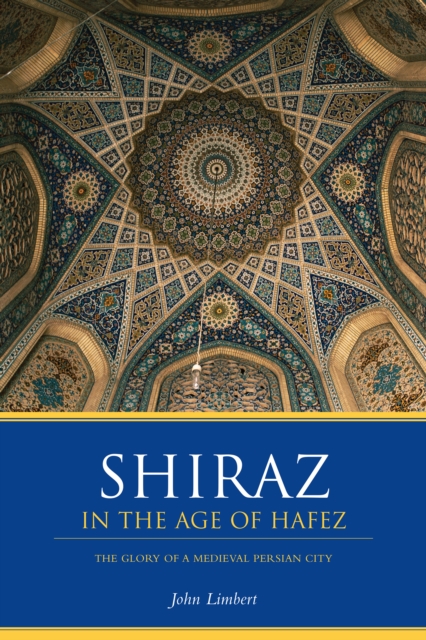
Shiraz in the Age of Hafez
In the fourteenth-century Persian city of Shiraz, poets composed, scholars studied, mystics sought hidden truths, ascetics prayed and fasted, drunkards brawled, and princes and their courtiers played deadly games of power. This was the world of Shams al-Din Mohammad Hafez Shirazi, a classical poet who remains broadly popular today in his native Shiraz and in modern Iran as a whole, and among all lovers of great verse traditions.
As John Limbert notes, Hafez's poetry is inseparable from the Iranian spirit--a reflection of Iranians intellectual and emotional responses to events. But if Hafez s endurance derives from the considerable charm of his work, it also arises from his sure grounding in the life of his day, from a setting so deftly explored by his verse that his depictions of it retain a timeless relevance.
To fully comprehend and enjoy Hafez, and thus to understand a root force in modern Iranian consciousness, we must know something of the city in which he lived and wrote. In this book, Limbert provides not only a rich context for Hafez s poetry but also a comprehensive perspective on a fascinating place in a dynamic time. His portrait of this elegant, witty poet and his marvelous city will be as valuable to medievalists, students of the Middle East, and specialists in urban studies as it will be to connoisseurs of world literature.
eBook