
Catalogue Search | MBRL


Are you sure you want to remove the book from the shelf?

{{itemTitle}}
1,306
result(s) for
"Shakespeare, William, 1564-1616 -- Criticism and interpretation"
Sort by:


Shakespeare and the Middle Ages
Shakespeare and the Middle Ages brings together a distinguished, multidisciplinary group of scholars to rethink the medieval origins of modernity. Shakespeare provides them with the perfect focus, since his works turn back to the Middle Ages as decisively as they anticipate the modern world: almost all of the histories depict events during the Hundred Years War, and King John glances even further back to the thirteenth-century Angevins; several of the comedies, tragedies, and romances rest on medieval sources; and there are important medieval antecedents for some of the poetic modes in which he worked as well. Several of the essays reread Shakespeare by recovering aspects of his works that are derived from medieval traditions and whose significance has been obscured by the desire to read Shakespeare as the origin of the modern. These essays, taken cumulatively, challenge the idea of any decisive break between the medieval period and early modernity by demonstrating continuities of form and imagination that clearly bridge the gap. Other essays explore the ways in which Shakespeare and his contemporaries constructed or imagined relationships between past and present. Attending to the way these writers thought about their relationship to the past makes it possible, in turn, to read against the grain of our own teleological investment in the idea of early modernity. A third group of essays reads texts by Shakespeare and his contemporaries as documents participating in social-cultural transformation from within. This means attending to the way they themselves grapples with the problem of change, attempting to respond to new conditions and pressures while holding onto customary habits of thought and imagination. Taken together, the essays in this volume revisit the very idea of transition in a refreshingly non-teleological way.
eBook

Shakespeare in our time : a Shakespeare Association of America collection
\"This volume marks the 400th anniversary of Shakespeare's death by reflecting on the unrivalled work of the Shakespeare Association of America and offering a unique collection of leading Shakespeare scholars outlining key developments in Shakespeare studies over the last two decades. These essays are complemented by younger scholars who respond and look forward to new fields of study and debate. As such the book offers a \"state of the nation\" look at Shakespeare criticism, covering all the key areas of research and study including gender, text, performance, the body, history, religion and biography. This is a must-read, comprehensive introduction to the key critical ideas surrounding Shakespeare's work and a stimulating exploration of where Shakespeare studies will go next.\"--Publisher's website.
Book

What You Will
In What You Will Kathryn Schwarz traces a curious pattern in sixteenth- and seventeenth-century representations of femininity: women pose a threat when they conform too willingly to social conventions. Exemplary texts describe chaste women who kill their rapists, constant wives who make marriage a debilitating obligation, and devoted mothers who destroy the fitness of children. These cautionary tales draw attention to the more ordinary, necessary choices that take prescribed roles as a mandate for purposeful acts. For early modern narratives, writes Schwarz, intentional compliance poses a complex problem: it sustains crucial tenets of order and continuity but unsettles the hierarchical premises from which those tenets derive. Feminine will appears as a volatile force within heterosociality, lending contingent security to a system that depends less on enforced obedience than on contract and consent.The book begins with an examination of early modern disciplines that treat will as an aspect of the individual psyche, of rhetoric, and of sexual and gendered identities. Drawing on these readings, Schwarz turns to Shakespearean works in which feminine characters articulate and manage the values that define them, revealing the vital force of conventional acts. Her analysis engages with recent research that has challenged the premise of feminine subordination, both by identifying alternative positions and by illuminating resistance within repressive structures. Schwarz builds on this awareness of disparate modes and sites of action in formulating the book's central questions: With what agency, and to what effect, do feminine subjects inhabit the conventions of femininity? In what sense are authenticity and masquerade inseparable aspects of social performance? How might coercive systems produce effective actors? What possibilities emerge from the paradox of prescribed choice? Her conclusions have implications not only for early modern scholarship but also for histories of gender and sexuality, queer studies, and theories of the relationship between subjectivity and ideological constraint.
eBook


Shakespeare as a Way of Life: Skeptical Practice and the Politics of Weakness
Shakespeare as a Way of Life shows how reading Shakespeare helps us to live with epistemological weakness and even to practice this weakness, to make it a way of life. In a series of close readings, Kuzner shows how Hamlet, Lucrece, Othello, The Winter's Tale, The Tempest, and Timon of Athens, impel us to grapple with basic uncertainties: how we can be free, whether the world is abundant, whether we have met the demands of love and social life. To Kuzner, Shakespeare's skepticism doesn't have the enabling potential of Keats's heroic \"negativity capability,\" but neither is that skepticism the corrosive disease that necessarily issues in tragedy. While sensitive to both possibilities, Kuzner offers a way to keep negative capability negative while making skepticism livable. Rather than light the way to empowered, liberal subjectivity, Shakespeare's works demand lasting disorientation, demand that we practice the impractical so as to reshape the frames by which we view and negotiate the world. The act of reading Shakespeare cannot yield the practical value that cognitive scientists and literary critics attribute to it. His work neither clarifies our sense of ourselves, of others, or of the world; nor heartens us about the human capacity for insight and invention; nor sharpens our ability to appreciate and adjudicate complex problems of ethics and politics. Shakespeare's plays, rather, yield cognitive discomforts, and it is just these discomforts that make them worthwhile.
eBook

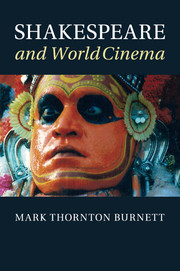
Shakespeare and World Cinema
Shakespeare and World Cinema radically re-imagines the field of Shakespeare on film, drawing on a wealth of examples from Africa, the Arctic, Brazil, China, France, India, Malaysia, Mexico, Singapore, Tibet, Venezuela, Yemen and elsewhere. Mark Thornton Burnett explores the contemporary significance of Shakespeare cinema outside the Hollywood mainstream for the first time, arguing that these adaptations are an essential part of the story of Shakespearean performance and reception. The book reveals in unique detail the scope, inventiveness and vitality of over seventy films that have undeservedly slipped beneath the radar of critical attention and also discusses regional Shakespeare cinema in Latin America and Asia. Utilising original interviews with filmmakers throughout, it introduces new auteurs, analyses multiple adaptations of plays such as Macbeth and Romeo and Juliet and pioneers fresh methodologies for understanding the role that Shakespeare continues to play in the international marketplace.
eBook

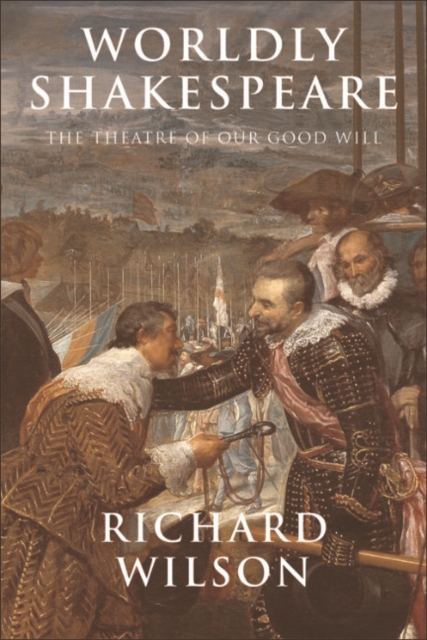
Worldly Shakespeare : the theatre of our good will
A comprehensive rereading of Shakespeare's plays in light of current debates about free speech and toleration.
eBook