
Catalogue Search | MBRL


Are you sure you want to remove the book from the shelf?

{{itemTitle}}
6
result(s) for
"Shakespeare, William, 1564-1616 -- Knowledge -- Middle Ages"
Sort by:


Shakespeare and the Middle Ages
Shakespeare and the Middle Ages brings together a distinguished, multidisciplinary group of scholars to rethink the medieval origins of modernity. Shakespeare provides them with the perfect focus, since his works turn back to the Middle Ages as decisively as they anticipate the modern world: almost all of the histories depict events during the Hundred Years War, and King John glances even further back to the thirteenth-century Angevins; several of the comedies, tragedies, and romances rest on medieval sources; and there are important medieval antecedents for some of the poetic modes in which he worked as well. Several of the essays reread Shakespeare by recovering aspects of his works that are derived from medieval traditions and whose significance has been obscured by the desire to read Shakespeare as the origin of the modern. These essays, taken cumulatively, challenge the idea of any decisive break between the medieval period and early modernity by demonstrating continuities of form and imagination that clearly bridge the gap. Other essays explore the ways in which Shakespeare and his contemporaries constructed or imagined relationships between past and present. Attending to the way these writers thought about their relationship to the past makes it possible, in turn, to read against the grain of our own teleological investment in the idea of early modernity. A third group of essays reads texts by Shakespeare and his contemporaries as documents participating in social-cultural transformation from within. This means attending to the way they themselves grapples with the problem of change, attempting to respond to new conditions and pressures while holding onto customary habits of thought and imagination. Taken together, the essays in this volume revisit the very idea of transition in a refreshingly non-teleological way.
eBook

Shakespeare and the medieval world
This text provides a panoramic overview of the influence of medieval culture on Shakespeare's plays and poems that opens up new vistas within his work uncovering the richness of his inheritance.
Book
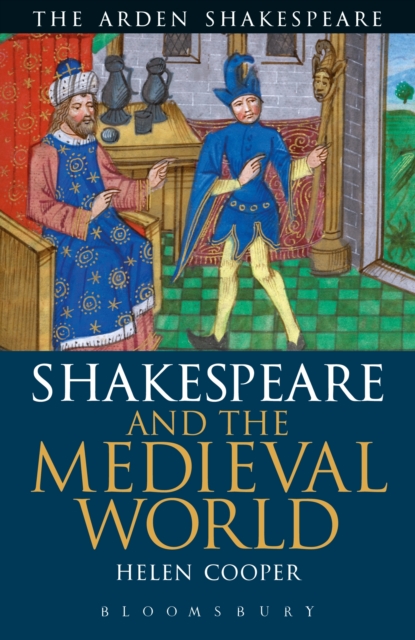
Shakespeare and the medieval world
A unique study examining the influence of medieval culture, thinking and drama on Shakespeare's work, looking at his use of sources and the ways in which the traditions of medieval drama permeate his plays.
eBook

Medieval Shakespeare : pasts and presents
\"For many, Shakespeare represents the advent of modernity. It is easy to forget that he was in fact a writer deeply embedded in the Middle Ages, who inherited many of his shaping ideas and assumptions from the medieval past. This collection brings together essays by internationally renowned scholars of medieval and early modern literature, the history of the book and theatre history to present new perspectives on Shakespeare and his medieval heritage. Separated into four parts, the collection explores Shakespeare and his work in the context of the Middle Ages, medieval books and language, the British past, and medieval conceptions of drama and theatricality, together showing Shakespeare's work as rooted in late medieval history and culture. Insisting upon Shakespeare's complexity and medieval multiplicity, Medieval Shakespeare gives readers the opportunity to appreciate both Shakespeare and his period within the traditions that fostered and surrounded him\"-- Provided by publisher.
Book

Shakespeare and Renaissance Europe
This collection of essays explores the diverse ways in which Shakespeare and his contemporaries experienced and imagined Europe. The book charts the aspects of European politics and culture which interested Renaissance travellers, thus mapping the context within which Shakespeare's plays with European settings would have been received. Chapters cover the politics of continental Europe, the representation of foreigners on the English stage, the experiences of English travellers abroad, Shakespeare's reading of modern European literature, the influence of Italian comedy, his presentation of Moors from Europe's southern frontier, and his translation of Europe into settings for his plays.
eBook