
Catalogue Search | MBRL


Are you sure you want to remove the book from the shelf?

{{itemTitle}}
1,026
result(s) for
"Shakespeare, William, 1564-1616. Adaptations."
Sort by:

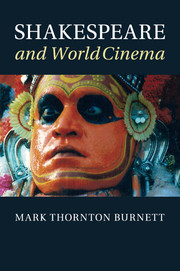
Shakespeare and World Cinema
Shakespeare and World Cinema radically re-imagines the field of Shakespeare on film, drawing on a wealth of examples from Africa, the Arctic, Brazil, China, France, India, Malaysia, Mexico, Singapore, Tibet, Venezuela, Yemen and elsewhere. Mark Thornton Burnett explores the contemporary significance of Shakespeare cinema outside the Hollywood mainstream for the first time, arguing that these adaptations are an essential part of the story of Shakespearean performance and reception. The book reveals in unique detail the scope, inventiveness and vitality of over seventy films that have undeservedly slipped beneath the radar of critical attention and also discusses regional Shakespeare cinema in Latin America and Asia. Utilising original interviews with filmmakers throughout, it introduces new auteurs, analyses multiple adaptations of plays such as Macbeth and Romeo and Juliet and pioneers fresh methodologies for understanding the role that Shakespeare continues to play in the international marketplace.
eBook


Shakespeare's cinema of love
This engaging and stimulating book argues that Shakespeare's plays
significantly influenced movie genres in the twentieth century,
particularly in films concerning love in the classic Hollywood
period. Shakespeare's 'green world' has a close functional
equivalent in 'tinseltown' and on 'the silver screen', as well as
in hybrid genres in Bollywood cinema. Meanwhile, Romeo and
Juliet continues to be an enduring source for romantic tragedy
on screen. The nature of generic indebtedness has not gained
recognition because it is elusive and not always easy to recognise.
The book traces generic links between Shakespeare's comedies of
love and screen genres such as romantic comedy, 'screwball' comedy
and musicals, as well as clarifying the use of common conventions
defining the genres, such as mistaken identity, 'errors', disguise
and 'shrew-taming'. Speculative, challenging and entertaining, the
book will appeal to those interested in Shakespeare, movies and the
representation of love in narratives.
eBook

King Lear
\"This introduction provides a broad overview of Lear on screen and offers some critical contexts for the chapters in this volume, highlighting their original contributions to the field. The volume comprises four sections. The first section, 'Surviving Lear', revisits the canon by offering new perspectives on productions that remain landmarks of screen history, continuing, through their afterlives in video and online archives, to influence more recent adaptations and appropriations, and invite new scholarly perspectives. The second section, 'Lear en abyme', considers the metatheatrical reframing of Lear generated through intersections of theater, screen and forms of 'liveness'. The chapters in the third section, 'The Genres of Lear', focus on what happens to Lear when Shakespeare's tragedy intersects with the codes of various filmic genres such as comedy, the Western or the road movie. The chapters of the final section, 'Lear on the loose', focus on the migration and appropriation processes that Lear has gone through and explore cases where Lear has wandered from the zone of adaptation into freer retellings and citations. Loosened from its moorings to the hypotext, Lear moves into new cultural contexts and geographical locations, creating new perspectives that nevertheless maintain dialogues with Shakespeare's text\"-- Provided by publisher.
Book

Shakespeare and the Victorians
Adrian Poole's major new study is the first to present a fully comprehensive view of what Shakespeare meant to the Victorian period as a whole. He examines the Victorian's obsession with Shakespeare, his impact upon the era's consciousness, and the expression of this in their drama, novels and poetry. The book features detailed discussion of the interpretations and applications of Shakespeare by major figures such as Dickens and Hardy, Tennyson and Browning, as well as those less well-known.
eBook

Shakespeare and East Asia
Structured around modes in which one might encounter Asian-themed performances and adaptations, Shakespeare and East Asia identifies four themes that distinguish post-1950s East Asian cinemas and theatres from works in other parts of the world: Japanese formalistic innovations in sound and spectacle; reparative adaptations from China, Taiwan, and Hong Kong; the politics of gender and reception of films and touring productions in South Korea and the UK; and multilingual, diaspora works in Singapore and the UK. These adaptations break new ground in sound and spectacle; they serve as a vehicle for artistic and political remediation or, in some cases, the critique of the myth of reparative interpretations of literature; they provide a forum where diasporic artists and audiences can grapple with contemporary issues; and, through international circulation, they are reshaping debates about the relationship between East Asia and Europe.0Bringing film and theatre studies together, this book sheds new light on the two major genres in a comparative context and reveals deep structural and narratological connections among Asian and Anglophone performances. These adaptations are products of metacinematic and metatheatrical operations, contestations among genres for primacy, or experimentations with features of both film and theatre.
BOOK

Shakespeare in Canada
Is there a distinctly Canadian Shakespeare? What is the status and function of Shakespeare in various locations within the nation: at Stratford, on CBC radio, in regional and university theatres, in Canadian drama and popular culture? Shakespeare in Canada brings insights from a little explored but extensive archive to contemporary debates about the cultural uses of Shakespeare and what it means to be Canadian.
Canada's long history of Shakespeare productions and reception, including adaptations, literary reworkings, and parodies, is analysed and contextualized within the four sections of the book. A timely addition to the growing field that studies the transnational reach of Shakespeare across cultures, this collection examines the political and cultural agendas invoked not only by Shakespeare's plays, but also by his very name. In part a historical and regional survey of Shakespeare in performance, adaptation, and criticism, this is the first work to engage Shakespeare with distinctly Canadian debates addressing nationalism, separatism, cultural appropriation, cultural nationalism, feminism, and postcolonialism.
eBook


Marketing the bard : Shakespeare in performance and print, 1660-1740
To mid-seventeenth-century theatergoers, William Shakespeare was just another dramatist. Yet barely a century later, he was England's most popular playwright and a household name. In this intriguing study, Don-John Dugas takes readers inside London's theaters and print shops to show how the practices of these intersecting enterprises helped transform Shakespeare from a run-of-the-mill author into the most performed playwright of all time-persuasively demonstrating that by the 1730s it was commerce, not criticism, that was the principal force driving Shakespeare's cultural dominance. This book is sure to please anyone interested in theater history, the history of the book, the origins of copyright, and Shakespeare himself.
eBook