
Catalogue Search | MBRL


Are you sure you want to remove the book from the shelf?

{{itemTitle}}
22
result(s) for
"Shakespeare 2018"
Sort by:

Shakespeare's cinema of love
This engaging and stimulating book argues that Shakespeare's plays
significantly influenced movie genres in the twentieth century,
particularly in films concerning love in the classic Hollywood
period. Shakespeare's 'green world' has a close functional
equivalent in 'tinseltown' and on 'the silver screen', as well as
in hybrid genres in Bollywood cinema. Meanwhile, Romeo and
Juliet continues to be an enduring source for romantic tragedy
on screen. The nature of generic indebtedness has not gained
recognition because it is elusive and not always easy to recognise.
The book traces generic links between Shakespeare's comedies of
love and screen genres such as romantic comedy, 'screwball' comedy
and musicals, as well as clarifying the use of common conventions
defining the genres, such as mistaken identity, 'errors', disguise
and 'shrew-taming'. Speculative, challenging and entertaining, the
book will appeal to those interested in Shakespeare, movies and the
representation of love in narratives.
eBook

The Renaissance of emotion
This collection of essays offers a major reassessment of the meaning and significance of emotional experience in the work of Shakespeare and his contemporaries. Recent scholarship on early modern emotion has relied on a medical-historical approach, resulting in a picture of emotional experience that stresses the dominance of the material, humoral body. The Renaissance of emotion seeks to redress this balance by examining the ways in which early modern texts explore emotional experience from perspectives other than humoral medicine. The chapters in the book seek to demonstrate how open, creative and agency-ridden the experience and interpretation of emotion could be. Taken individually, the chapters offer much-needed investigations into previously overlooked areas of emotional experience and signification; taken together, they offer a thorough re-evaluation of the cultural priorities and phenomenological principles that shaped the understanding of the emotive self in the early modern period. The Renaissance of emotion will be of particular interest to students and scholars of Shakespeare and Renaissance literature, the history of emotion, theatre and cultural history, and the history of ideas.
eBook
Shakespeare and Spenser
Shakespeare and Spenser: Attractive opposites is a much-needed volume that brings together ten original papers by experts on the relations between Spenser and Shakespeare. There has been much noteworthy work on the linguistic borrowings of Shakespeare from Spenser, but the subject has never before been treated systematically, and the linguistic borrowings lead to broader-scale borrowings and influences which are treated here. An additional feature of the book is that for the first time a large bibliography of previous work is offered which will be of the greatest help to those who follow up the opportunities offered by this collection. Shakespeare and Spenser: Attractive opposites presents new approaches, heralding a resurgence of interest in the relations between two of the greatest Renaissance English poets to a wider scholarly group and in a more systematic manner than before. This will be of interest to Students and academics interested in Renaissance literature.
eBook
On Anachronism
On Anachronism joins together Shakespeare and Proust as the great writers of love to show that love is always anachronistic, and never more so when it is homosexual. Drawing on Nietzsche, Freud, Heidegger, Derrida, Blanchot and Levinas and Deleuze, difficult but essential theorists of the subject of ‘being and time’ and ‘time and the other’ the book examines why speculation on time has become so crucial within modernity. Through the related term ‘anachorism’, it considers how discussion of time always turns into discussion of space, and how this, too, can never be quite defined. It speculates on chance and thinks of ways in which a quality of difference within time – heterogeneity, anachronicity – is essential to think of what is meant by ‘the other’.The book examines how contemporary theory considers the future and its relation to the past as that which is inescapable in the form of trauma. It considers what is meant by ‘the event’, that which is the theme of all post-Nietzschean theory and which breaks in two conceptions of time as chronological.
eBook
Robert Southwell
It has traditionally been held that Robert Southwell’s poetry offers a curious view of Elizabethan England, one that is from the restricted perspective of a priest-hole. This book dismantles that idea by examining the poetry, word by word, discovering layers of new meanings, hidden emblems, and sharp critiques of Elizabeth’s courtiers, and even of the ageing queen herself.Using both the most recent edition of Southwell’s poetry and manuscript materials, it addresses both poetry and private writings including letters and diary material to give dramatic context to the radicalisation of a generation of Southwell’s countrymen and women, showing how the young Jesuit harnessed both drama and literature to give new poetic poignancy to their experience. Bringing a rigorously forensic approach to Southwell’s ‘lighter’ pieces, Sweeney can now show to what extent Southwell engaged exclusively through them in direct artistic debate with Spenser, Sidney, and Shakespeare, placing the poetry firmly in the English landscape familiar to Southwell’s generation. Those interested in early modern and Elizabethan culture will find much of interest, including new insights into the function of the arts in the private Catholic milieu touched by Southwell in so many ways and places.
eBook
Coriolanus
This book is a study of twenty stage productions, adaptations and screen versions of Shakespeare’s final Roman play. It makes available for the first time sustained discussions of major productions of the play in four languages and five countries, and explores how Shakespeare’s most political drama has been shaped to circumstances radically different from its original early modern staging. The book offers in-depth analyses of Coriolanus productions covering the post-war era to the twenty-first century, combining close readings of documents and historical contextualisation to productions by the BBC, the Berliner Ensemble, The Katona József Theatre in communist Hungary, the Royal Shakespeare Company, Britain’s National Theatre, The New York Shakespeare Festival, Robert Lepage, Shakespeare’s Globe Theatre and Ralph Fiennes’ major motion picture. This volume will be of interest to a wide range of readers, including specialists, graduate students and undergraduates studying both Coriolanus and the history of Shakespearean performance.
eBook
Mothers and meaning on the early modern English stage
Mothers and meaning on the early modern English stage is a study of the dramatised mother figure in English drama from the mid-sixteenth to the early seventeenth centuries. It explores a range of genres: moralities, histories, romantic comedies, city comedies, domestic tragedies, high tragedies, romances and melodrama and includes close readings of plays by such diverse dramatists as Udall, Bale, Phillip, Legge, Kyd, Marlowe, Peele, Shakespeare, Middleton, Dekker and Webster. The study is enriched by reference to religious, political and literary discourses of the period, from Reformation and counter-Reformation polemic to midwifery manuals and Mother’s Legacies, the political rhetoric of Mary I, Elizabeth I and James VI, reported gallows confessions of mother convicts and Puritan conduct books. It thus offers scholars of literature, drama, art and history a unique opportunity to consider the literary, visual and rhetorical representation of motherhood in the context of a discussion of familiar and less familiar dramatic texts.
eBook
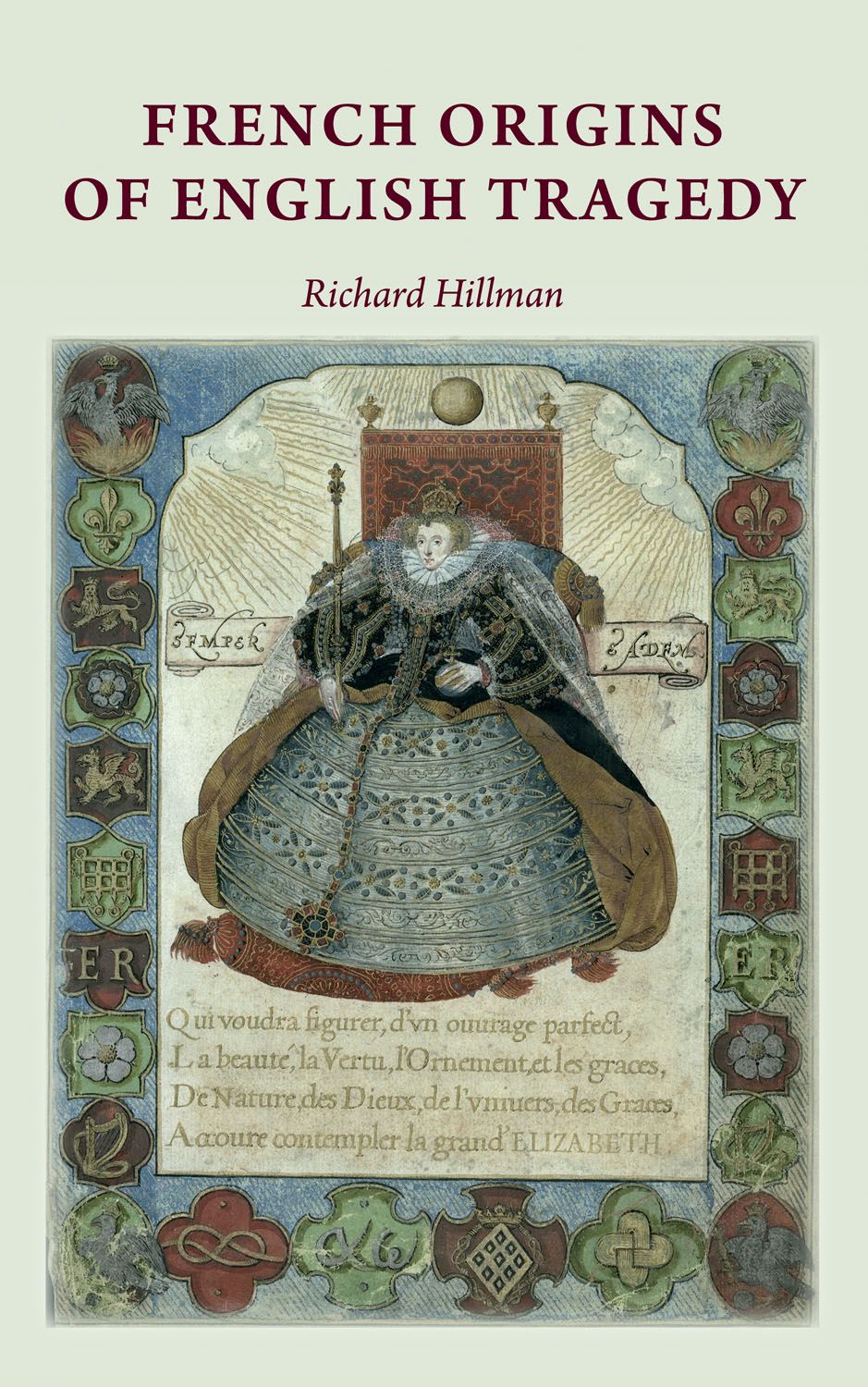
French origins of English tragedy
Richard Hillman applies to tragic patterns and practices in early modern England his long-standing critical preoccupation with English-French cultural connections in the period. With primary, though not exclusive, reference on the English side to Shakespeare and Marlowe, and on the French side to a wide range of dramatic and non-dramatic material, he focuses on distinctive elements that emerge within the English tragedy of the 1590s and early 1600s. These include the self-destructive tragic hero, the apparatus of neo-Senecanism (including the Machiavellian villain) and the confrontation between the warrior-hero and the femme fatale. The broad objective is less to 'discover' influences – although some specific points of contact are proposed – than at once to enlarge and refine a common cultural space through juxtaposition and intertextual tracing. The conclusion emerges that the powerful, if ambivalent, fascination of the English for their closest Continental neighbours expressed itself not only in but through the theatre.
eBook
Shakespeare and laughter
This book examines laughter in the Shakespearean theatre, in the context of a cultural history of early modern laughter. Aimed at an informed readership as well as graduate students and scholars in the field of Shakespeare studies, it is the first study to focus specifically on laughter, not comedy. It looks at various strands of the early modern discourse on laughter, ranging from medical treatises and courtesy manuals to Puritan tracts and jestbook literature. It argues that few cultural phenomena have undergone as radical a change in meaning as laughter.Laughter became bound up with questions of taste and class identity. At the same time, humanist thinkers revalorised the status of recreation and pleasure. These developments left their trace on the early modern theatre, where laughter was retailed as a commodity in an emerging entertainment industry. Shakespeare´s plays both reflect and shape these changes, particularly in his adaptation of the Erasmian wise fool as a stage figure, and in the sceptical strain of thought that is encapsulated in the laughter evoked in the plays.
eBook
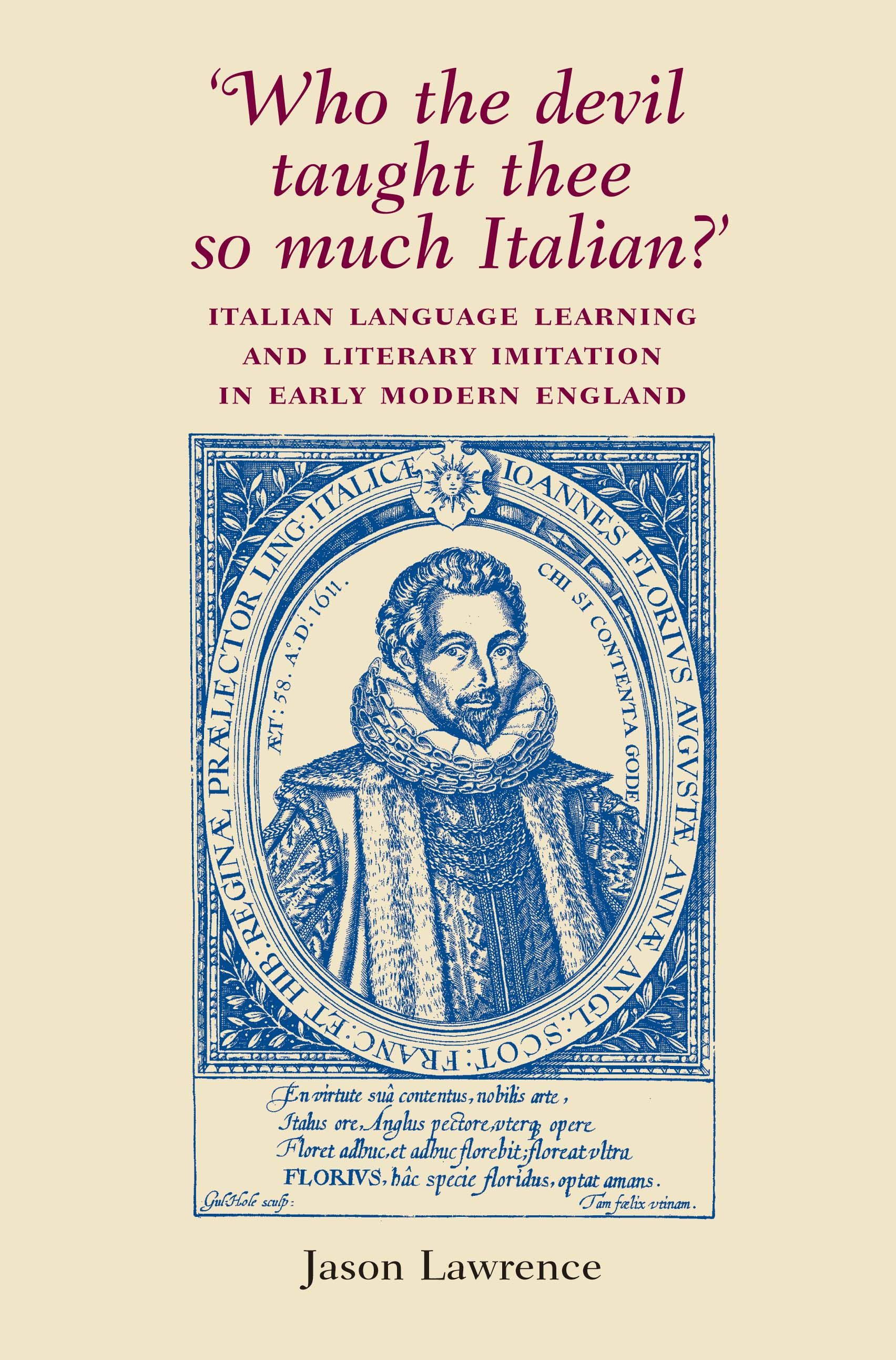
Who the Devil taught thee so much Italian?
This book offers a comprehensive account of the methods and practice of learning modern languages, particularly Italian, in late sixteenth and early seventeenth century England. It is the first study to suggest a fundamental connection between language-learning habits and the techniques for both reading and imitating Italian materials employed by a range of poets and dramatists, such as Daniel, Drummond, Marston and Shakespeare, in the period.The widespread use of bilingual parallel-text instruction manuals from the 1570s onwards, most notably those of the Italian teacher John Florio, highlights the importance of translation in the language-learning process. This study emphasises the impact of language-learning translation on contemporary habits of literary imitation, in its detailed analyses of Daniel's sonnet sequence 'Delia' and his pastoral tragicomedies, and Shakespeare's use of Italian materials in 'Measure for Measure' and 'Othello'.
eBook