
Catalogue Search | MBRL


Are you sure you want to remove the book from the shelf?

{{itemTitle}}
4,580
result(s) for
"Shakespeare studies"
Sort by:

Shakespeare in the Theatre: Mark Rylance at the Globe
Each volume in the Shakespeare in the Theatre series focuses on a director or theatre company who has made a significant contribution to Shakespeare production, identifying the artistic and political/social contexts of their work. The series introduces readers to the work of significant theatre directors and companies whose Shakespeare productions have been transformative in our understanding of his plays in performance. Each volume examines a single figure or company, considering their key productions, rehearsal approaches and their work with other artists. Since its opening in the late 1990s, the reconstructed Shakespeare’s Globe Theatre has made an indelible impression on the contemporary British theatre scene. This book explores the theatre’s first decade of productions under the pioneering leadership of Sir Mark Rylance. Drawing upon an extensive range of material from the theatre’s archive, interviews with Globe practitioners, and Rylance’s own personal archive, this book argues that the Rylance era was a ground-breaking and important period of recent theatre history. It concludes with an in-depth interview with Rylance himself. The book gives a unique insight into Rylance’s practice and impact, and will be of interest to anyone studying Shakespeare in performance. Series Editors: Bridget Escolme, Queen Mary University of London, UK, Peter Holland, University of Notre Dame, USA and Farah Karim-Cooper, Shakespeare’s Globe, London, UK.
eBook

At the Bottom of Shakespeare’s Ocean
We need a poetic history of the ocean, and Shakespeare can help us find one. There’s more real salt in the plays than we might expect. Shakespeare’s dramatic ocean spans the God-sea of the ancient world and the immense blue vistas that early modern mariners navigated. Throughout his career, from the opening shipwrecks of The Comedy of Errors through The Tempest, Shakespeare’s plays figure the ocean as shocking physical reality and mind-twisting symbol of change and instability. To fathom Shakespeare’s ocean–to go down to its bottom–this book’s chapters focus on different things that humans do with and in and near the sea: fathoming, keeping watch, swimming, beachcombing, fishing, and drowning. Mentz also sets Shakespeare’s sea-poetry against modern literary sea-scapes, including the vast Pacific of Moby-Dick, the rocky coast of Charles Olson’s Maximus
Poems, and the lyrical waters of the postcolonial Caribbean. Uncovering the depths of Shakespeare’s maritime world, this book draws out the centrality of the sea in our literary culture.
eBook

Shakespeare and Digital Pedagogy
Shakespeare and Digital Pedagogy is an international collection of fresh digital approaches for teaching Shakespeare. It describes 15 methodologies, resources and tools recently developed, updated and used by a diverse range of contributors in Great Britain, Australia, Asia and the United States. Contributors explore how these digital resources meet classroom needs and help facilitate conversations about academic literacy, race and identity, local and global cultures, performance and interdisciplinary thought. Chapters describe each case study in depth, recounting needs, collaborations and challenges during design, as well as sharing effective classroom uses and offering accessible, usable content for both teachers and learners. The book will appeal to a broad range of readers. College and high school instructors will find a rich trove of usable teaching content and suggestions for mounting digital units in the classroom, while digital humanities and education specialists will find a snapshot of and theories about the field itself. With access to exciting new content from local archives and global networks, the collection aids teaching, research and reflection on Shakespeare for the 21st century.
eBook

Shakespeare and posthumanist theory
Shakespeare and Posthumanist Theory charts challenges in the field of Shakespeare studies to the assumption that the category \"human\" is real, stable, or worthy of privileging in discussions of the playwright's work.
eBook

The Tempest
The Tempestcontains sublime poetry and catchy songs, magic and low comedy, while it tackles important contemporary concerns: education, power politics, the effects of colonization, and technology. In this guide, Alden T. Vaughan and Virginia Mason Vaughan open up new ways into one of Shakespeare's most popular, malleable and controversial plays.
eBook

Finding Shakespeare’s New Place
This book provides an abundance of fresh insights into Shakespeare's life in relation to his lost family home, New Place. It first covers the first 6,000 years of the site, from its prehistoric beginnings through its development into a plot within the economic context of early medieval Stratford-upon-Avon, and the construction of the first timber-framed building. The book then describes the construction and distinctive features of Hugh Clopton's brick-and-timber house, the first New Place. Stratford-upon-Avon gave Shakespeare a deeply rooted love of family, loyal neighbours and friends, and although he came to enjoy a prominent social standing there, he probably had little or no time at all for its puritanical side. The book provides a cultural, religious and economic context for Shakespeare's upbringing; education, work, marriage, and early investments up to his son, Hamnet's death, and his father, John Shakespeare, being made a gentleman. It discusses the importance of New Place to Shakespeare and his family during the nineteen years he owned it and spent time there. The book also takes us to just beyond the death of Shakespeare's granddaughter, Elizabeth, Lady Bernard, the last direct descendant of Shakespeare to live in the house. It further gives an account of James Halliwell's acquisition of the site, his archaeology and how New Place has become an important focus for the local community, not least during the 'Dig for Shakespeare'.
eBook
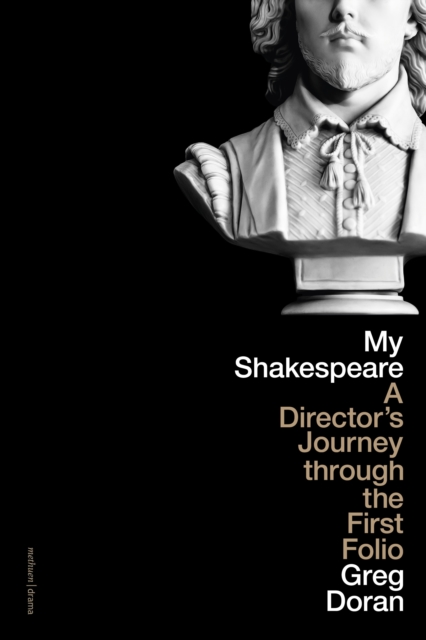
My Shakespeare
This book charts the personal and professional journey of Greg Doran, Artistic Director of the Royal Shakespeare Company from 2012 until 2022 and \"one of the great Shakespearians of his generation\" (Sunday Times). During his illustrious career, Doran has directed or produced all of the plays within Shakespeare's First Folio -- a milestone reached in the same year that the world celebrates the 400th anniversary of its original publication. Each chapter looks at a different play, considering the choices made and weaving in both autobiographical detail and background on the RSC, as well as giving insights into key collaborations, including those with actors such as Judi Dench, David Tennant, Harriet Walter, Patrick Stewart, Simon Russell Beale, Paterson Joseph and Doran's husband, the late Antony Sher, as well as seminal practitioners such as Cicely Berry, John Barton and Terry Hands. The book also includes 16 striking pages with stills from some of the RSC plays. Through Doran's account of this extraordinary journey, we see how Henry VIII, initially regarded as a poisoned chalice, became his lucky break; how the tragedy of 9/11 unfolded during a matinee of King John and how the language of the play went some way in helping to articulate the unfathomable; how a RSC supporter bequeathed their skull to the company to be used as Yorick in Hamlet; how meeting Nelson Mandela inspired the production of Julius Caesar; how Falstaff was introduced to China for the very first time; and how arachnophobia informed the production of Macbeth. This book uniquely captures the excitement, energy, surprises, joys and agonies of working on these greatest of plays; sheds new light on these plays through Doran's own research and discoveries made in the rehearsal room; and gives unprecedented access into the craft, life and loves of this exceptional director.
eBook

Othello
In this volume on Othello, Laurie Maguire examines the use and misuse of language, the play's textual and performance histories and how critics and directors have responded to the language of sexual jealousy.
eBook

Early Modern Theatre and the Figure of Disability
What work did physically disabled characters do for the early modern theatre? Through a consideration of a range of plays, including Doctor Faustus and Richard III, Genevieve Love argues that the figure of the physically disabled prosthetic body in early modern English theatre mediates a set of related ‘likeness problems’ that structure the theatrical, textual, and critical lives of the plays of Shakespeare and his contemporaries. The figure of disability stands for the relationship between actor and character: prosthetic disabled characters with names such as Cripple and Stump capture the simultaneous presence of the fictional and the material, embodied world of the theatre. When the figure of the disabled body exits the stage, it also mediates a second problem of likeness, between plays in their performed and textual forms. While supposedly imperfect textual versions of plays have been characterized as ‘lame’, the dynamic movement of prosthetic disabled characters in the theatre expands the figural role which disability performs in the relationship between plays on the stage and on the page. Early Modern Theatre and the Figure of Disability reveals how attention to physical disability enriches our understanding of early modern ideas about how theatre works, while illuminating in turn how theatre offers a reframing of disability as metaphor.
eBook

Shakespeare’s Musical Imagery
Music pervades Shakespeare's work. In addition to vocal songs and numerous instrumental cues there are thousands of references to music throughout the plays and many of the poems. This book discusses Shakespeare's musical imagery according to categories defined by occurrence in the plays and poems. In turn, these categories depend on their early modern usage and significance. Thus, instruments such as lute and viol deserve special attention just as Renaissance ideas relating to musical philosophy and pedagogical theory need contextual explanation. The objective is to locate Shakespeare's musical imagery, reference and metaphor in its immediate context in a play or poem and explain its meaning. Discussion and explanation of the musical imagery suggests a range of possible dramatic and poetic purposes these musical references serve.
eBook