
Catalogue Search | MBRL


Are you sure you want to remove the book from the shelf?

{{itemTitle}}
116
result(s) for
"Sharecroppers"
Sort by:


The journey of little Charlie
When his poor sharecropper father is killed in an accident and leaves the family in debt, twelve-year-old Little Charlie agrees to accompany fearsome plantation overseer Cap'n Buck north in pursuit of people who have stolen from him; Cap'n Buck tells Little Charlie that his father's debt will be cleared when the fugitives are captured, which seems like a good deal until Little Charlie comes face-to-face with the people he is chasing.
Book

American Congo
This is the story of how rural black people struggled against the oppressive sharecropping system of the Arkansas and Mississippi Delta during the first half of the twentieth century. Delta planters, aided by local law enforcement, engaged in peonage, murder, theft, and disfranchisement. As individuals and through collective struggle, black men and women fought back, demanding a just return for their crops and laying claim to a democratic vision of citizenship. Nan Woodruff shows how the freedom fighters of the 1960s would draw on this half-century tradition of protest, thus expanding our standard notions of the civil rights movement and illuminating a neglected but significant slice of the American black experience.
eBook

The sittin' up
\"When the patriarch of twelve-year-old Bean's sharecropping community dies, Bean gets a lesson in not only what it means to lose someone you love, but also in how his family and friends care for their dead\"-- Provided by publisher.
Book
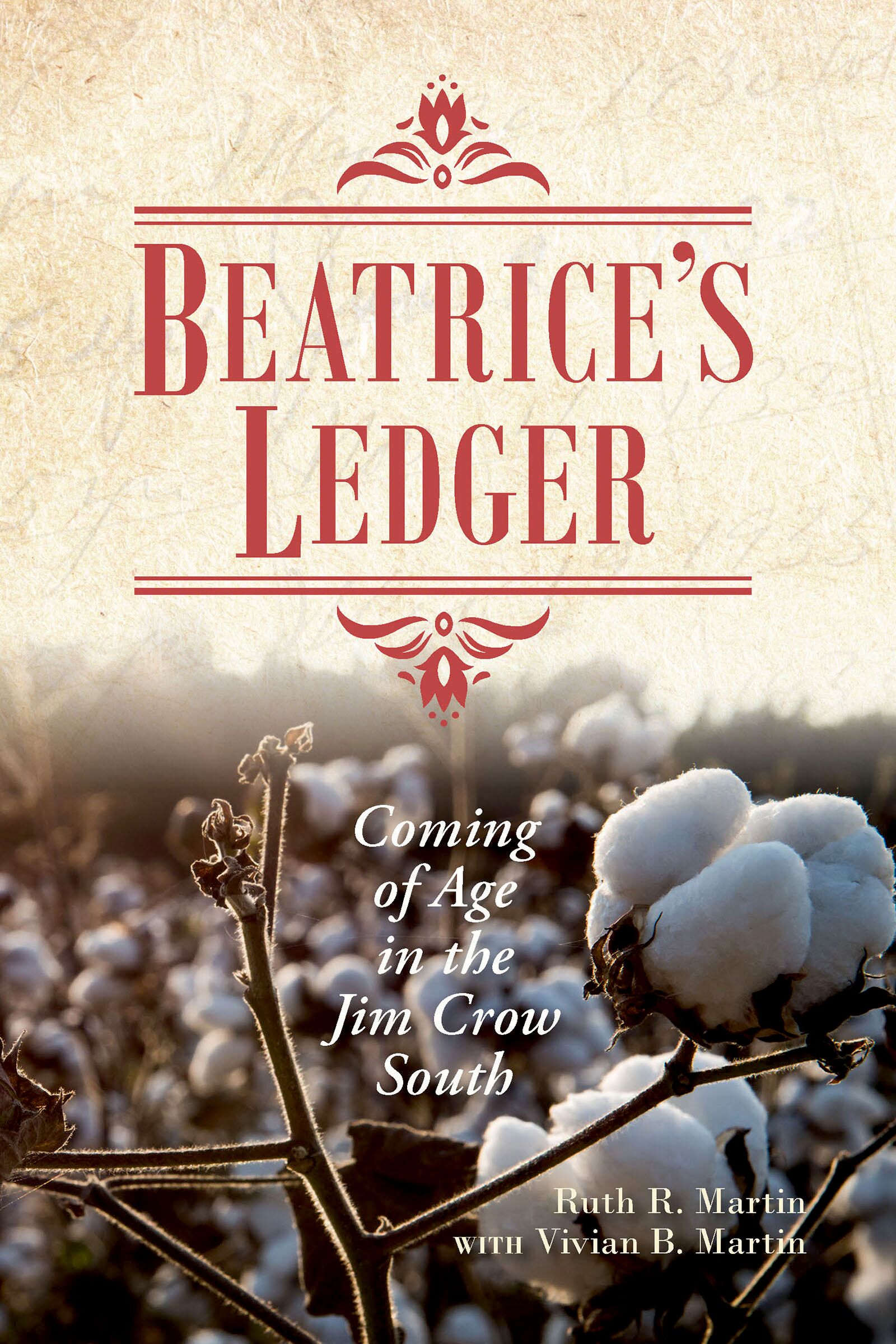
Beatrice's Ledger
A vivid and moving story about family, courage, and the power of
education
Ruth remembers the day the sheriff pulled up in front of her
family's home with a white neighbor who claimed Ruth's father owed
her recently deceased husband money. It was the early 1940s in Jim
Crow South Carolina, and even at the age of eleven, Ruth knew a
Black person's word wasn't trusted. But her father remained calm as
he waited on her mother's return from the house. Ruth's mother had
retrieved a gray book, which she opened and handed to the sheriff.
Satisfied by what he saw, the sheriff and the woman left. Ruth
didn't know what was in that book, but she knew it was important.
In Beatrice's Ledger, Ruth R. Martin brings to life the stories
behind her mother's entries in that well-worn ledger, from
financial transactions to important details about her family's
daily struggle to survive in Smoaks, South Carolina, a small town
sixty miles outside of Charleston. Once the land of plantations,
slavery, and cotton, by the time Ruth was born in 1930 many of the
plantations were gone but the cotton remained. Ruth's family made a
living working the land, and her father owned a local grist and
sawmill used by Black and white residents in the area. The family
worked hard, but life was often difficult, and Ruth offers rich
descriptions of the sometimes-perilous existence of a Black family
living in rural South Carolina at mid-century. But there was joy as
well as hardship, and readers will be drawn into the story of life
in Smoaks. Enriched with public records research and interviews
with friends and family still living in Smoaks, Martin weaves
history, humor, and family lore into a compelling narrative about
coming of age as a Black woman in the Jim Crow South. Martin
recounts her journey from Smoaks to Tuskegee Institute and beyond.
It is a story about the power of family; about the importance of
the people we meet along the way; and about the place we call
home.
eBook


Lahav VII: Ethnoarchaeology in the Tell Halif Environs
This seventh volume of final reports of the Lahav Research Project’s efforts at Tell Halif in Southern Israel focuses on the team’s excavations and related regional ethnographic research at adjacent Khirbet Khuweilifeh, an early twentieth-century settlement of Bedouin and Arab fellahin clients. These efforts illustrate the symbiosis between the itinerant Bedouin and their seasonal sharecropper neighbors along the northern flanks of the Negev desert during and following the First World War in southern Palestine.
The stratigraphic excavation and recovery of material culture from Cave Complex A revealed a pattern of occupation dating from the late nineteenth century C.E. up to the mid-1940s and produced hundreds of artifacts and samples, giving testimony to the lifeways of the fellahin who had inhabited the complex. The associated ethnographic research with Bedouin sheikhs and Hebron-area merchant informants established that the Complex’s most recent occupants were the family of a plow maker named Khalil al-Kaayke. The studies elucidated in this volume articulate in more detail the family’s patterns of subsistence, showing the interdependence of the Bedouin and fellahin partners. Examination of the pottery remains provides a profile of the site’s Stratum I, early twentieth-century ceramic forms and also reveals earlier Islamic-period and pre-Islamic traces.
Over the past century the lifeways of these early twentieth-century Bedouin and their fellahin village neighbors in southern Palestine have been rapidly disappearing. This volume serves to chronicle and preserve data on their waning history and culture.
eBook

The Pecan Orchard
This is a true story of the struggle, survival, and ultimate success of a large black family in south Alabama who, in the middle decades of the 20th century, lifted themselves out of poverty to achieve the American dream of property ownership. Descended from slaves and sharecroppers in the Black Belt region, this family of hard-working parents and their thirteen children is mentored by its matriarch, Moa, the author’s beloved great grandmother, who passes on to the family, along with other cultural wealth, her recipe for moonshine. Without rancor or blame, and even with occasional humor, The Pecan Orchard offers a window into the inequities between blacks and whites in a small southern town still emerging from Jim Crow attitudes. Told in clean, straightforward prose, the story radiates the suffocating midday heat of summertime cotton fields and the biting winter wind sifting through porous shanty walls. It conveys the implicit shame in “Colored Only” restrooms, drinking fountains, and eating areas; the beaming satisfaction of a job well done recognized by others; the “yessum” manners required of southern society; and the joyful moments, shared memories, and loving bonds that sustain—and even raise—a proud family.
eBook