
Catalogue Search | MBRL


Are you sure you want to remove the book from the shelf?

{{itemTitle}}
27
result(s) for
"Shared virtual environments Social aspects."
Sort by:

The metaverse : and how it will revolutionize everything
\"From the leading theorist of the Metaverse comes the definitive account of the next internet: what the Metaverse is, what it will take to build it, and what it means for all of us. The term \"Metaverse\" is suddenly everywhere, from the front pages of national newspapers and the latest fashion trends to the plans of the most powerful companies in history. It is already shaping the policy platforms of the US government, the European Union, and the Chinese Communist Party. But what, exactly, is the Metaverse? As pioneering theorist and venture capitalist Matthew Ball explains, it is a persistent and interconnected network of 3D virtual worlds that will eventually serve as the gateway to most online experiences, and also underpin much of the physical world. For decades, these ideas have been limited to science fiction and video games, but they are now poised to revolutionize every industry and function, from finance and healthcare to education, consumer products, city planning, dating, and well beyond. Taking us on an expansive tour of the \"next internet,\" Ball demonstrates that many proto-Metaverses are already here, such as Fortnite, Minecraft, and Roblox. Yet these offer only a glimpse of what is to come. Ball presents a comprehensive definition of the Metaverse before explaining the technologies that will power it-and the breakthroughs that will be necessary to fully realize it. He addresses the governance challenges the Metaverse entails; investigates the role of Web3, blockchains, and NFTs; and predicts Metaverse winners and losers. Most importantly, he examines many of the Metaverse's almost unlimited applications. The internet will no longer be at arm's length; instead, it will surround us, with much of our lives, labor, and leisure taking place inside the Metaverse. Bringing clarity and authority to a frequently misunderstood concept, Ball foresees trillions of dollars in new value-and the radical reshaping of society\"-- Provided by publisher.
Book

Communities of play : emergent cultures in multiplayer games and virtual worlds
The odyssey of a group of \"refugees\" from a closed-down online game and an exploration of emergent fan cultures in virtual worlds.Play communities existed long before massively multiplayer online games; they have ranged from bridge clubs to sports leagues, from tabletop role-playing games to Civil War reenactments. With the emergence of digital networks, however, new varieties of adult play communities have appeared, most notably within online games and virtual worlds. Players in these networked worlds sometimes develop a sense of community that transcends the game itself. In Communities of Play, game researcher and designer Celia Pearce explores emergent fan cultures in networked digital worlds-actions by players that do not coincide with the intentions of the game's designers. Pearce looks in particular at the Uru Diaspora-a group of players whose game, Uru: Ages Beyond Myst, closed. These players (primarily baby boomers) immigrated into other worlds, self-identifying as \"refugees\"; relocated in There.com, they created a hybrid culture integrating aspects of their old world. Ostracized at first, they became community leaders. Pearce analyzes the properties of virtual worlds and looks at the ways design affects emergent behavior. She discusses the methodologies for studying online games, including a personal account of the sometimes messy process of ethnography. Pearce considers the \"play turn\" in culture and the advent of a participatory global playground enabled by networked digital games every bit as communal as the global village Marshall McLuhan saw united by television. Countering the ludological definition of play as unproductive and pointing to the long history of pre-digital play practices, Pearce argues that play can be a prelude to creativity.
eBook

Leaving mundania : inside the transformative world of live action role-playing games
\"The story of adults who put on a costume, develop a persona, and interact with other characters for hours or days as part of a LARP, or Live Action Role-Playing game. A look at the hobby from its history in the pageantry of Tudor England to its use as a training tool for the US military\"--Provided by publisher.
Book
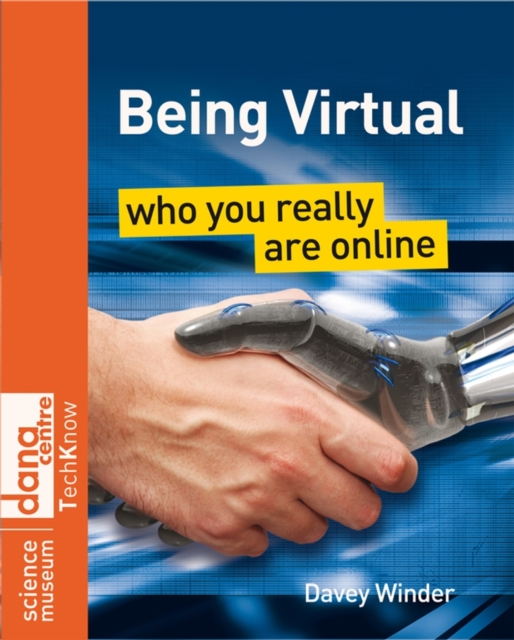
Being Virtual
Thanks to the Internet, it has never been so easy to become the person of your wildest dreams. Immersive 3D worlds such as Second Life and THERE.com provide an escape route from the ordinary, into a virtual world where you have the power to mould your life in any way you please. Forget about walking, wheelchair users can fly. Pensioners wipe away the pains of age, discovering youthful exuberance and making young friends once more. No wonder it has become harder than ever to honestly answer the question: who am I? In Being Virtual, Davey Winder looks at how an increasing number of us are living part-real, part-virtual lives, and how it affects who we are. He looks at the opportunities and dangers that a virtual identity offers us, how we juggle our real and online lives, and what happens when one spills over into the other... He uses his own personal experiences to bring the issues to life, and backs them up with the real-life stories of others and testimony from the experts. Along the way, he looks at some fascinating questions such as: Are you a virtual liar? What happens when our virtual and real worlds collide? Why will you talk to anyone online, but nobody on the train to work? Why do so many middle-aged men transform into teenage girls online? Is it possible to have any secrets in such a connected world? Being Virtual gives a glimpse into the future of human identity, and is a must-read for anyone who uses the Internet to enhance - or escape from - their 'ordinary' life. About the author Davey Winder has been a freelance journalist for 16 years, and is Contributing Editor of the best-selling IT magazine, PC Pro. He has picked up many awards including Technology Journalist of the Year and IT Security Journalist of the Year. A founder member of the Internet Society of England and author of more than 20 books, his blog can be found at: http://happygeeknewmedia.blogspot.com/
eBook

Understanding the metaverse : a business and ethical survival guide
\"Together we will explore what the Metaverse is, how it works, the many use cases we are already aware of in the Metaverse, as well as look at why there are so many more we cannot yet see. I will also introduce you to some of the main threats and challenges businesses and individuals face as the Metaverse evolves and grows, sharing potential solutions to make this an inclusive virtual world that all of us can enjoy and use to its full potential. I will also explain some of the key elements of technology that underpin the Metaverse in its current form and that will provide the necessary foundations for its growth and evolution in the future -- such as blockchain, cryptocurrency, AI and deep learning. I will build out the picture with you, helping you to turn some of the greyed-out map into a world filled with technicolour and exciting opportunities. By the end of this book, I hope you will feel confident to set out and explore more of this uncharted territory on your own\"-- Provided by publisher.
Book

Making Virtual Worlds
The past decade has seen phenomenal growth in the development and use of virtual worlds. In one of the most notable, Second Life, millions of people have created online avatars in order to play games, take classes, socialize, and conduct business transactions. Second Life offers a gathering point and the tools for people to create a new world online.
Too often neglected in popular and scholarly accounts of such groundbreaking new environments is the simple truth that, of necessity, such virtual worlds emerge from physical workplaces marked by negotiation, creation, and constant change. Thomas Malaby spent a year at Linden Lab, the real-world home of Second Life, observing those who develop and profit from the sprawling, self-generating system they have created.
Some of the challenges created by Second Life for its developers were of a very traditional nature, such as how to cope with a business that is growing more quickly than existing staff can handle. Others are seemingly new: How, for instance, does one regulate something that is supposed to run on its own? Is it possible simply to create a space for people to use and then not govern its use? Can one apply these same free-range/free-market principles to the office environment in which the game is produced? \"Lindens\"-as the Linden Lab employees call themselves-found that their efforts to prompt user behavior of one sort or another were fraught with complexities, as a number of ongoing processes collided with their own interventions.
InMaking Virtual Worlds, Malaby thoughtfully describes the world of Linden Lab and the challenges faced while he was conducting his in-depth ethnographic research there. He shows how the workers of a very young but quickly growing company were themselves caught up in ideas about technology, games, and organizations, and struggled to manage not only their virtual world but also themselves in a nonhierarchical fashion. In exploring the practices the Lindens employed, he questions what was at stake in their virtual world, what a game really is (and how people participate), and the role of the unexpected in a product like Second Life and an organization like Linden Lab.
eBook

Regulating the metaverse : a critical assessment
\"The metaverse seems to be on everybody's lips - and yet, very few people can actually explain what it means or why it is important. This book aims to fill the gap from an interdisciplinary perspective informed by law and media and communications studies. Going beyond the optimism emanating from technology companies and venture capitalists, the authors critically evaluate the antecedents and the building blocks of the metaverse, the design and regulatory challenges that need to be solved, and commercial opportunities that are yet to be fully realised. While the metaverse is poised to open new possibilities and perspectives, it will also be a dangerous place - one ripe with threats ranging from disinformation to intellectual property theft to sexual harassment. Hence, the book also offers a useful guide to the legal and political governance issues ahead while also contextualising them within the broader domain of governance and regulation of digital technologies\"-- Provided by publisher.
Book

Hello avatar : rise of the networked generation
An examination of our many modes of online identity and how we live on the continuum between the virtual and the real.Hello Avatar!Or, {llSay(0, \"Hello, Avatar!\"); is a tiny piece of user-friendly code that allows us to program our virtual selves.In Hello Avatar , B.
eBook

Star worlds : freedom versus control in online gameworlds
\"Star Worlds explores the future-oriented universe of online virtual worlds connected with popular science fiction--specifically, with Star Wars and Star Trek--that have been inhabited for over a decade by computer gamers. The Star Wars and Star Trek franchises, both of which have shaped the dominant science fiction mythologies of the last half-century, offer profound conceptions of the tension between freedom and control in human economic, political, and social interactions. William Sims Bainbridge investigates the human and technological dynamics of four online virtual worlds based on these two very different traditions: the massively multiplayer online games Star Wars Galaxies; Star Wars: The Old Republic; Star Trek Online; and the Star Trek community in the non-game, user-created virtual environment, Second Life. The four \"star worlds\" explored in this book illustrate the dilemmas concerning the role of technology as liberator or oppressor in our postindustrial society, and represent computer simulations of future possibilities of human experience. Bainbridge considers the relationship between a real person and the role that person plays, the relationship of an individual to society, and the relationship of human beings to computing technology. In addition to collecting ethnographic and quantitative data about the social behavior of other players, he has immersed himself in each of these worlds, role-playing 14 avatars with different skills and goals to gain new insights into the variety of player experience from a personal perspective\"-- Provided by publisher.
Book

Networked
Daily life is connected life, its rhythms driven by endless email pings and responses, the chimes and beeps of continually arriving text messages, tweets and retweets, Facebook updates, pictures and videos to post and discuss. Our perpetual connectedness gives us endless opportunities to be part of the give-and-take of networking. Some worry that this new environment makes us isolated and lonely. But in Networked , Lee Rainie and Barry Wellman show how the large, loosely knit social circles of networked individuals expand opportunities for learning, problem solving, decision making, and personal interaction. The new social operating system of \"networked individualism\" liberates us from the restrictions of tightly knit groups; it also requires us to develop networking skills and strategies, work on maintaining ties, and balance multiple overlapping networks. Rainie and Wellman outline the \"triple revolution\" that has brought on this transformation: the rise of social networking, the capacity of the Internet to empower individuals, and the always-on connectivity of mobile devices. Drawing on extensive evidence, they examine how the move to networked individualism has expanded personal relationships beyond households and neighborhoods; transformed work into less hierarchical, more team-driven enterprises; encouraged individuals to create and share content; and changed the way people obtain information. Rainie and Wellman guide us through the challenges and opportunities of living in the evolving world of networked individuals.
eBook