
Catalogue Search | MBRL


Are you sure you want to remove the book from the shelf?

{{itemTitle}}
529
result(s) for
"Sharks - anatomy "
Sort by:


Inner ear development in cyclostomes and evolution of the vertebrate semicircular canals
Jawed vertebrates have inner ears with three semicircular canals, the presence of which has been used as a key to understanding evolutionary relationships. Ostracoderms, the jawless stem gnathostomes, had only two canals and lacked the lateral canal
1
–
3
. Lampreys, which are modern cyclostomes, are generally thought to possess two semicircular canals whereas the hagfishes—which are also cyclostomes—have only a single canal, which used to be regarded as a more primitive trait
1
,
4
. However, recent molecular and developmental analyses have strongly supported the monophyly of cyclostomes
5
–
7
, which has left the evolutionary trajectory of the vertebrate inner ear unclear
8
. Here we show the differentiation of the otic vesicle of the lamprey
Lethenteron camtschaticum
and inshore hagfish
Eptatretus burgeri
. This is the first time, to our knowledge, that the development of the hagfish inner ear is reported. We found that canal development in the lamprey starts with two depressions—which is reminiscent of the early developmental pattern of the inner ear in modern gnathostomes. These cyclostome otic vesicles show a pattern of expression of regulatory genes, including OTX genes, that is comparable to that of gnathosomes. Although two depressions appear in the lamprey vesicle, they subsequently fuse to form a single canal that is similar to that of hagfishes. Complete separation of the depressions results in anterior and posterior canals in gnathostomes. The single depression of the vesicle in hagfishes thus appears to be a secondarily derived trait. Furthermore, the lateral canal in crown gnathostomes was acquired secondarily—not by de novo acquisition of an OTX expression domain, but by the evolution of a developmental program downstream of the OTX genes.
The differentiation of the inner ear in the lamprey
Lethenteron camtschaticum
and hagfish
Eptatretus burgeri
sheds light on the evolution of the semicircular canals of jawed vertebrates.
Journal Article

An early chondrichthyan and the evolutionary assembly of a shark body plan
Although relationships among the major groups of living gnathostomes are well established, the relatedness of early jawed vertebrates to modern clades is intensely debated. Here, we provide a new description of Gladbachus, a Middle Devonian (Givetian approx. 385-million-year-old) stem chondrichthyan from Germany, and one of the very few early chondrichthyans in which substantial portions of the endoskeleton are preserved. Tomographic and histological techniques reveal new details of the gill skeleton, hyoid arch and jaws, neurocranium, cartilage, scales and teeth. Despite many features resembling placoderm or osteichthyan conditions, phylogenetic analysis confirms Gladbachus as a stem chondrichthyan and corroborates hypotheses that all acanthodians are stem chondrichthyans. The unfamiliar character combination displayed by Gladbachus, alongside conditions observed in acanthodians, implies that pre-Devonian stem chondrichthyans are severely under-sampled and strongly supports indications from isolated scales that the gnathostome crown group originated at the latest by the early Silurian (approx. 440 Ma). Moreover, phylogenetic results highlight the likely convergent evolution of conventional chondrichthyan conditions among earliest members of this primary gnathostome division, while skeletal morphology points towards the likely suspension feeding habits of Gladbachus, suggesting a functional origin of the gill slit condition characteristic of the vast majority of living and fossil chondrichthyans.
Journal Article

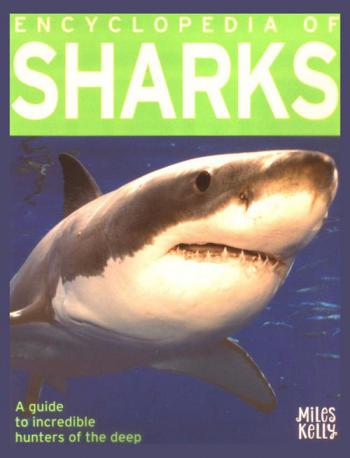
Super shark encyclopedia and other creatures of the deep
Super Shark Encyclopedia uncovers the secrets of the oceans by exploring a remarkable array of 80 sharks and other sea creatures -- from Barrel Shrimp to Blue Sharks, Starfish to Bat Fish, and Hammerhead Sharks to Sandtiger Sharks, plus surfing penguins, deep-sea monsters, rays, eels and more. Packed with jaw-dropping facts about animal behavior and anatomy, new x-ray artworks utilize cross-sections and strip layers away to show key anatomical features in detail. It showcases record-breaking animals, such as the deadliest predators and the most venomous creatures, and explains how and why their bodies work the way they do.\"-- Publisher's description.
Book

Evolutionary pathways toward gigantism in sharks and rays
Through elasmobranch (sharks and rays) evolutionary history, gigantism evolved multiple times in phylogenetically distant species, some of which are now extinct. Interestingly, the world’s largest elasmobranchs display two specializations found never to overlap: filter feeding and mesothermy. The contrasting lifestyles of elasmobranch giants provide an ideal case study to elucidate the evolutionary pathways leading to gigantism in the oceans. Here, we applied a phylogenetic approach to a global dataset of 459 taxa to study the evolution of elasmobranch gigantism. We found that filter feeders and mesotherms deviate from general relationships between trophic level and body size, and exhibit significantly larger sizes than ectothermic-macropredators. We confirm that filter feeding arose multiple times during the Paleogene, and suggest the possibility of a single origin of mesothermy in the Cretaceous. Together, our results elucidate two main evolutionary pathways that enable gigantism: mesothermic and filter feeding. These pathways were followed by ancestrally large clades and facilitated extreme sizes through specializations for enhancing prey intake. Although a negligible percentage of ectothermic-macropredators reach gigantic sizes, these species lack such specializations and are correspondingly constrained to the lower limits of gigantism. Importantly, the very adaptive strategies that enabled the evolution of the largest sharks can also confer high extinction susceptibility.
Journal Article

Shark-skin surfaces for fluid-drag reduction in turbulent flow: a review
The skin of fast-swimming sharks exhibits riblet structures aligned in the direction of flow that are known to reduce skin friction drag in the turbulent-flow regime. Structures have been fabricated for study and application that replicate and improve upon the natural shape of the shark-skin riblets, providing a maximum drag reduction of nearly 10 per cent. Mechanisms of fluid drag in turbulent flow and riblet-drag reduction theories from experiment and simulation are discussed. A review of riblet-performance studies is given, and optimal riblet geometries are defined. A survey of studies experimenting with riblet-topped shark-scale replicas is also given. A method for selecting optimal riblet dimensions based on fluid-flow characteristics is detailed, and current manufacturing techniques are outlined. Due to the presence of small amounts of mucus on the skin of a shark, it is expected that the localized application of hydrophobic materials will alter the flow field around the riblets in some way beneficial to the goals of increased drag reduction.
Journal Article

The Sensory Shark: High-quality Morphological, Genomic and Transcriptomic Data for the Small-spotted Catshark Scyliorhinus Canicula Reveal the Molecular Bases of Sensory Organ Evolution in Jawed Vertebrates
Abstract
Cartilaginous fishes (chondrichthyans: chimeras and elasmobranchs -sharks, skates, and rays) hold a key phylogenetic position to explore the origin and diversifications of jawed vertebrates. Here, we report and integrate reference genomic, transcriptomic, and morphological data in the small-spotted catshark Scyliorhinus canicula to shed light on the evolution of sensory organs. We first characterize general aspects of the catshark genome, confirming the high conservation of genome organization across cartilaginous fishes, and investigate population genomic signatures. Taking advantage of a dense sampling of transcriptomic data, we also identify gene signatures for all major organs, including chondrichthyan specializations, and evaluate expression diversifications between paralogs within major gene families involved in sensory functions. Finally, we combine these data with 3D synchrotron imaging and in situ gene expression analyses to explore chondrichthyan-specific traits and more general evolutionary trends of sensory systems. This approach brings to light, among others, novel markers of the ampullae of Lorenzini electrosensory cells, a duplication hotspot for crystallin genes conserved in jawed vertebrates, and a new metazoan clade of the transient-receptor potential (TRP) family. These resources and results, obtained in an experimentally tractable chondrichthyan model, open new avenues to integrate multiomics analyses for the study of elasmobranchs and jawed vertebrates.
Journal Article

Integration of multi-level dental diversity links macro-evolutionary patterns to ecological strategies across sharks
The exceptional dental diversity in sharks is frequently used as a proxy for ecological function. However, functional inferences from morphology need to consider morphological features across different organizational scales and spatial resolutions. Here, we compare morphological features ranging from sub-dental patterns to whole dentitions within a large ensemble of species encompassing all extant shark orders. Although taxa scoring high for different heterodonty measures are distributed throughout the phylogeny, the two shark superorders show a different degree of modularity between mono- and dignathic heterodonty as well as substantial differences in ecological niches. Intriguingly, we observe two alternative ways of increasing dental complexity: either at the tooth- or dentition-level. Correlating heterodonty and single-tooth complexity with ecological and life-history traits, we find that pelagic and demersal species evolve dental complexity in different ways. We track trait variability as a function of genetic distance, thus quantifying dental trait adaptability at different resolutions. Overall, intermediate resolution levels, namely the degree of monognathic heterodonty, predict ecological traits best but carry a relatively low phylogenetic signal, suggesting a more dynamic adaptability on shorter evolutionary timescales. This raises macro-evolutionary interpretations about the evolvability of nested modular phenotypic structures, with important implications for paleo-ecological inferences from sequentially homologous traits. Teeth are among the most diverse and complex organs in the animal kingdom that have evolved over millions of years to accommodate a wide range of diets and habitats. Their shapes vary broadly between and within species, and even among individuals, which often possess multiple tooth types within a single dentition. Mammals and sharks both exhibit particularly high tooth diversity, having diverged from a common ancestor several hundred million years ago. Comparing their dentitions, therefore, provides a valuable opportunity to investigate how these organs evolved, how they develop, and what they reveal about past ecosystems and animal behaviors. Although mammalian and shark teeth form through distinct developmental mechanisms, both groups share key principles. For example, in both groups, large-scale features – such as tooth position within the mouth – are established before finer details, such as small cusps or serrations. Zimm et al. sought to determine which levels of anatomical organization are most informative for understanding how composed functional traits like dentitions evolve and adapt. This question is critical because many biological functions arise from the integration of traits across multiple spatial scales – from fine serrations and cusps to differences between teeth and jaws – and establishing a methodological framework for comparing these levels has remained a major challenge. Moreover, while isolated shark teeth have been studied previously, little is known about how sharks have adapted to different ecological niches. To address this, Zimm et al. developed a new methodology for comparing dentitions using an online collection of shark teeth combined with genomic data. Their analyses revealed strong statistical differences in types of dental complexity between the two major shark groups and the different environments they inhabit, especially the deep sea and the open ocean. For example, the way neighboring teeth differ from each other is more shaped by their ecological niches rather than by genetic relationships, while the latter explains more details within teeth or dental differences between jaws. These findings provide new insights into how integrated biological systems adapt and evolve. Because shark dentitions are tightly linked to ecological function, this work may also offer new avenues for studying long-term changes in marine ecosystems. Together, these perspectives could play an important role in developing both general and specific predictions about how the biosphere may evolve in a rapidly changing world.
Journal Article

Ontogenetic shifts in morphology and ecology of eastern Pacific white sharks revealed by computer vision
Body size is a fundamental property of animal physiology, growth, and maturation, yet field measurements remain difficult to acquire for large-bodied, highly mobile marine species such as white sharks ( Carcharodon carcharias) . In this study, we integrate aerial and underwater imagery to obtain high-resolution morphometrics of eastern Pacific white sharks remotely in the Monterey Bay National Marine Sanctuary. We develop and validate a computational pipeline leveraging deep learning analysis of Unoccupied Aircraft System (UAS) imagery to extract shark total length and body condition, given by a span-length ratio. UAS-based morphometric data reveal that white sharks form size-structured aggregations aligned with oceanographic gradients, indicating that coastal areas within Monterey Bay function as key transitional zones along a continuum of ontogenetic habitat use on the central coast of California. Across individuals, extended girth-length scaling relationships indicate proportionally greater girth amongst eastern Pacific white sharks relative to other populations. This pattern is particularly pronounced in females, which exhibit progressively higher body condition with life stage, likely reflecting the energetic demands of reproduction or sex-specific foraging strategies. By linking UAS-derived morphometrics to ecological context, this approach enables a novel population-level investigation of ecological structure, body size, and morphological variation in a marine predator population.
Journal Article