
Catalogue Search | MBRL


Are you sure you want to remove the book from the shelf?

{{itemTitle}}
5,309
result(s) for
"Sheep Breeding"
Sort by:

Berganês, a new sheep breed from the Brazilian semiarid: performance and carcass traits in different sex-classes by univariate and multivariate approaches
Twenty-four lambs between four and five months of age were divided into sex classes: uncastrated males, castrated males and females, eight for each treatment, with an average body weight of 27.00 ± 3.13 kg. dry matter and water intakes were higher for uncastrated males (p < 0.001). final body weight, body weight at slaughter, average daily gain and cold carcass weight were greater for uncastrated, intermediate for castrated and lower for females (p < 0.05). hot and cold carcass yields were higher for castrated males and females, respectively. (p < 0.05). based on principal component analysis, twenty-five variables were selected out of thirty-two, in some of the seven principal components generated, summarizing 21.87% data dimension. Discriminant analysis identified greater discrimination power for body weight at slaughter, thorax width, thorax depth, fatness, dry matter intake and hot carcass weight. All lambs were classified into their respective sex classes. Therefore, uncastrated males have performed better than castrated ones and both showed higher performance than females. Females and castrated males showed higher carcass yield. Discriminant analysis indicated heterogeneity between sex classes.
Journal Article

Sheep Keeping
As seen in Clarkson's Farm, season 1, episode 2. Sheep Keeping is a practical guide to common problems seen in small sheep flocks, suitable for experienced smallholder sheep farmers, but also relevant to new and prospective ones.
eBook

Polymorphism of CLPG gene in three sheep breeds grown in the steppe zone of the Russian Federation
This study aims to investigate the callipyge gene (
) polymorphism in sheep of Edilbay, Volgograd, and Kalmyk breeds.
The analysis was performed by the polymerase chain reaction-restriction fragment length polymorphisms method. The objects of the study were Edilbay fat-tailed sheep (
= 500) at the breeding plant Volgograd-Edilbay (Volgograd region), Volgograd fine-wool sheep (
= 500) at the breeding plant Romashkovskiy (Volgograd region), and Kalmyk fat-tailed sheep (
= 500) at the breeding plant Kirovsky (the Republic of Kalmykia, Yashkul rayon). To conduct the research, tissue samples of 1 cm² from sheep of Kalmyk and Edilbay breeds were taken from the auricle.
The allelic
gene variants have been determined and genotypes of representative sampling of the three breeds of livestock grown in the steppe zone of Russia. The presented results of the
gene polymorphism in these sheep breeds grown in Russia were obtained for the first time. The research study has revealed that in terms of the
gene, the Edilbay, Volgograd, and Kalmyk sheep breeds have only a homozygous form.
The results obtained expand the current understanding of the molecular markers that characterize the meat qualities of sheep.
Journal Article

Genetic evaluation of growth rate and efficiency-related traits in Menz sheep
Growth efficiency traits are economically important and their genetic improvement is essential in small ruminants, particularly under conditions of limited feed availability. Data on body weights of Menz sheep collected from 2009 through 2023 in Menz sheep community-based breeding programs (CBBPs) were used to estimate genetic parameters for six months weight (WT6), average daily gain from birth to weaning (ADG1), average daily gain from weaning to six months (ADG2), and average daily gain from six months to yearling (ADG3), and corresponding kleiber ratios (KR1, KR2, KR3), efficiency of growth (GE1, GE2, GE3), and relative growth rate (RGR1, RGR2, RGR3). Least-squares analysis was performed using the PROC GLM procedure in SAS 9.4. (Co)variance components and corresponding genetic parameters were estimated using the Average Information Restricted Maximum Likelihood (AI-REML) method in WOMBAT software by fitting six univariate animal models that incorporated various combination of direct additive, maternal genetic, and permanent environmental effects. The year of birth, season and villages of CBBP contributed significantly (P < 0.001) to the variation of all the considered traits. The model with direct additive genetic effect alone provided the best fit for all traits except WT6 and ADG1, for which the model including direct and maternal genetic effects performed best. Direct heritability estimates (h2a) were 0.46 ± 0.02, 0.44 ± 0.02, 0.35 ± 0.02, 0.21 ± 0.02, 0.38 ± 0.02, 0.36 ± 0.02, 0.23 ± 0.02, 0.39 ± 0.02, 0.39 ± 0.02, 0.48 ± 0.03, 0.36 ± 0.02, 0.42 ± 0.02, and 0.47 ± 0.03 for WT6, ADG1, ADG2, ADG3, KR1, KR2, KR3, GE1, GE2, GE3, RGR1, RGR2, and RGR3, respectively. Maternal heritability (h2m) for WT6 and ADG1 was 0.02 ± 0.01 and 0.02 ± 0.01. Moderate to high direct heritability estimates for the studied traits revealed that direct selection would be yield significant genetic progress. Genetic correlation estimates between the traits raged from -0.66 for ADG1-RGR2 and KR1-RGR2 to 0.98 for KR2-RGR2. Traits measured within the same growth period showed strong positive genetic and phenotypic correlations. Since Menz sheep are raised under harsh environmental conditions, incorporating efficiency related traits into the selection program can enhance the overall efficiency of the breeding program. Selection for WT6 would be more effective and increase efficiency-related traits due to their positive genetic correlations.
Journal Article
Genetic and economic efficiencies of alternative breeding schemes for improvement of local breeds in low-input production systems: The case of the Farta sheep in Northwest Ethiopia
Designing and implementing a sound breeding program is essential for sustainably improving livestock productivity. This study evaluated the efficiencies of three breeding schemes for sustainable genetic improvement of indigenous sheep in low-input production systems. The schemes were one-stage selection at six months (Scheme I) or yearling age (Scheme II) and two-stage selections with the first at six months and the second at the yearling age (Scheme III). Each scheme was assessed with three levels of selection proportions (5%, 10% and 20%) and four flock sizes (600, 1200, 1800 and 2400 breeding ewes). Selection responses were simulated using a deterministic approach employed in the SelAction software. For six-month weight, the annual predicted genetic gains ranged from 0.177 to 0.267 kg (Scheme I) and 0.157 to 0.233 kg (Scheme III). For yearling weight, simulated annual genetic gains were 0.268 to 0.399 kg (Scheme II) and 0.265 to 0.398 kg (Scheme III). The expected annual genetic gains for the number of lambs weaned per ewe bred (NLW) and fertility rate were generally small, but the estimates in Schemes II and III were higher compared to Scheme I. The annual economic responses estimated for Schemes I, II, and III ranged from US$0.393 to 0.591, 0.589 to 0.879 and 0.494 to 0.744, respectively. Notably, Scheme II yielded 34% and 16% higher economic returns than Schemes I and III, respectively. The results also revealed that varying the selection proportion significantly influenced the annual selection response, index accuracy, and inbreeding rate. Increasing the flock size had little effect on the genetic progress but significantly reduced the inbreeding rate. Given its genetic and economic benefits alongside operational feasibility, Scheme II, with a 5% selection proportion and a flock size of 1200 breeding ewes, is appropriate for the genetic improvement of indigenous sheep in low-input systems.
Journal Article
Breeding practices and trait preferences of smallholder farmers for indigenous sheep in the northwest highlands of Ethiopia: Inputs to design a breeding program
The aim of this study was to identify breeding practices and trait preferences for indigenous sheep in three districts (Estie, Farta and Lay Gayient) located in the northwest highlands of Ethiopia. Questionnaire survey and choice experiment methods were used to collect data from 370 smallholder farmers. Respondents were selected randomly among smallholder farmers who own sheep in the aforementioned districts. A generalized multinomial logit model was employed to examine preferences for sheep attributes, while descriptive statistics and index values were computed to describe sheep breeding practices. Having the highest index value of 0.36, income generation was ranked as the primary reason for keeping sheep, followed by meat and manure sources. The average flock size per smallholder farmer was 10.21 sheep. The majority of the smallholder farmers (91%) have the experience of selecting breeding rams and ewes within their own flock using diverse criteria. Given the highest index value of 0.34, body size was ranked as a primary ram and ewe selection criteria, followed by coat color. Furthermore, choice modeling results revealed that tail type, body size, coat color, growth rate, horn and ear size have shown significant influences on smallholder farmers' preference for breeding rams (P<0.01). The part-worth utility coefficients were positive for all ram attributes except ear size. For breeding ewes, mothering ability, coat color, body size, lambing interval, growth rate, tail type and litter size have shown significant effects on choice preferences of smallholder farmers (P<0.05). Moreover, significant scale heterogeneity was observed among respondents for ewe attributes (P<0.001). Overall, the results implied that sheep breeding objectives suitable for the northwest highlands of the country can be derived from traits such as linear body measurement, weight and survival at different ages, and lambing intervals. However, selection decisions at the smallholder level should not only be based on estimated breeding values of traits included in the breeding objective but instead, incorporate ways to address farmers' preference for qualitative traits.
Journal Article
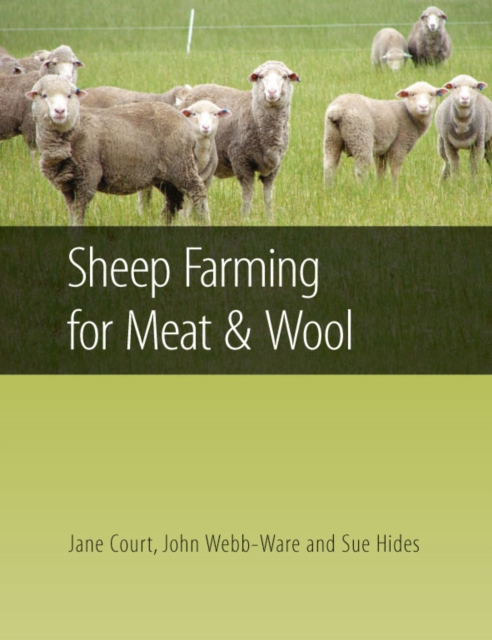
Sheep farming for meat & wool
Sheep Farming for Meat and Wool contains practical, up-to-date information on sheep production and management for producers throughout temperate Australia. It is based on research and extension projects conducted over many years by the Department of Primary Industries and its predecessors and the University of Melbourne. The book covers business management, pasture growth and management, nutrition and feed management, drought management, reproductive management, disease management, genetic improvement, animal welfare and working dog health. It also gives seasonal reminders for a spring lambing wool-producing flock, for autumn lambing Merino ewes joined to Border Leicester rams, and for winter lambing crossbred ewes joined to terminal sires. It will guide new and established farmers, students of agriculture and service providers with detailed information on the why and how of sheep production, and will assist farmer groups to initiate activities aimed at increasing their efficiency in specific areas of sheep production.
eBook
Farming systems in sheep rearing: Impact on growth and reproductive performance, nutrient digestibility, disease incidence and heat stress indices
The experiment was conducted with an intent to know the effect of different farming systems on the growth performance, nutrient digestibility coefficients, reproductive traits, disease incidence, heat stress indices, and cost economics of Nellore sheep. The study includes two parallel trials to prevent the influence of age on heat stress indices (panting score and erythrocyte osmotic fragility (EOF)). One hundred and twenty lambs (60 ram-lambs and 60 ewe-lambs) were allotted in a randomized block design under extensive, semi-intensive, and intensive systems for trial I, whereas trial II include eighteen rams assigned to the three respective farming systems in a completely randomised design. Both, season (summer) and grazing practice increased the panting score and EOF. The heat stress indices were positively correlated (P<0.01) with dry-bulb temperature and temperature-humidity index (THI) and inversely correlated (P<0.01) to relative humidity. Allotting the sheep to intensive system increased (P<0.001) weight gain and average daily gain with higher effect in males compared to females. The parameters of asymptotic weight (A), integration constant (B), and maturation rate were higher for intensive males. The male Nellore lambs had higher asymptotic weight and lower maturity rate than females, irrespective of the rearing system. Intensive sheep revealed a higher dry matter intake, digestibility coefficients, feed conversion ratio. The instantaneous bite mass (IBM) was higher for Commelina benghalensis , while instantaneous bite frequency (IBF), instantaneous intake rate (IIR) were higher for Cyanodon dactylon and amaranthus viridis , respectively. The proportion of intakes were highest for Stylo hemata followed by Cynodon dactylon and Tridax procumbens species. No differences were observed for the weight at puberty, oestrus cycle length, oestrus duration, conception percent, gestation period, and lambing percent in three rearing systems; however, the age at puberty was lower (P<0.001) and the birth weight was higher (P<0.001) for sheep reared under intensive farming system. Highest disease incidence was observed in rainy and winter seasons, particularly in sheep reared under extensive system. The capital expenditure was same for the three rearing systems, while the recurring expenditure was higher for Intensive farming system. The gross income and net income were higher for intensive system on account of higher weight gains. However, the higher returns per rupee of expenditure project the extensive farming as an ideal rearing system for small farmers and entrepreneurs with a low initial capital.
Journal Article
Genomic insights into runs of homozygosity, effective population size and selection signatures in Iranian meat and dairy sheep breeds
Genome-wide scan for run of homozygosity (ROH) stretches, effective population size (N e ) and selection signatures can help to elucidate mechanisms of selection and pinpoint genomic regions linked with phenotypic traits. This study aimed to identify the genomic patterns of ROH, N e and selection signatures in two Iranian main sheep breeds including Afshari and Qezel (known as meat and dairy sheep, respectively) using 49,017 single nucleotide polymorphisms (SNPs) generated using the ovine 50K SNP BeadChips. Analysis of ROH in Iranian sheep breeds revealed the differences in the pattern of ROH length and burden in these breeds. Inbreeding estimated based on ROH stretches showed very low amount of inbreeding in these indigenous sheep breeds. The Qezel breed displayed a higher N e than Afshari breed. Furthermore, the potential selection was detected in genomic regions using three complementary approaches including F ST (fixation index), XP-EHH (cross-population extended haplotype homozygosity), and hapFLK (haplotype differentiation). Our results identified the genomic regions that were enriched with the genes associated with immune response (e.g., IL23A, STAT2 and DOCK5 ), milk traits (e.g., PCCA , ACAP3 , TTK and BTG3 ), energy metabolisms (e.g., GLS2 ), reproduction (e.g., ANGPT2 ), fecundity (e.g., BMP5 ), nervous system (e.g., DLG2 , PCDH9 , and FRMPD4 ), growth traits and muscle formation ( NPY , MYF5 and PPP1R12A ), and sweat gland development ( SCNN1D ). Some regions were also detected for the first time and overlapped with no genes suggesting novel loci associated with traits that differentiate these breeds. Overall, the finding of this study may shed light on the genomic regions linked to economically important traits in sheep as well as for developing the conservation and selection breeding programs.
Journal Article