
Catalogue Search | MBRL


Are you sure you want to remove the book from the shelf?

{{itemTitle}}
82
result(s) for
"Shell Oil Company"
Sort by:

The offshore imperative
The Americanization of Shell Oil -- Testing the waters -- Betting on technology -- The trials and triumphs of exploration -- The end of business as usual -- The offshore imperative -- Deepwater treasures in a new era of oil
Book

The offshore imperative : Shell Oil's search for petroleum in postwar America
“. . . tells a dramatic story of imaginative businessmen and engineers who propelled Shell forward in the search for ways to locate and recover oil from the depths of the sea.”—Southwestern Historical Quarterly
“This book clarifies some of the concerns that are specific to a company like Shell and shows how information acquisition and processing provided the company with a tangible competitive advantage.”—Business History Review
“This book’s narrative is sustained throughout by easily understood explanations of the technical details of drilling and production.”—Journal of Southern History
eBook
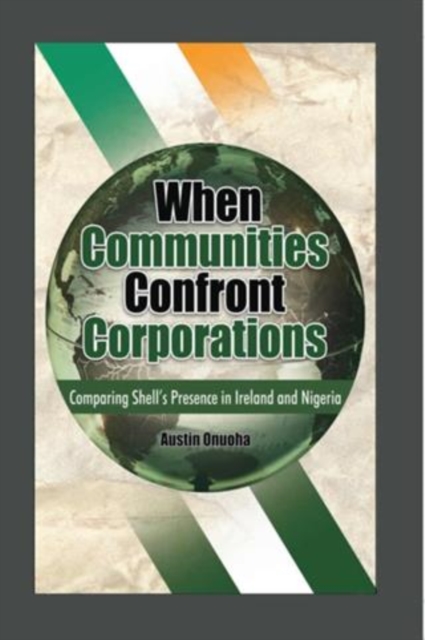
When Communities Confront Corporations
In April of 2005 Shell sought an injunction in a Dublin court against residents of Erris in northwestern Republic of Ireland who were obstructing the laying of pipelines across their lands. On June 29, 2005 the court convicted and jailed five people for failing to comply with the order of the High Court restraining them from interfering with Shell's project. When Communities Confront Corporations examines the issues and events that led to the incarceration of the Rossport Five and how it resonates with events in the Niger Delta region of Nigeria. It argues that conflicts between communities and corporations, though pervasive, do not appear to receive adequate scholarly attention. The book compares the altercations between Shell and the Erris communities in Ireland and the responses to these conflicts, with similar conflicts generated in the Niger Delta area of Nigeria by the presence of the oil giant. It challenges the so-called conspiracy theory, which is often associated with the oil company's operations in the Niger Delta and argues that the key difference between the two sets of conflicts and responses to them is the context.
eBook

Political instability and business: Focus on Shell in Nigeria
Business managers name Africa's political instability as a key obstacle to economic development, but many companies continue to invest in Africa. The article explains this apparent contradiction by looking at the case of Shell in Nigeria. Nigeria experiences serious political instability, yet Shell is expanding its investment in the country. This article deals with sources of firm-specific political instability that have affected Shell in Nigeria in the past and attempts to explain why a specific corporation such as Shell may want to make investments in the country despite political instability. The examination of three different angles of Shell's activity, which forms the core of this paper, reveals that political instability does not hinder Shell from operating in Nigeria. Firstly, the international perspective illuminates in what way Nigeria may be more attractive to Shell than other countries. Profits in Nigeria appear to be higher than elsewhere, while Shell occupies a dominant market position unrivalled in most other countries. Secondly, the structural perspective illuminates the interconnectedness of Shell with state structures in Nigeria that may tie the company to Nigeria. Shell established a first mover advantage in the 1950s, since Nigeria was a British colony until 1960 and British oil companies were given preferential treatment. After independence, Shell managed to penetrate state structures which helped to hedge political risk in the country. Thirdly, the strategic perspective explores how Shell's strategic approaches may make political instability less significant to Shell. This article concludes that Shell has adopted to political instability. The conclusion that political instability can be conducive to business is significant since one expects political instability to be inherently harmful to business.
Journal Article
Fenceline : a company town divided
Polluting industries have a history of locating in low-income, minority communities, impacting health and leaving residents to fight for environmental justice. Fenceline follows the struggle of an African-American neighborhood known as the Diamond Community to be relocated because of the pollution from the Royal Dutch/Shell Oil Company. When Shell bought out Diamond in the 1940s to build a petrochemical industry, the company said nothing about potential health hazards, instead promising high paying jobs with generous benefits. Sixty years later, Norco, a company town which includes Diamond, is divided. Residents of the Diamond Community say they receive no economic benefits, yet inherit health problems ranging from asthma to cancer. The majority of white residents work for Shell and view the company as a benevolent employer. They reject the health problems of their neighbors as the result of poor lifestyle choices. Meanwhile, Shell depicts itself as a \"good neighbor,\" carefully monitoring chemical emissions and offering employment to the community. This film helped to resolve the conflict in Norco; in June 2002, the publicity caused by the impending national broadcast of Fenceline on PBS prompted Shell to offer to buy out all four streets of the Diamond Community.
Streaming Video
Shell in Nigeria : corporate social responsibility and the Ogoni crisis
The November 1995 hanging of Ken Saro-Wiwa, a well-known Nigerian author and spokesperson for the Movement for the Survival of the Ogoni People, and eight other Ogoni activists, highlighted the long-running debate over the role Shell and other oil multinationals played in Nigeria. This case study, created for the Carnegie Council on Ethics and International Affairs, examines how one transnational corporation reacted to the challenge of demands that it takes on responsibilities beyond maximizing profit.
eBook
Hugh Mitchell interview : Shell. Example Shell's involvement in Brazil
Hugh Mitchell shares examples of Shell's involvement in Brazil.
Streaming Video

Climate schmimate?: Local campaigns against Shell or transnational campaigns against climate change?
Concentrations of power, wealth and resources among environmental groups in the global North mean transnational environmental activism may not always be wholly desirable, since these inequalities are likely to reproduce themselves, particularly under meta-narratives like climate change. This article revisits this argument by first of all reviewing the 'green-icon' case of local resistance to Shell's gas pipelines and refineries in the Niger Delta region of Nigeria, and then extends the investigation in more detail by addressing the more recent conflicts against the company in Erris-rural County Mayo-in Ireland. [PUBLICATION ABSTRACT]
Journal Article

Corporate responsibility or core competence?
Although the concept that corporations are responsible not only to their shareholders but also for the social and environmental impacts of their activities has now entered the mainstream, pressure is still required to ensure that companies honour their public commitments. This article describes the work of the Ecumenical Council for Corporate Responsibility in harnessing the power of individual shareholders and ethical investors in order to hold companies to account, with particular reference to the activities of Shell in Nigeria and the Republic of Ireland. It is argued that companies do not exist to carry out community development, and so should be judged not on these grounds but rather on the impact of how they conduct their core business.
Journal Article

The Cost of Doing Business: Transnational Corporations and Violence in Nigeria
Examines multinational corporations as sources of security threats to local populations by focusing on the petroleum industry and the Ogoni tribe; focus on Shell Petroleum Development Company of Nigeria (SPDC). Argues that security threats come from international business enterprises through their close relationships with repressive state institutions, and have resulted in direct use of violence and fatalities.
Journal Article