
Catalogue Search | MBRL


Are you sure you want to remove the book from the shelf?

{{itemTitle}}
31
result(s) for
"Shell Scripting"
Sort by:

Learning Linux Shell Scripting - Second Edition
Delve into the power of Linux shell scripting with 'Learning Linux Shell Scripting,' a guide designed to take you from foundational basics to advanced scripting expertise. By leveraging practical examples and real-world scenarios, you'll unlock the potential of shell scripting to efficiently solve problems, automate tasks, and streamline processes. What this Book will help me do Understand and master text filtering tools in Linux for efficient text manipulation. Learn to use expressions and variables effectively within scripts. Develop skills to automate decision-making processes in scripts, saving time and effort. Explore the integration of scripts written in other languages like Python, Perl, and Ruby into shell scripting. Master database administration automation using shell scripts for systems like MySQL and Oracle. Author(s) Ganesh Sanjiv Naik is a seasoned technology professional with extensive expertise in Linux and shell scripting. With years of hands-on experience in Linux system administration and automation, Ganesh brings practical knowledge to his writing. He is passionate about teaching and aims to empower readers with the skills to solve real-world challenges using Linux scripting. Who is it for? This book is ideal for readers who are proficient in Linux basics and seek to enhance their knowledge by learning shell scripting. Whether you're a system administrator, developer, or Linux enthusiast, this guide will cater to your needs. If your goal is to improve efficiency, automate repetitive tasks, or deepen your understanding of Linux scripting, this book will provide invaluable insights and practical solutions.
eBook
Linux Command Line and Shell Scripting Bible, 3rd Edition
Talk directly to your system for a faster workflow with automation capability Linux Command Line and Shell Scripting Bible is your essential Linux guide. With detailed instruction and abundant examples, this book teaches you how to bypass the graphical interface and communicate directly with your computer, saving time and expanding capability. This third edition incorporates thirty pages of new functional examples that are fully updated to align with the latest Linux features. Beginning with command line fundamentals, the book moves into shell scripting and shows you the practical application of commands in automating frequently performed functions. This guide includes useful tutorials, and a desk reference value of numerous examples. The Linux command line allows you to type specific shell commands directly into the system to manipulate files and query system resources. Command line statements can be combined into short programs called shell scripts, a practice increasing in popularity due to its usefulness in automation. This book is a complete guide providing detailed instruction and expert advice working within this aspect of Linux. Write simple script utilities to automate tasks Understand the shell, and create shell scripts Produce database, e-mail, and web scripts Study scripting examples ranging from basic to advanced Whether used as a tutorial or as a quick reference, this book contains information that every Linux user should know. Why not learn to use the system to its utmost capability? Linux is a robust system with tremendous potential, and Linux Command Line and Shell Scripting Bible opens the door to new possibilities.
eBook

Jq command tutorials for Bash shell scripting
Nowadays, DevOps automation is more into REST API usage, and REST API response is JSON. So, to implement bash shell scripts using REST APIs, you must know how to parse the response of REST API (that is, parse JSON data). Jq is a program developed to filter JSON data. You can consider Jq like sed, awk, or grep program but designed specifically for filtering JSON data. Jq supports filters, conditions, operators, and other language features. While the creation and understanding of JSON data are effortless due to its human-readable format, JSON data parsing is still a very complicated task to achieve if done manually. Instead, you can use programs like Jq to parse JSON data in minutes. In this course, you will see the usage of the Jq command in Bash Shell Scripts, followed by filters and options to work with JSON objects. After that, you will look at the simple usage of the Jq command in Shell Scripts and start working with JSON arrays using the index concept. Next, you will be constructing objects and arrays with and without inputs and the usage of the -n option in Jq Command. Finally, you will study the Jq functions. By the end of this course, you will have learned and gained the requisite confidence to work with the Jq Command using Bash Shell scripting in detail.
Streaming Video
Linux command line and shell scripting bible
Talk directly to your system for a faster workflow with automation capability Linux Command Line and Shell Scripting Bible is your essential Linux guide. With detailed instruction and abundant examples, this book teaches you how to bypass the graphical interface and communicate directly with your computer, saving time and expanding capability. This third edition incorporates thirty pages of new functional examples that are fully updated to align with the latest Linux features. Beginning with command line fundamentals, the book moves into shell scripting and shows you the practical application of commands in automating frequently performed functions. This guide includes useful tutorials, and a desk reference value of numerous examples. The Linux command line allows you to type specific shell commands directly into the system to manipulate files and query system resources. Command line statements can be combined into short programs called shell scripts, a practice increasing in popularity due to its usefulness in automation. This book is a complete guide providing detailed instruction and expert advice working within this aspect of Linux. Write simple script utilities to automate tasks Understand the shell, and create shell scripts Produce database, e-mail, and web scripts Study scripting examples ranging from basic to advanced Whether used as a tutorial or as a quick reference, this book contains information that every Linux user should know. Why not learn to use the system to its utmost capability? Linux is a robust system with tremendous potential, and Linux Command Line and Shell Scripting Bible opens the door to new possibilities.
eBook

A Web-Based Docker Image Assistant Generation Tool for User-PC Computing System
Currently, we are developing the user-PC computing (UPC) system based on the master-worker model as a scalable, low-cost, and high-performance computing platform. To run various application programs on personal computers (PCs) with different environments for workers, it adopts Docker technology to bundle every necessary software as one image file. Unfortunately, the Docker file/image are manually generated through multiple steps by a user, which can be the bottleneck. In this paper, we present a web-based Docker image assistant generation (DIAG) tool in the UPC system to assist or reduce these process steps. It adopts Angular JavaScript for offering user interfaces, PHP Laravel for handling logic using RestAPI, MySQL database for storing data, and Shell scripting for speedily running the whole program. In addition, the worker-side code modification function is implemented so that a user can modify the source code of the running job and update the Docker image at a worker to speed up them. For evaluations, we collected 30 Docker files and 10 OpenFOAM jobs through reverse processing from Docker images in Github and generated the Docker images using the tool. Moreover, we modified source codes for network simulations and generated the Docker images in a worker five times. The results confirmed the validity of the proposal.
Journal Article
Azure PowerShell Quick Start Guide
In \"Azure PowerShell Quick Start Guide,\" you will master the essentials of managing Azure virtual machines using PowerShell. This concise guide provides hands-on instructions for automating tasks such as deploying VMs, managing drives, configuring high availability, and more, empowering you to efficiently manage your cloud resources. What this Book will help me do Master the basics of PowerShell commands to manage Azure virtual machines. Automate the deployment and resizing of VMs across your Azure cloud. Learn to create and restore VM disk snapshots for backup and recovery. Deploy load-balanced VMs using PowerShell for high availability. Enhance VM configurations through custom PowerShell scripts. Author(s) None Mitchell, the author of this guide, is an expert in IT operations management and cloud infrastructure. With extensive experience in PowerShell and Azure, None brings practical insights and real-world solutions into their writing. Their friendly, hands-on teaching style is aimed at quickly equipping readers with actionable skills. Who is it for? This book is perfect for IT professionals and system administrators looking to streamline their Azure virtual machine management processes. Whether you're new to PowerShell or have some experience, this guide offers step-by-step tasks to build your proficiency. It's an invaluable resource for those wanting to improve their efficiency in managing Azure environments or embark on cloud-based system automation.
eBook
Bash Quick Start Guide
Bash Quick Start Guide is the go-to resource for anyone looking to effectively use and master Bash scripting. You will learn to navigate the Bash environment, write efficient scripts, and leverage Bash's powerful features to automate tasks and tailor your workflows. This book provides clear explanations, practical examples, and helpful insights to empower you in your projects. What this Book will help me do Understand the role and utility of the Bash shell in system administration and programming tasks. Learn to effectively interact with the Bash command line and its essential feature set. Gain proficiency in creating, managing, and executing Bash scripts to automate repetitive tasks. Master the art of filtering and transforming text and data processing directly within Bash. Develop the skills to configure and personalize the Bash environment for optimized workflows. Author(s) None Ryder is an experienced software developer and Linux system administrator with a passion for teaching actionable knowledge. With years of experience in shell scripting and automating tasks in Linux, they bring in-depth understanding and practice-tested techniques to their writing. None focuses on making complex technical concepts accessible, ensuring the reader's success at every step. Who is it for? This book is perfect for professionals who regularly use Unix and Linux systems and seek to enhance their command-line automation expertise. Readers with familiarity in other scripting languages like Python or PHP will find the book helps them smoothly adapt to Bash. System administrators, devops engineers, and developers aiming to boost their shell scripting efficiency will greatly benefit. If you're looking to harness the full potential of the Bash shell to streamline your tasks and workflows, this book is designed for you.
eBook
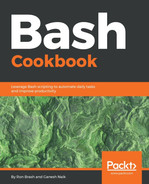
Bash Cookbook
The \"Bash Cookbook\" is your comprehensive guide to mastering Bash scripting. By working through engaging examples, you will learn how to leverage the Bash shell to automate complex tasks, create efficient scripts, and manage Linux systems effectively. What this Book will help me do Understand the fundamental principles of Bash scripting and how to effectively automate tasks on Linux systems. Develop advanced skills with Bash, such as UI scripting, data parsing, and system monitoring. Create robust scripting solutions for data collection, complex task automation, and security management. Enhance your productivity by applying best practices and techniques directly applicable to real-world problems. Gain confidence in Bash scripting by completing practical exercises and mini-projects that simulate real-life scenarios. Author(s) None Brash and Ganesh Sanjiv Naik are experienced software professionals with a strong background in Linux system administration and Bash scripting. Together, they bring years of hands-on experience to their writing, aimed at delivering practical insights to their readers. They believe in empowering users through knowledge and providing tools and techniques to make tasks easier and more efficient. Who is it for? If you are a system administrator, Linux power user, or developer looking to automate your workflows, optimize your tasks, or learn Bash scripting from scratch, this book is designed for you. Ideal for newcomers to Bash scripting who want to learn step-by-step, as well as more experienced users who aim to expand their scripting capabilities.
eBook
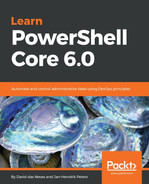
Learn PowerShell Core 6.0
Learn PowerShell Core 6.0 provides you with the practical knowledge to master PowerShell Core 6.0 and utilize its potential for administrative and automation tasks. Through this guide, you will uncover how to perform tasks ranging from simple automation to complex scripting techniques. What this Book will help me do Master the essentials of PowerShell Core 6.0 and its applications. Learn advanced scripting techniques, such as reusable and modular coding. Understand PowerShell's security features and the concept of Just Enough Administration. Implement DevOps practices using pipelines and Desired State Configuration (DSC). Integrate PowerShell with tools such as SQL Server and Microsoft Azure. Author(s) None das Neves is an experienced systems administrator and IT consultant with a focus on automation and scripting. Jan-Hendrik Peters specializes in creating efficient PowerShell solutions for enterprise environments. Together, they share their vast knowledge and hands-on expertise in this comprehensive guide. Who is it for? This book is ideal for Windows administrators and DevOps professionals looking to efficiently tackle everyday management tasks. Beginners to PowerShell will find clear steps to build foundational knowledge, while more advanced readers can deepen their understanding of core concepts and advanced techniques. If your goal is to use automation to increase productivity or explore PowerShell's capabilities in security and DevOps, this book is for you.
eBook
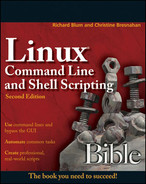
Linux® Command Line and Shell Scripting Bible, Second Edition
The authoritative guide to Linux command line and shell scripting completely updated and revised [it's not a guide to Linux as a whole just to scripting] The Linux command line allows you to type specific Linux commands directly to the system so that you can easily manipulate files and query system resources, thereby permitting you to automate commonly used functions and even schedule those programs to run automatically. This new edition is packed with new and revised content, reflecting the many changes to new Linux versions, including coverage of alternative shells to the default bash shell. For this edition, the author has teamed up with another Linux expert with their shared expertise, they take you beyond the basics of shell scripting and guide you through using shell scripting for higher-level applications that are commonly found in Linux environments. In addition, this edition features a host of real-world examples, so you can see how the scripts work in application. Reflects changes to new Linux versions and covers alternate shells to the default bash shell Offers new chapters on working with file system commands and software installation commands Includes a plethora of real-world examples of advanced shell scripting Shows how to use shell scripts in a graphical desktop environment With Linux Command Line and Shell Scripting Bible you'll learn to manage file systems, install software, write scripts for graphical desktops, work with alternative shells, and more.
eBook