
Catalogue Search | MBRL


Are you sure you want to remove the book from the shelf?

{{itemTitle}}
7,405
result(s) for
"Shellfish culture"
Sort by:


Ecological risk assessment of heavy metal pollution in the water of China’s coastal shellfish culture areas
In order to learn about the status of heavy metals and ecological risks in the water of thirteen China’s costal shellfish culture areas, principal component analysis was applied to analyze the distributions of five kinds of heavy metal, while the safety threshold method was employed to evaluate the ecological risks. The results showed that among the 13 shellfish culture areas, the average metal concentrations were in the order of Zn > Cu > Pb > Hg > Cd, and all heavy metals were below the second standards for sea water quality of China. The distribution of heavy metals in 13 shellfish culture areas was reflected by two principal components with the contribution rates of F1(Cu) and F2(Zn, Pb) were 36.14% and 23.40%,respectively,which was less affected by economic and geographical differences. The ecological risks assessment of five kinds of heavy metals showed that MOS10 was more than one; the probabilities of five heavy metals affecting more than 10% of aquatic organisms were 49.52%, 24.11%, 17.49%, 22.05%, and 5.66%, respectively, the ecological risk of five main heavy metals was in order Cu > Zn > Cd > Pb > Hg. In the selected thirteen shellfish culture areas, the value of msPAF of seven culture areas was higher than 20%, indicating these areas are highly ecologically contaminated by heavy metals, and the other four shellfish culture areas with value of 0, indicating that these areas have no ecological risk of heavy metals pollution.
Journal Article


Evaluation of nutrient bioextraction by seaweed and shellfish aquaculture in Korea
Although Korea is third in seaweed production and second in shellfish production globally, this is the first study evaluating ecosystem services of seaweed and shellfish aquaculture in Korea. The objective of this study is to evaluate nutrient bioextraction capacities of major seaweed and shellfish species aquacultured in Korea. C (C) removal of three major aquacultured seaweed species, Neopyropia yezoensis, Saccharina japonica, and Undaria pinnatifida were 24,247, 8,423, and 12,758 tons, respectively, in 2016. N (N) removal of these species was 4,088, 732, and 1,244 tons, respectively. The C and N removal of the Pacific oysters (Crassostrea gigas) were 14,693 and 1,050 tons, respectively. Manila clams (Venerupis philippinarum) removed 2,120 tons of C and 136.5 tons of N. Together, 161,846 tons of CO2 and 7,251 tons of N were removed by three major seaweed species and two shellfish species. These values are significant amounts, equivalent to 5.7% of CO2 and 8.6% of N discharged from all wastewater treatment plants in Korea. These results suggest that nutrient bioextraction by aquacultured seaweed and shellfish can be a cost efficient, affordable, and equitable solution for coastal nutrient management programs in Korea and elsewhere.
Journal Article

Lobster
Takes us on a journey through the history, biology, and culture of lobsters, including the creature's economic and environmental status worldwide. He describes the evolution of technologies to capture these creatures and addresses the ethics of boiling them alive. Along the way, King also explores the salacious lobster palaces of the 1920s, the animal's thousand-year status as an aphrodisiac, and how the lobster has inspired numerous artists, writers, and thinkers including Aristotle, Dickens, Thoreau, Dali, and Woody Allen.
Book

Microplastic Pollution in Shellfish Aquaculture: Occurrence, Impact, and Possible Remedies
Microplastic (MP) contamination, which originated from anthropogenic activities, is one of the environmental challenges posing a threat to aquaculture systems globally. Occurrence of MPs pollution has been found to affect the commercially important farmed shellfish organisms in many recent studies. Considering the interconnected repercussions, this paper reviews and assesses the likely sources of microplastics in shellfish farming, as well as their behavioral, physical, and genetic effects on shellfish products. Microplastic penetration and deposition by various shellfish may result in unique health and performance deterioration, such as toxicological implications, behavioral changes, growth, and reproductive issues. These negative consequences are leading the shellfish aquaculture industry to an unsustainable future. Finally, potential solutions are presented to mitigate the negative effects of microplastic pollution in shellfish cultures, such as controlling microplastics through water treatment technology, limiting plastic usage in aquaculture, ecological concepts, the use of alternative plastic products, and policy implications.
Journal Article

Perceptions of shellfish aquaculture in British Columbia and implications for well-being in marine social-ecological systems
Shellfish aquaculture is often positioned as an adaptive alternative to traditional resource industries, but the social and cultural effects of expanding production on coastal/marine social-ecological systems are unclear. Reporting on a multimethods study, we present perceptions about shellfish aquaculture collected through interviews, participant-employed photography, and a household survey in British Columbia, Canada. With an approach focused on local preferences for social-ecological conditions and the ways in which those conditions may be enhanced or diminished, we indicate that perceptions of the effects of aquaculture on the environment, economy, and lived experience are composed of both objective and subjective components. Interview responses and survey opinions varied widely and included bimodal responses. Industry interviewees tended to focus on environmental and economic benefits while acknowledging concerns about the environment and lived experience. Nonindustry interviewees typically questioned the environmental effects while underscoring economic benefits and negative effects on experience. Most survey participants felt positively about the effects on the economy, expressed negativity and uncertainty about effects on the environment, and demonstrated the greatest variability in opinions about effects on lived experience. Findings revealed uncertainty and alienation across all dimensions. Our findings, used as an analytical lens, support the usefulness of the concept of well-being in attempts like this one to understand the dynamics of coastal communities by providing a framework for deciphering what is important to individuals and societies experiencing change and considering adaptations.
Journal Article

Research on the Separation Technology of Kelp and Shellfish Box Based on Shellfish–Kelp Mixed Culture Mode
Aiming at the problem of floating shellfish boxes interfering with kelp harvesting when mechanized kelp harvesting is based on shellfish–kelp mixed culture mode, this paper combines the structural characteristics of the shellfish box itself, designs the kelp harvesting unit test bench and develops a shellfish box separator device. The key factors affecting the box separator’s separation effect were derived through the theoretical analysis. The process of separation of a shellfish box by the box separator is simulated and optimized under the derived boundary conditions. The single-factor test for the separating effect of the box separator was conducted with ADAMS kinematics simulation software. The test showed the optimal utility intervals for the key factors under consideration. Further orthogonal tests were conducted for the three key factors, which were ranked in descending order of importance as box separator separation angle θ, box separator taper angle β and box separator placement depth h. The optimal parameter combination is the box separator separation angle of 31.9°, the box separator taper angle of 30° and the box separator placement depth of 550 mm. Verification experiments have shown that both indicators, the farthest horizontal distance of the shellfish box and the angle of the shellfish box deviating from the box separator, meet the actual production requirements. In summary, the separator can effectively separate the shellfish box from the kelp, and the device is simple in design, quick in operation, and accomplished separation without disturbing shellfish. This study can provide a theoretical basis for the separation technology of kelp and shellfish box under shellfish–kelp mixed culture mode.
Journal Article
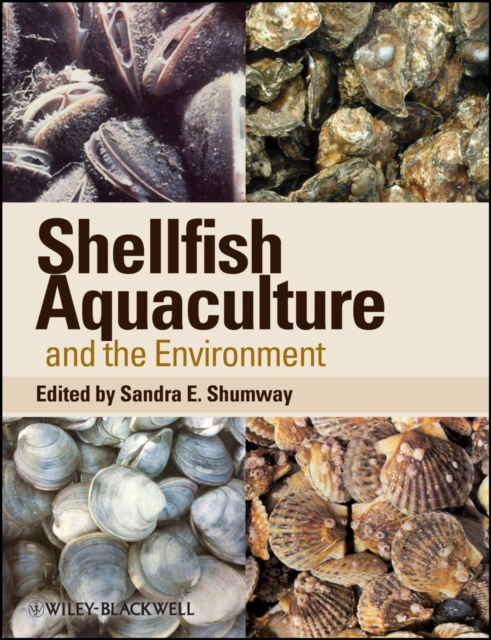
Shellfish aquaculture and the environment
Shellfish Aquaculture and the Environment focuses primarily on the issues surrounding environmental sustainability of shellfish aquaculture.The chapters in this book provide readers with the most current data available on topics such as resource enhancement and habitat restoration.
eBook

Winter Bloom Dynamics and Molecular Analysis of Benthic Sediments for the Toxic Dinoflagellate, Dinophysis acuminata, at Torquay Canal, Rehoboth Bay, Delaware, USA
The increased presence of harmful algal blooms (HABs) is a concern for many aquatic environments, especially with the increasing effects of climate change. Members of the dinoflagellate genus Dinophysis have been shown to produce toxins that can cause Diarrheic Shellfish Poisoning (DSP) in humans who consume infected shellfish. The advancing oyster aquaculture industry in Delaware will require the development of management practices and monitoring HAB species to protect environmental and human health. Temperature, nutrients, and prey abundance can be drivers of Dinophysis blooms. D. acuminata has been historically identified at high concentrations (>200,000 cells L−1) in water samples from Rehoboth Bay, DE, USA. However, the reach of spring blooms and how far they extend to aquaculture sites have not been determined. This study monitored an emergent HABs threat of a toxin-producing dinoflagellate, Dinophysis acuminata, by assessing a transect during the first recorded winter bloom in Torquay Canal and analyzing concentrations of chemical nutrients of combined nitrate and nitrite, and orthophosphate. Pearson correlation coefficient analysis between cell density (cells L−1) and environmental variables across all sites was conducted to determine significant relationships between water temperature, Chl-a concentration, conductivity, dissolved oxygen (DO), combined nitrate and nitrite concentrations (NOx), and orthophosphate concentrations (PO43−). Genetic techniques and PCR were utilized to determine the presence of Dinophysis using genus-specific primers to monitor cell density or abundance within the sediments during winter months. There were no significant correlations between environmental variables, and nutrient concentrations did not exceed EPA regulations. Molecular analyses of benthic sediments detected Dinophysis spp., offering insight into potential bloom origins. Overall, there is limited ecological data on Dinophysis acuminata in Rehoboth Bay, DE, USA. The results of this study will help strengthen resources for monitoring HAB species and understanding potential risks to oyster aquaculture in Delaware.
Journal Article