
Catalogue Search | MBRL


Are you sure you want to remove the book from the shelf?

{{itemTitle}}
297,890
result(s) for
"Shelters"
Sort by:

The injured fox kit
When Ella discovers an injured fox by the river, she wants to nurse it back to health but has to be careful how she handles the fox so that it can be returned to the wild.
Book

Evaluating the effects of shelter-in-place policies during the COVID-19 pandemic
We estimate the effects of shelter-in-place (SIP) orders during the first wave of the COVID-19 pandemic. We do not find detectable effects of these policies on disease spread or deaths. We find small but measurable effects on mobility that dissipate over time. And we find small, delayed effects on unemployment. We conduct additional analyses that separately assess the effects of expanding versus withdrawing SIP orders and test whether there are spillover effects in other states. Our results are consistent with prior studies showing that SIP orders have accounted for a relatively small share of the mobility trends and economic disruptions associated with the pandemic. We reanalyze two prior studies purporting to show that SIP orders caused large reductions in disease prevalence, and show that those results are not reliable. Our results do not imply that social distancing behavior by individuals, as distinct from SIP policy, is ineffective.
Journal Article

The homeless foal
When a new foal is born at Animal Magic, Ella wants to make sure that she can find a new home for him that is close enough for her to visit.
Book
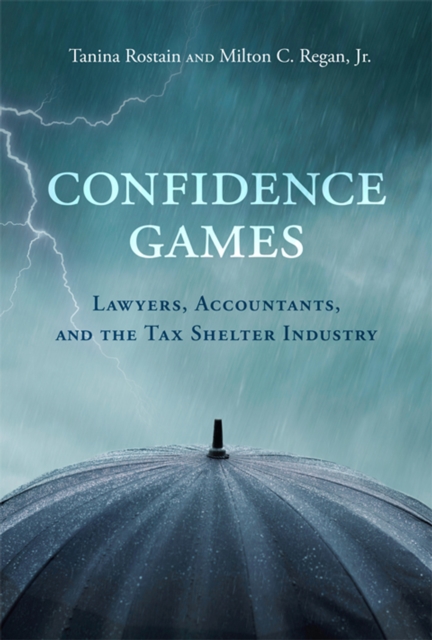
Confidence Games
For ten boom-powered years at the turn of the twenty-first century, some of America's most prominent law and accounting firms created and marketed products that enabled the very rich -- including newly minted dot-com millionaires -- to avoid paying their fair share of taxes by claiming benefits not recognized by law. These abusive domestic tax shelters bore such exotic names as BOSS, BLIPS, and COBRA and were developed by such prestigious firms as KPMG and Ernst & Young. They brought in hundreds of millions of dollars in fees from clients and bilked the U.S. Treasury of billions in revenues before the IRS and Justice Department stepped in with civil penalties and criminal prosecutions. InConfidence Games, Tanina Rostain and Milton Regan describe the rise and fall of the tax shelter industry during this period, offering a riveting account of the most serious episode of professional misconduct in the history of the American bar. Rostain and Regan describe a beleaguered IRS preoccupied by attacks from antitax and antigovernment politicians; heightened competition for professional services; the relaxation of tax practitioner norms against aggressive advice; and the creation of complex financial instruments that made abusive shelters harder to detect. By 2004, the tax shelter boom was over, leaving failed firms, disgraced professionals, and prison sentences in its wake. Rostain and Regan's cautionary tale remains highly relevant today, as lawyers and accountants continue to face intense competitive pressure and regulators still struggle to keep pace with accelerating financial risk and innovation.
eBook

Stolen! : a pony called Pebbles
Finding a horse in the park, Amy takes it to the Rainbow Street Shelter and secretly hopes the owner never turns up.
Book

Homes, Houses, and Shelters 1
Palma talks about a house and a pool made of cardboard. Besides cardboard and blue tempera paint, the duct tape did wonders while building the houses. The boy making this one was amazed to discover that some pieces of riveted cardboard functioned perfectly for stairs. He was in the zone, adding stairs in all directions, so when the house was done, he looked dizzy trying to find solid ground for the construction. He soon realized that in one position, the house was simply a house with some stairs, but in another one, the stairs flipped their position and took one to a big blue container.
Journal Article

A new leash on life
\"In this fifth book, Brianna tries to figure out where she fits as the Dog Club's newest member. She loves the dogs, especially sweet shelter dog Lily, but sometimes she feels like the fourth wheel in Sasha, Kim, and Taylor's friendship trio. Then the shelter starts a new foster program. Bri knows she'll feel better if she can bring Lily home---but convincing her mom to take in an older shelter dog may be even tougher than feeling like a fourth wheel...\"--Provided by Amazon.
Book

A Framework for Efficient and Adaptable Post-Disaster Shelters: Streamlining Material Provisions through Modular Scaffolds
Providing shelter after disasters is a complex, multi-stage process. In the early aftermath, emergency shelters must be secured to meet basic physical needs of affected communities. However, the subsequent provision of various types of temporary accommodation requires new resources. Agencies and governments mobilize significant supplies during the phases of relief, often for a protracted period time, facing inefficiencies and challenges of wasted resources. This paper aims to review the persistent issues of post-disaster shelter processes to explore how the relief efforts could be more sustainable. The study derives a technical framework for shelter adaptability and efficiency based on architectural principles of flexibility to examine how material supply from early emergency stages could contribute to efficient transitional shelter processes. Following a review of literature, the study drew analogies with theories of Open Building and flexibility to propose guidelines for a design and building method. Through an analytical description, the paper draws up an actual shelter proposal using the derived principles. The analysis suggests that the early-stage provision of adaptable shelters, conducive to the concept of incremental transitional building processes, could optimize resources and logistics, reduce waste, enhancing the efficiency, adaptability, and overall sustainability of post-disaster shelter responses.
Journal Article

125 pet rescues : from pound to palace : homeless pets made happy!
\"A collection of hilarious and heartwarming stories of dogs, cats, and all types of pets given a second chance, and the human animal lovers who rescued them.\"--Provided by publisher.
Book

Field and full-scale laboratory testing of prototype wildland fire shelters
This paper describes a series of tests conducted to evaluate prototype fire shelters designed to provide enhanced thermal protective insulation in wildland fire burn-over events. Full-scale laboratory and field tests are used to compare the thermal performance of the prototypes with a fire shelter construction in current use in the United States. Laboratory tests showed that the prototype fire shelters outperformed the current shelter in providing fire-blocking thermal insulation in tests designed to simulate exposure to the intense flame conditions encountered in wildland fires. Field tests supported laboratory comparisons, but proved to be statistically inconclusive in differentiating shelter performance because of the variability inherent in thermal data obtained in field burns. This study confirmed the value of evaluating prototype shelter designs in laboratory tests capable of reproducibly simulating exposure to turbulent flames encountered in wildland fires.
Journal Article