
Catalogue Search | MBRL


Are you sure you want to remove the book from the shelf?

{{itemTitle}}
42
result(s) for
"Shepherds Fiction."
Sort by:

What is pastoral?
One of the enduring traditions of Western literary history, pastoral is often mischaracterized as a catchall for literature about rural themes and nature in general. In What Is Pastoral?, distinguished literary historian Paul Alpers argues that pastoral is based upon a fundamental fiction—that the lives of shepherds or other socially humble figures represent the lives of human beings in general. Ranging from Virgil's Eclogues to Sarah Orne Jewett's The Country of the Pointed Firs, from Shakespeare and Cervantes to Hardy and Frost, this work brings the story of the pastoral tradition, previously limited to classical and Renaissance literature, into the twentieth century. Pastoral reemerges in this account not as a vehicle of nostalgia for some Golden Age, nor of escape to idyllic landscapes, but as a mode bearing witness to the possibilities and problems of human community and shared experience in the real world. A rich and engrossing book, What Is Pastoral? will soon take its place as the definitive study of pastoral literature.
eBook
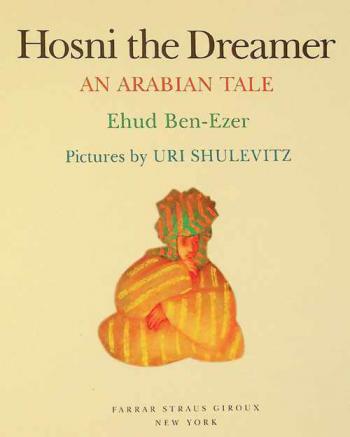
Hosni the dreamer : an Arabian tale
Hosni, a shepherd living in the desert, finally realizes his dream of traveling to the city where he spends his gold dinar in a way which changes his life forever.
Book


Funny machines for George the sheep : a children's book inspired by Leonardo Da Vinci
George the sheep is troubled that when it begins to rain he shrinks-- but his ingenious shepherd devises a way to solve George's problem.
Book

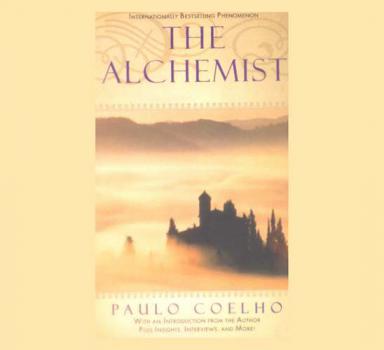
The alchemist : a fable about following your dream
An Andalusian shepherd boy named Santiago travels from his homeland in Spain to the Egyptian desert in search of a treasure buried in the Pyramids. Along the way he meets a Gypsy woman, a man who calls himself king, and an alchemist, all of whom point Santiago in the direction of his quest. No one knows what the treasure is, or if Santiago will be able to surmount the obstacles along the way. But what starts out as a journey to find worldly goods turns into a discovery of the treasures found within.
Book

Preaching without Practicing
Recognizing how important domesticity was to her persona, he emphasized that neither her public engagements nor her writing career conflicted with her duties as a wife and mother. [...]he accounts for her prodigious productivity by explaining that \"her social, literary, and domestic duties are taken up methodically. According to its founder and proprietor William Robertson Nicoll, the Woman at Home was created for \"women who were married or expected to marry\"; however, its readership appears to have significantly exceeded this category, including (if Swan's correspondence is an accurate indicator) many single women who had no desire to marry and were interested in pursuing careers.44 Nicoll acknowledged uneasily that \"numbers of the best women now live independent lives and that their tastes and needs must also be taken into account. [...]she also recognized that many jobs to which middle-class women might aspire required skill and training. [...]Swan consistently discouraged her readers from pursuing authorship or journalism as a means of earning a living, undoubtedly because of the very real challenges involved. Lyall's career reveals the influence of W. T. Stead's \"new\" or investigative journalism, through which newspapers and magazines became instruments of moral improvement by shocking readers into awareness of social ills and campaigning on behalf of the disadvantaged.75 As Lyall observes the effects of poverty, alcoholism, and mental illness on other recent arrivals in London, journalism and philanthropy become inseparable for him.
Journal Article

The alchemist
\"Tells the mystical story of Santiago, an Andalusian shepherd boy who yearns to travel in search of a worldly treasure. His quest will lead him to riches far different--and far more satisfying--than he ever imagined. Santiago's journey teaches us about the essential wisdom of listening to our hearts, of recognizing opportunity and learning to read the omens strewn along life's path, and, most importantly, to follow our dreams\"-- Provided by publisher.
Book
The second shepherds' play
The Second Shepherds' Play was written in the fifteenth century by a playwright known to scholars today as the Wakefield Master. The comic-drama focuses on Col, the nominal leader of three shepherds and their encounter with Mak, the local thief. In the middle of the night, Mak casts a spell over the three and makes off with a lamb. Arriving home, Mak's wife Gil disguises the lamb as a baby, so that when the shepherds come knocking, they are at first fooled before discovering the deception. Exacting their revenge, they retrieve their sheep to return to the flock. That night they are visited by an angel who allows these shepherds to travel back in time to witness the birth of Christ and give him presents, making the journey from the profane dark comedy of the beginning to the sublime divine of a miracle play.
Streaming Video