
Catalogue Search | MBRL


Are you sure you want to remove the book from the shelf?

{{itemTitle}}
773
result(s) for
"Ship captains."
Sort by:


The duty of the shipmaster to render assistance at sea under international law
This study examines the shipmaster's duty to render assistance at sea under international law. This duty is assessed in the light of contemporary challenges posed by the phenomenon of irregular migration by sea, a problem which has intensified in recent years. The approach undertaken gives special emphasis to the shipmaster's responsibilities in rescue operations, and his role in the fulfilment of States' international obligations in the rendering of assistance.
eBook

Billy Budd, sailor : (an inside narrative)
\"'Is it the intention of law-makers that good men shall be hung ever?' asked Henry David Thoreau. The question has never been academic, but in 1924, when Herman Melville's Billy Budd was published, we understood it better than ever. A dense and poetic account of the human cost of realpolitik, Billy Budd asks how far we should go to protect the status quo. In the novella, John Claggart, master-at-arms of a British warship, alleges a sailor is talking mutiny. The sailor, Billy, isn't just innocent of the charge; he's a true innocent. Yet when confronted by his accuser, Billy reacts impulsively, striking Claggart. The resulting trial shows the horrors that can arise from a civilized society following its own laws. This Broadview Edition is based on the authoritative Hayford-Sealts copy-text of Billy Budd. The introduction distils the long and complex critical conversation about the work since its publication, and the historical appendices feature materials on mutiny, capital and corporal punishment, and the rule of law.\"-- Provided by publisher.
Book

Whaleback Ships and the American Steel Barge Company
The whaleback ship reflected the experiences of its inventor, Captain Alexander McDougall, who decided in the 1880s that he could build an improved and easily towed barge cheaply by using the relatively unskilled labor force available in his adopted hometown of Duluth, Minnesota. Captain McDougall's dream resulted in the creation of the American Steel Barge Company. From 1888 to 1898, the American Steel Barge Company built and operated a fleet of forty-four barges and steamships on the Great Lakes and in international trade. These new ships were considered revolutionary by some and nautical curiosities by others. Built from what was then a high tech material (steel) and powered by state-of-the-art steam machinery, their creation in the remote north was a sign of industrial accomplishment. In Whaleback Ships and the American Steel Barge Company, Roger C. Pellett explains that the construction of these ships and the industrial infrastructure required to build them was financed by a syndicate that included some of the major players active in the Golden Age of American capitalism. The American Steel Barge Company operated profitably from 1889 through 1892, each year adding new vessels to its growing fleet. By 1893, it had run out of cash. The cash crisis worsened with the onset of the Panic of 1893, which plunged the country into a depression that mostly halted the ship-building industry. Only one shareholder, John D. Rockefeller, was willing and able to invest in the company to keep it afloat, and by doing so he gained control. When prosperity returned in 1896, the interest in huge iron ore deposits on the Mesabe Range required larger, more efficient vessels. In an attempt to meet this need, the company built another vessel that incorporated many whaleback features but included a conventional Great Lakes steamship bow. Although this new steamship compared favorably with vessels of conventional design, it was the last vessel of whaleback design to be built. Whaleback Ships and the American Steel Barge Company objectively examines the design of these ships using the original design drawings, notes the successes and failures of the company's business strategy, and highlights the men at the operating level that attempted to make this strategy work. Readers interested in the maritime history of the Great Lakes and the industries that developed around them will find this book fascinating.
eBook


True yankees : the South Seas and the discovery of American identity
With American independence came the freedom to sail anywhere in the world under a new flag. During the years between the Treaty of Paris and the Treaty of Wangxi, Americans first voyaged past the Cape of Good Hope, reaching the ports of Algiers and the bazaars of Arabia, the markets of India and the beaches of Sumatra, the villages of Cochin, China, and the factories of Canton. Their South Seas voyages of commerce and discovery introduced the infant nation to the world and the world to what the Chinese, Turks, and others dubbed the “new people.”
Drawing on private journals, letters, ships’ logs, memoirs, and newspaper accounts, True Yankees traces America’s earliest encounters on a global stage through the exhilarating experiences of five Yankee seafarers. Merchant Samuel Shaw spent a decade scouring the marts of China and India for goods that would captivate the imaginations of his countrymen. Mariner Amasa Delano toured much of the Pacific hunting seals. Explorer Edmund Fanning circumnavigated the globe, touching at various Pacific and Indian Ocean ports of call. In 1829, twenty-year-old Harriett Low reluctantly accompanied her merchant uncle and ailing aunt to Macao, where she recorded trenchant observations of expatriate life. And sea captain Robert Bennet Forbes’s last sojourn in Canton coincided with the eruption of the First Opium War.
How did these bold voyagers approach and do business with the people in the region, whose physical appearance, practices, and culture seemed so strange? And how did native men and women—not to mention the European traders who were in direct competition with the Americans—regard these upstarts who had fought off British rule? The accounts of these adventurous travelers reveal how they and hundreds of other mariners and expatriates influenced the ways in which Americans defined themselves, thereby creating a genuinely brash national character—the “true Yankee.” Readers who love history and stories of exploration on the high seas will devour this gripping tale.
eBook


The Captains Widow of Sandwich
In 1852 Hannah Rebecca Crowell married sea captain William Burgess and set sail. Within three years, Rebecca Burgess had crossed the equator eleven times and learned to navigate a vessel. In 1856, 22-year-old Rebecca saved the ship Challenger as her husband lay dying from dysentery. The widow returned to her family's home in Sandwich, Massachusetts, where she refused all marriage proposals and died wealthy in 1917.This is the way Burgess recorded her story in her prodigious journals and registers, which she donated to the local historical society upon her death, but there is no other evidence that this dramatic event occurred exactly this way. In The Captain's Widow of Sandwich, Megan Taylor Shockley examines how Burgess constructed her own legend and how the town of Sandwich embraced that history as its own. Through careful analysis of myriad primary sources, Shockley also addresses how Burgess dealt with the conflicting gender roles of her life, reconciling her traditionally masculine adventures at sea and her independent lifestyle with the accepted ideals of the period's Victorian woman.
eBook

Shadow tyrants : a novel of the Oregon files
When the descendants of a legendary band of imperial secret-keepers threaten humanity, Juan Cabrillo and his team aboard the Oregon race to protect the world from a plot to eliminate all technology.
Book
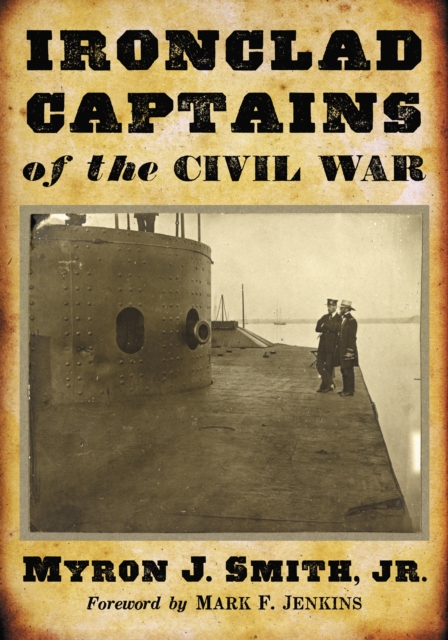
Ironclad Captains of the Civil War
From 1861 to 1865, the American Civil War saw numerous technological innovations in warfare--chief among them was the ironclad warship.Based on the Official Records, biographical works, ship and operations histories, newspapers and other sources, this book chronicles the lives of 158 ironclad captains, North and South, who were charged with.
eBook