
Catalogue Search | MBRL


Are you sure you want to remove the book from the shelf?

{{itemTitle}}
2,159
result(s) for
"Shipping History."
Sort by:


Roman Seas
This book offers an archaeological analysis of maritime economy and connectivity in the Roman east. That seafaring was fundamental to prosperity under Rome is beyond doubt, but a tendency to view the grandest long-distance movements among major cities against a background noise of small-scale, short-haul activity has tended to flatten the finer and varied contours of maritime interaction and coastal life into a featureless blue Mediterranean. Drawing together maritime landscape studies and network analysis, this work takes a bottom-up view of the diverse socioeconomic conditions and seafaring logistics that generated multiple structures and scales of interaction. The material record of shipwrecks and ports along a vital corridor from the southeast Aegean across the northeast Mediterranean provides a case study of regional exchange and communication based on routine sails between simple coastal facilities. Rather than a single well-integrated and persistent Mediterranean network, multiple discrete and evolving regional and interregional systems emerge. This analysis sheds light on the cadence of economic life along the coast, the development of market institutions, and the regional continuities that underpinned integration—despite certain interregional disintegration—into Late Antiquity. Through this model of seaborne interaction, the study advances a new approach to the synthesis of shipwreck and other maritime archaeological and historical economic data, as well as a path through the stark dichotomies that inform most paradigms of Roman connectivity and trade.
eBook

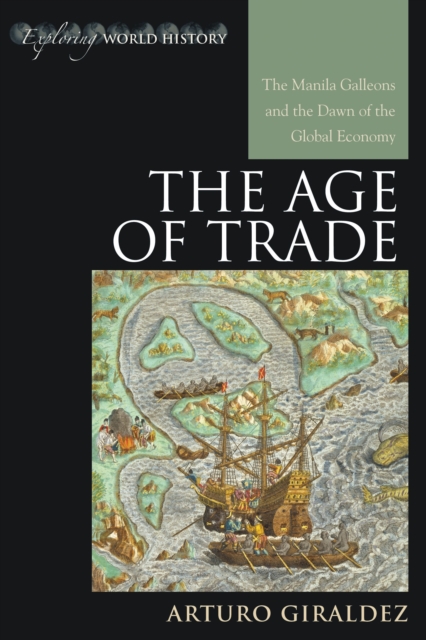
The age of trade
This groundbreaking book presents the first full history of the Manila galleons, which marked the true beginning of a global economy. Arturo Giraldez, the world's leading scholar of the galleons, traces the rise of the maritime route, which began with the founding of the city of Manila in 1571 and ended in 1815 when the last galleon left the port of Acapulco in New Spain (Mexico) for the Philippines, establishing a permanent connection between the Spanish empire in America with Asian countries, most importantly China, the main supplier of commodities during that era. Throughout the two-and-a-half-century history of the Manila galleons, the strategic commodity fuelling global networks was always silver. Giraldez shows how this most important of precious metals shaped world history, with influences that stretch to the present.
eBook


Shipping, Trade and Crusade in the Medieval Mediterranean
The cutting-edge papers in this collection reflect the wide areas to which John Pryor has made significant contributions in the course of his scholarly career. They are written by some of the world's most distinguished practitioners in the fields of Crusading history and the maritime history of the medieval Mediterranean. His colleagues, students and friends discuss questions including ship construction in the fourth and fifteenth centuries, navigation and harbourage in the eastern Mediterranean, trade in Fatimid Egypt and along the Iberian Peninsula, military and social issues arising among the crusaders during field campaigns, and wider aspects of medieval warfare. All those with an interest in any of these subjects, whether students or specialists, will need to consult this book.
eBook

Ninety percent of everything : inside shipping, the invisible industry that puts clothes on your back, gas in your car, and food on your plate
Revealing the workings and dangers of freight shipping, the author sails from Rotterdam to Suez to Singapore to present an eye-opening glimpse into an overlooked world filled with suspect practices, dubious operators, and pirates.
Book

Dutch Deltas
In Dutch Deltas, Werner Scheltjens examines the emergence, functions and structure of the Low Countries' maritime transport system between ca. 1300 and 1850. Scheltjens introduces the delta as a suitable geographical unit of analysis for understanding the regional economic origins of communities of maritime transporters. The author proves that changes in maritime trade networks and in the structure of regional economies entailed a process of specialisation, which led to the emergence of 'professional' maritime transport communities and the development of an integrated maritime transport market with Amsterdam and Rotterdam as its main centres.Dutch Deltas offers the first comprehensive study of the economic geography of the Low Countries' maritime transport sector and its long-term development between 1300 and 1850.
eBook

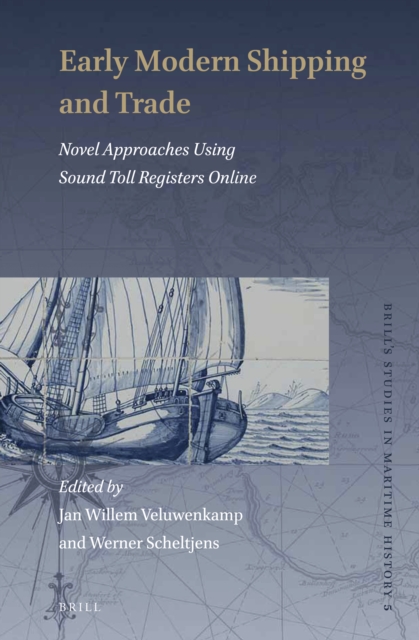
Early Modern Shipping and Trade
The articles collected in this volume are examples of the kind of research that can be done with the online database Sound Toll Registers Online (STRO). They show how STRO boosts the writing of the history of European maritime transport and trade, and how its use contributes to our knowledge of that history.
eBook