
Catalogue Search | MBRL


Are you sure you want to remove the book from the shelf?

{{itemTitle}}
67,398
result(s) for
"Short films."
Sort by:


Predicting the Learning Avoidance Motivation, Learning Commitment, and Silent Classroom Behavior of Chinese Vocational College Students Caused by Short Video Addiction
As short video addiction has gradually become an emerging Internet behavioral addiction, its negative impacts on the student population have been noticed and cannot be ignored. Based on a literature review, this study referred to the person-process-content framework and drew on the ecosystem theory to define the relationship between short video addiction, learning avoidance motivation, learning commitment, and silent classroom behavior by using structural equation modeling. This study recruited 1000 participants from Chinese vocational colleges to fill out questionnaires. With an effective recovery rate of 94.6%, there were 946 effective study participants comprising 445 males (47%) and 501 females (53%). After it was confirmed that the data passed the reliability and validity tests, structural equation model analysis was carried out. The study results showed that short video addiction was positively correlated with learning avoidance motivation, but negatively correlated with learning commitment; on the other hand, study avoidance motivation was negatively correlated with learning commitment, but positively correlated with silent classroom behavior. Meanwhile, there was a negative correlation between learning commitment and silent classroom behavior. As a result, the negative correlation between short video addiction and learning behavior needs attention from parents and teachers.
Journal Article

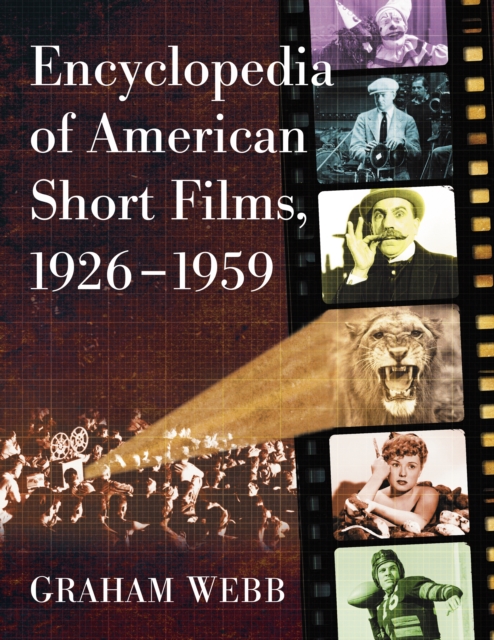
Encyclopedia of American Short Films, 1926-1959
Short subject films have a long history in American cinemas.These could be anywhere from 2 to 40 minutes long and were used as a \"filler\" in a picture show that would include a cartoon, a newsreel, possibly a serial and a short before launching into the feature film.
eBook


The perspective of journalism students towards Palestinian short narrative films: Evidence from a survey across Palestinian universities
Palestinian short narrative films epitomize the political, social, and cultural life of Palestinians. Beyond their artistic value, the films are pedagogical tools that shape students' learning and critical understanding. This study investigated the attitudes of journalism students toward Palestinian short narrative films in terms of viewing habits, motives, perceived content, and educational effect. The study is a cross-sectional survey carried out among 360 undergraduate journalism students from eight Palestinian universities during the period between June and December 2023. Of 384 students invited, 360 responded (93.7%). Most (78%) of the respondents do not watch Palestinian short films regularly, though 67.7% view them via satellite TV and 45% online. The dominant motives were educational and cultural, as 75.9% reported an increase in self-understanding and reflection on their identity, and 73.3% had an enhanced empathy with national issues. Political themes came first (74.1%), followed by historical themes (65.1%), and then social themes (61.9%). While 46.6% reported the technical quality as weak and the performance amateurish, 74.9% became more interested in the method of production, and 66.1% developed enhanced critical analysis skills. Generally, Palestinian short films can boost journalism students’ cultural identity, media literacy, and technical skills, especially when better produced and integrated into coursework.
Journal Article


Narrating the preservation of a film school archive – Re-configuring the hero’s journey across the nexus of conservation and film production
Narrating the preservation of a film school archive–Re-configuring the hero’s journey across the nexus of conservation and film production. In 2013, a program to secure the future of the more than 1800 films produced by students in the Victorian College of Arts’ Department of Film and Television commenced at the University of Melbourne. This is a highly significant collection, with films from 1966 to the present, that contains work by some of Australia’s pre-eminent producers, cinematographers, scriptwriters, and others. Utilising narrative frameworks theory, and particularly the victim to hero narrative, this paper explores the journey taken to preserve this archive and make it accessible to current and future students and the public. This makes explicit the value of narrative inquiry as a method for active rethinking and reframing of the project, the opportunities for democratisation and increasing plurality during the project and highlighted the need to contest the celebratory narrative of project completion to ensure that the continued risk to the hero-archive remains a central institutional concern.
Journal Article

Crafting short screenplays that connect
\"Crafting Short Screenplays That Connect introduces the essential element of 'human connection'- the ability to 'touch' the reader or observer- to the screenwriting and story creation process for short films. Claudia Hunter Johnson teaches the craft of short screenplay writing by guiding you through carefully focused writing exercises of increasing length and complexity. You will learn how to think more deeply about the screenwriter's purposes, craft an effective pattern of human change, and hone your vision and process for your short screenplays. New to this 4th edition:* 2 entirely new chapters, Connecting to Structure and Connecting to Dialogue* 2 new award winning short films included on the DVD* new exercises, images, examples and more throughout the book\"-- Provided by publisher.
Book

Why Don’t You Get It?
This essay explores the relationship between language and mutual (mis)understanding in Candra Aditya’s short film Dewi pulang. The film follows Dewi, a young Javanese woman, as she travels from Jakarta to her natal home in Central Java to attend her father’s funeral. The tension between Dewi’s multiple and often conflicting obligations is marked by the use of language—from the colloquial Indonesian she speaks with her friends in Jakarta to a brief exchange with her English-speaking boss on the telephone and the various forms of Javanese employed ‘at home’. Drawing on examples in both Indonesian and Javanese, it is argued that the film’s use of language may be understood as a form of social commentary, reflecting critically on the complex and at times incongruous desires, expectations, and aversions at play in the lives of a growing number of young Indonesians.
Journal Article