
Catalogue Search | MBRL


Are you sure you want to remove the book from the shelf?

{{itemTitle}}
126,583
result(s) for
"Short stories"
Sort by:

A day in the life of a smiling woman : the collected stories
\"The novelist, critic and biographer Margaret Drabble is one of the major literary figures of her generation. This collection reveals her brilliance in the art of the short story, presenting her complete short fiction for the first time in a single volume\"--Jacket.
Book

The Cambridge Introduction to the Short Story in English
The short story has become an increasingly important genre since the mid-nineteenth century. Complementing The Cambridge Introduction to the American Short Story, this book examines the development of the short story in Britain and other English-language literatures. It considers issues of form and style alongside - and often as part of - a broader discussion of publishing history and the cultural contexts in which the short story has flourished and continues to flourish. In its structure the book provides a chronological survey of the form, usefully grouping writers to show the development of the genre over time. Starting with Dickens and Kipling, the chapters cover key authors from the past two centuries and up to the present day. The focus on form, literary history, and cultural context, together with the highlighting of the greatest short stories and their authors, make this a stimulating and informative overview for all students of English literature.
eBook

Sorry, please, thank you
\"Drawing from both pop culture and science, Charles Yu is an observer of contemporary society, and in Sorry Please Thank You he fills his stories with equal parts humor and insight into the human condition. A big-box store employee is confronted by a zombie during the graveyard shift, a problem that pales in comparison to his inability to ask a coworker out on a date. A fighter leads his band of virtual warriors, thieves, and wizards across a deadly computer-generated landscape, but does he have what it takes to be a hero? A company outsources grief for profit, its slogan: Don't feel like having a bad day? Let someone else have it for you\"--From publisher description.
Book

Lucky Tomorrow
Lives of longing and resilience, searching and belonging in a debut story collection from a memoirist and renowned advocate for change For a Lucky Tomorrow Buy a Flower Today. Is it true? a prospective customer asks. About the luck? “Absolutely!” Felma says. Flowers, she knows, are all that’s anchored in this world, even if not for long, and like others in these luminous stories, Felma knows what it is to be rootless. In Lucky Tomorrow, Deborah Jiang-Stein presents an unforgettable cast of characters dreaming of redemption, purpose, and connection in a wounded yet beautiful world. A young girl stuck working at her family’s candy stand. A former priest trapped on a crowded train. A prisoner robbed of the book she’s been writing. A father haunted by his broken family. A woman confined to a psych ward. A reverend caring for her dying housemate. And Felma, a flower vendor, searching for the daughter she gave birth to while in prison, who was swiftly bundled away. Felma’s story leads us in, through, and around the others—a central beating heart for these lives on the fringes, where Jiang-Stein finds a singular, tenacious humanity. The stories in Lucky Tomorrow move through settings drawn from the path of the author’s own life: Seattle, where she grew up after being born in an Appalachian prison; Tokyo, where she once lived; the Twin Cities, where she currently resides; and the American South, where she travels for much of her advocacy work with women in prison. Pushing the boundaries of genre, Jiang-Stein delicately layers the stories of these outcasts, eccentrics, and visionaries, gathering them in from the shadows with remarkable empathy and candor, laying bare our shared sorrows and joys.
eBook

Beginners
\"Carver is one of the most celebrated short-story writers in American literature his style is both instantly recognizable and hugely influential and the pieces in \"What We Talk About\" . . ., which portray the gritty loves and lives of the American working class, are counted among the foundation stones of the contemporary short story. In this unedited text, we gain insight into the process of a great writer. These expansive stories illuminate the many dimensions of Carver s style, and are indispensable to our understanding of his legacy.\"--Provided by publisher.
Book
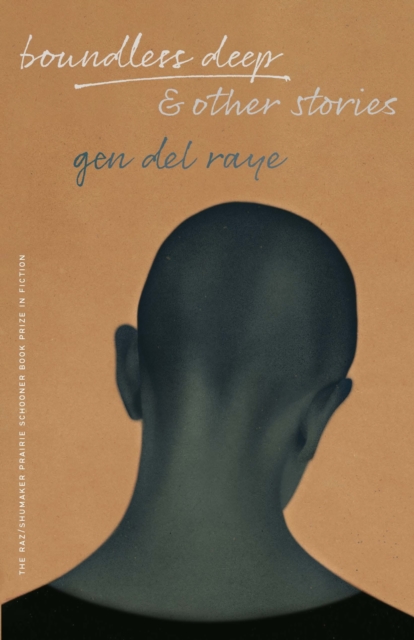
Boundless Deep, and Other Stories
By turns introspective, surreal, and bitingly funny, this collection of linked short stories spans seven decades across Japan and the United States and shows a family's tenacity in the face of relationships fractured by language and distance.
eBook

This is not a love song : stories
A collection of dark, witty stories explores the efforts of ordinary people to persevere when marriages, friendships, and families come undone.
Book

Joyriders
In this collection of stories set across the Midwest
and rural Appalachia, lonely people travel half-haunted
landscapes and discover moments of light. In this
debut collection, tangled bonds of love and family collide with
a natural world both fragile and ferocious. Upended by grief, a
widowed veterinarian seeks solace by fostering a litter of
orphaned opossums. A young lawyer embarks on an affair, only to
fall into a deeper, stranger entrancement with her
lover’s nine-year-old daughter during a weekend on the
Lake Huron coast. In the depths of a Wisconsin winter, a
recovering alcoholic risks everything to plot a careening
course toward atonement. And in the title story, two teenagers
steal a car, discover a loaded rifle in the backseat, and set
off consequences both devastating and tender for a series of
strangers they’ll never meet. Set across the Midwest and
rural Appalachia, the stories in
Joyriders offer a resonant vision of rural and
small-town life: lonely, half-haunted landscapes are pierced
with moments of light, and even the most taciturn faces conceal
inner worlds both rich and strange. Comfort and heartache
abound—entangled, inseparable. “What was Kevin
suggesting,” wonders Valerie, after struggling for years
to steer her innocent, angry, mysteriously afflicted son
through the world, “that she loved him less because of
his troubles? Oh, preposterous. More, she wanted to tell him,
more.” Characters’ paths repeatedly bend in
unforeseen directions, and the shape of each story
surprises—illuminating, in this way, the surprising
contours of entire lives.
eBook


British Short Fiction in the Early Nineteenth Century
In spite of the importance of the idea of the 'tale' within Romantic-era literature, short fiction of the period has received little attention from critics. Contextualizing British short fiction within the broader framework of early nineteenth-century print culture, Tim Killick argues that authors and publishers sought to present short fiction in book-length volumes as a way of competing with the novel as a legitimate and prestigious genre. Beginning with an overview of the development of short fiction through the late eighteenth century and analysis of the publishing conditions for the genre, including its appearance in magazines and annuals, Killick shows how Washington Irving's hugely popular collections set the stage for British writers. Subsequent chapters consider the stories and sketches of writers as diverse as Mary Russell Mitford and James Hogg, as well as didactic short fiction by authors such as Hannah More, Maria Edgeworth, and Amelia Opie. His book makes a convincing case for the evolution of short fiction into a self-conscious, intentionally modern form, with its own techniques and imperatives, separate from those of the novel.
eBook