
Catalogue Search | MBRL


Are you sure you want to remove the book from the shelf?

{{itemTitle}}
73
result(s) for
"Short stories, Vietnamese."
Sort by:
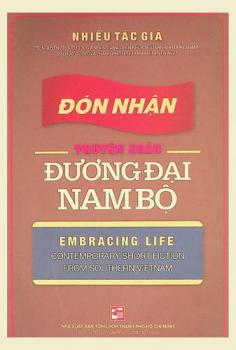
Đón nhận truyện ngắn đương đại Nam Bộ = Embracing life contemporary short fiction from Southern Vietnam
Collection of contemporary short stories created by authors from the Southern Vietnam.
Book

Political Orientation in Ecocriticism: National Allegory in Vietnamese Ecofiction by Trần Duy Phiên
Since the late 1990s, theories and practices of ecocriticism have tended to be more politically engaged than in its earliest phase, considering that \"environmental problems cannot be solved without addressing issues of wealth and poverty, overconsumption, underdevelopment, and the notion of resource scarcity\" (Heise 251-2). This paper engages with the political orientation in ecocriticism by examining presentations of humans and nature in three Vietnamese short stories--\"Kien va nguoi\" (The Ants and the Man, 1990), \"Moi va nguoi\" (The Termite and the Man, 1992), and \"Nhen va nguoi\" (The Spider and the Man, 2012) by Tran Duy Phien (born 1942). These presentations center around conflicts between human characters and insect characters, in which the former attempt to dominate and exploit the latter and the latter resist and take revenge on the former. This paper delves into the political context of these presentations which is the Vietnamese government's projects of modernizing the nation since the time it came into power in 1945 and particularly since the time of Reform in 1986. These projects include the making of modern citizens, civilizing the highland, and modernizing the national economy, all have aimed at clearing colonial legacies in material and mental aspects of postcolonial Vietnam. The paper argues that national allegory is a characteristic of Vietnamese ecofiction, which forms Vietnamese intellectuals' engagement with the postcolonial condition of Vietnam. This argument in its turn affirms political engagements in ecocriticism as a historical situation, particularly in former colonial countries.
Journal Article

Vietnamese stories for language learners : traditional folktales in Vietnamese and English
\"Intended for Vietnamese language students or heritage learners, the stories in this volume present the everyday vocabulary and grammar in use in Vietnam today. Forty folk stories have been edited and simplified for learning purposes and are presented in parallel Vietnamese and English versions to facilitate language learning\"--Publisher marketing.
Book
Confucianism and Folklore in Vietnamese Fantasy Short Stories: The Case of Ghost Stories
Truyền kỳ, which is a genre of fantasy short stories, was formed and developed in the historic period of medieval literature of Vietnam in the sixteenth and seventeenth centuries. Despite being derived from a similar Chinese genre, the truyền kỳ of Vietnam was the work of the endogenous development of the national fantasy short story, which was closely associated with folk literature and historical prose. However, at the time of its inception, as well as at the glorious top of this genre, truyền kỳ had never been accepted as an official genre. It was rather a metaphor for unorthodox discourse in formal Confucian society. The reason is that truyền kỳ founded the first elements of folk narrative genres that were considered inferior and which Confucius advised Confucians to reject. Therefore, truyền kỳ deeply influenced Confucian doctrines, yet in this genre by itself, the deficiencies of Confucian philosophy related to the metaphysical world were exposed in competition with other non Confucian religions that had emerged, such as Buddhism, Taoism, and especially folklore. By analyzing ghost stories that represent the most typical case or expression of the complex relationship between Confucianism and folklore in the Vietnamese truyền kỳ genre, this article concludes that all the ontological crises of Confucianists that manifested in truyền kỳ derived from this tradition of folklore which created a minor discourse of a Confucian literatus who wrote on the periphery of official Confucianism.
Journal Article

The Frangipani Hotel : stories
A collection of linked short stories about ghosts and hauntings in modern Vietnam and in the Vietnamese-American community. Some are inspired by old Vietnamese legends but reimagined in the post-1975 world--Provided by publisher.
Book
Confucianism and Folklore in Vietnamese Fantasy Short Stories: The Case of Ghost Stories
Truyen ky, which is a genre of fantasy short stories, was formed and developed in the historic period of medieval literature of Vietnam in the sixteenth and seventeenth centuries. Despite being derived from a similar Chinese genre, the truyen ky of Vietnam was the work of the endogenous development of the national fantasy short story, which was closely associated with folk literature and historical prose. However, at the time of its inception, as well as at the glorious top of this genre, truyen ky had never been accepted as an official genre. It was rather a metaphor for unorthodox discourse in formal Confucian society. The reason is that truyen ky founded the first elements of folk narrative genres that were considered inferior and which Confucius advised Confucians to reject. Therefore, truyen ky deeply influenced Confucian doctrines, yet in this genre by itself, the deficiencies of Confucian philosophy related to the metaphysical world were exposed in competition with other non Confucian religions that had emerged, such as Buddhism, Taoism, and especially folklore. By analyzing ghost stories that represent the most typical case or expression of the complex relationship between Confucianism and folklore in the Vietnamese truyen ky genre, this article concludes that all the ontological crises of Confucianists that manifested in truyen ky derived from this tradition of folklore which created a minor discourse of a Confucian literatus who wrote on the periphery of official Confucianism.
Journal Article

Southern Memory, Southern Metaphor: Representing South Vietnam through the US South
This essay takes the juxtaposition of South Vietnamese and Confederate flags at the January 6, 2021 Capitol Riot as a point of departure for thinking through southern metaphors and southern memories connecting South Vietnam and the US South. It analyzes cultural productions by 1.5 generation South Vietnamese refugees—Andrew Lam's short story \"Show and Tell\" and An-My Lê's photographic series Silent General—to trace the ways in which South Vietnam has been represented through the iconography and vernacular of the US South. What links South Vietnam and the US South is a distinct articulation of southern memory and memorialization, forged in the wake of southern civil war defeat. Southern memory, however, is always already contested, manifesting in the US context either as Lost Cause mythology or as Black abolitionist remembrance. Southern memory and southern metaphor thus open up space for contingencies and interventions, to route South Vietnamese diasporic politics through Black freedom struggles instead of Confederate nostalgia. Overall, this essay interrogates what critiques of empire and white supremacy are enabled by juxtaposing South Vietnam and the US South: two seemingly conservative southern spaces that do not easily cohere to the anti-imperialist, Third World Liberationist politics typically associated with the \"Global South.\"
Journal Article

Freshwater Crayfish and the Trouble with Names
[...]pineapples, which are an ingredient in Vietnamese soup; however, she says, pineapples are up to me because she herself doesn't like them. [...]phka snao, the name of a yellow flower (Sesbania javanica), to be eaten as a raw vegetable with our dinner. [...]many Cambodians, including me, are now calling the soup samla mchu Vietnam.
Journal Article

The Refugee, Recently: Souvankham Thammavongsa, Philip Huynh, and The Aesthetics of Heterogeneity
[...]refugees from the Vietnam War are not solely Vietnamese, but include a number of Lao, Cambodian, Hmong, and ethnic Chinese (\"Hoa\") migrants whose lives were irrevocably altered by the war's effects. Offering a number of affective appeals and formal perspectives, an aesthetic of heterogeneity can both engage and disrupt audience expectations, highlighting the processes and varieties of experiences that comprise refugee life while remaining embedded in the organizing social structures that reach across differing refugee ethnic groups. Historically, Canada has conceptualized the role of cultural diversity and refugees at similar moments, as the ideology of Canadian multiculturalism was created as the Canadian populace was viewing images of Southeast Asian refugees on their television sets and shortly thereafter met this new immigrant population in person.3 In his essential history of Vietnamese Canadian refugee aesthetics, Vinh Nguyen identifies how \"the arrival of post-war Vietnamese refugees to Canada was bookended by two major legislative changes that significantly changed the nation: the Immigration Act of 1976 and the Canadian Multiculturalism Act of 1988\" (3). The former Act inaugurated the legal class of \"refugees\" in Canadian immigration legislation, which meant that Vietnamese refugees \"entered Canadian society-physically as well as culturally-at a conjecture when state directives recognized the category of 'the refugee' as a legitimate course of entry into the country and the value of 'cultural diversity' to its conception of nationality\" (3).
Journal Article
Journey to Hoi An: The Theme of Return in Philip Huynh's The Forbidden Purple City
Yet, aside from a few recent contributions,1 scholars have found it difficult to account for Southeast Asians, like Vietnamese Canadians who mostly came to Canada as refugees or \"boat people\" following the end of the Vietnam War (Ty 565). More than four decades after the first Vietnamese refugee arrivals, this discourse, and its accompanying image of Canada, continues to circulate in powerful ways, due to its ability to depict the nation-state as \"a benevolent peacemaker\" (Nguyen 398) that has given Vietnamese refugees \"the gift of freedom\" (Ngo 70).2 As evidenced in recent legislation like the Journey to Freedom Day Act, politicians continually draw upon this \"grateful refugee\" discourse, further ensconcing \"a very specific, dominant Vietnamese Canadian identity . . . within Canadian culture, history, and politics\" (Nguyen, \"Journey\" 75). Contributing to efforts to better acknowledge the \"rich histories and diverse subjectivities\" of Asian groups in Canada (Pon et al. 16), it illuminates aspects of Vietnamese Canadian experience that have been eclipsed by the \"grateful refugee\" discourse. [...]instead of reiterating the familiar understanding that Vietnamese Canadians \"lost democracy in their homeland\" following the Vietnam War \"only to be gifted with a second life\" in Canada (Ngo 70), it scrutinizes the intricate theme of return in Philip Huynh's collection of stories The Forbidden Purple City with the aim of destabilizing this widespread belief. According to this discourse, the Vietnamese subject has enjoyed warm welcomes and rewarding opportunities, following the developmental trajectory from \"rags to riches\" in Canada (Ngo 70).
Journal Article