
Catalogue Search | MBRL


Are you sure you want to remove the book from the shelf?

{{itemTitle}}
156
result(s) for
"Sicile"
Sort by:


The Normans
A bold new history of the rise and expansion of the Norman
Dynasty across Europe from Byzantium to England In the
eleventh century the climate was improving, population was growing,
and people were on the move. The Norman dynasty ranged across
Europe, led by men who achieved lasting fame like William the
Conqueror and Robert Guiscard. These figures cultivated an image of
unstoppable Norman success and their victories make for a great
story, but how much of it is true? In this insightful history,
Judith Green challenges old certainties and explores the reality of
Norman life across the continent. There were many soldiers of
fortune, but their successes were down to timing, good luck, and
ruthless leadership. Green shows the Normans' profound impact, from
drastic change in England to laying the foundations for unification
in Sicily, to their contribution to the First Crusade. Going beyond
the familiar, she looks at personal dynastic relationships and the
important part women played in what at first sight seems a
resolutely masculine world.
eBook
Trinacria, 'An Island Outside Time'
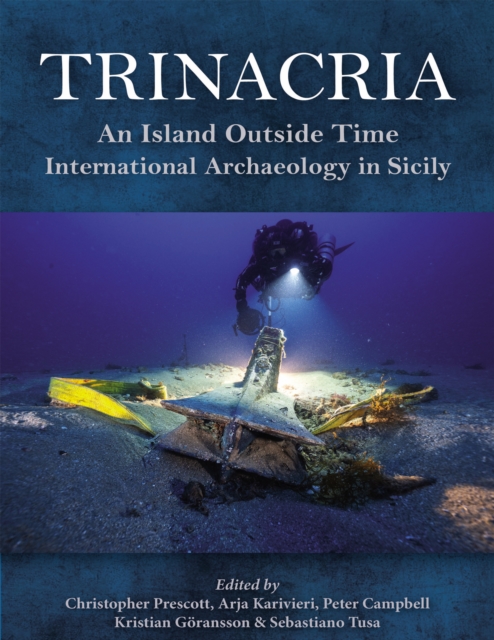
Trinacria, the ancient name for Sicily extending back to Homeric Greek, has understandably been the focus of decades of archaeological research. Recognizing Sicily’s rich prehistory and pivotal role in the history of the Mediterranean, Sebastiano Tusa - professor, head of heritage agencies and councillor for Cultural Heritage for the Sicilian Region - promoted the exploration of the island’s heritage through international collaboration. His decades of fostering research initiatives not only produced rich archaeological results spanning the Palaeolithic to the modern era but brought scholars from a range of schools and disciplines to work together in Sicily. Through his efforts, uniquely productive methodological, theoretical and interpretative networks were created. Their impact extends far beyond Sicily and Italy. To highlight these networks and their results, the Institutum Romanum Finlandiae, the Swedish Institute in Rome, the Norwegian Institute in Rome, the British School at Rome and the Assessorato dei Beni Culturali of Sicily, with generous support from the Swedish Riksbankens Jubileumsfond, assembled this anthology of papers. The aim is to present a selection of the work of and results from contemporary, multi-national research projects in Sicily. The collaboration between the Sicilian and international partners, often in an interdisciplinary framework, has generated important results and perspectives. The articles in this volume present research projects from throughout the island. The core of the articles is concerned with the Archaic through to the Roman period, but diachronic studies also trace lines back to the Stone Age and up to the contemporary era. A range of methods and sources are explored, thus creating an up-to-date volume that is a referential gateway to contemporary Sicilian archaeology.
eBook


The Donkey and the Boat: quelques remarques andalouses
Les quelques remarques qui suivent mettent en avant la richesse de la nouvelle interprétation de l’économie méditerranéenne proposée par Chris Wickham, en accordant une attention particulière aux espaces soumis à l’Islam au cours des Xe-XIIe siècles. Après avoir souligné l’ampleur et la qualité de cette vaste étude, ainsi que la remarquable érudition de l’auteur, elles s’interrogent sur la pertinence des régions étudiées et suggèrent seulement quelques précisions concernant al-Andalus, tout en regrettant le peu d’importance accordé au Maghreb occidental.
Journal Article

Sicily and The Enlightenment
Dominico Caracciolo was an important figure on the eighteenth-century European stage, holding high office as a diplomat in London, Turin and Paris, and as viceroy and prime minister in the Two Sicilies. He was an inveterate letter-writer and his huge correspondence, with his diplomatic despatches and other official writing, is a unique original source, providing a detailed and vivid picture of the eighteenth-century European elite with all its extravagance and scandalous behaviour but, even more importantly, it is an account of an Enlightenment struggle against the increasingly outdated clerical and feudal rule in Sicily. Caracciolo was an abrasive and combative official and politician and vigorous scion of the Enlightenment. In this book, Angus Campbell provides a detailed portrait of Caracciolo and of the political, social, economic, legal and cultural context in which he lived and worked. In doing so, he provides a unique vantage point on the European diplomatic culture of the eighteenth century.
eBook
Where Three Worlds Met
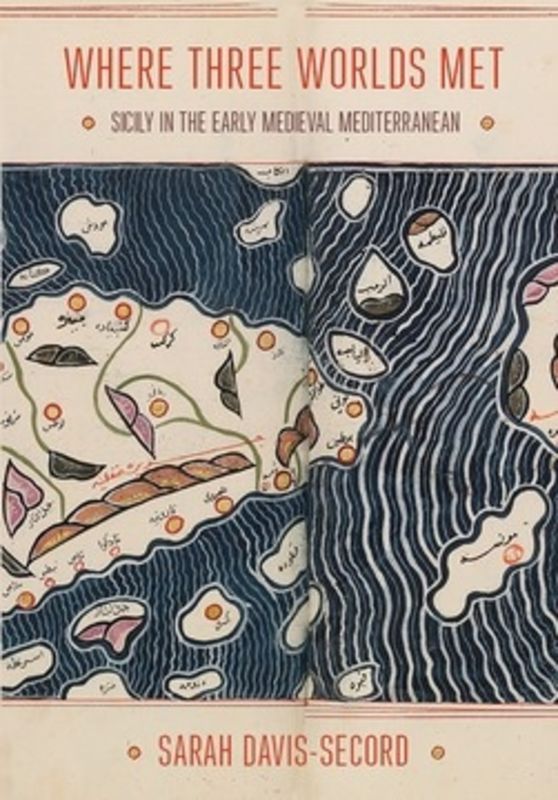
In Where Three Worlds Met, Sarah Davis-Secord investigates Sicily's place within the religious, diplomatic, military, commercial, and intellectual networks of the Mediterranean by tracing the patterns of travel, trade, and communication among Christians (Latin and Greek), Muslims, and Jews. By looking at the island across this long expanse of time and during the periods of transition from one dominant culture to another, Davis-Secord uncovers the patterns that defined and redefined the broader Muslim-Christian encounter in the Middle Ages.
eBook

CITIES AND CIVIC LIFE IN LATE HELLENISTIC ROMAN SICILY
Cet article propose une présentation générale et une réévaluation des sources sur les cités et la vie civique en Sicile, dans les deux derniers siècles avant notre ère: l'époque de la province romaine républicaine. L'étude s'ouvre par une brève critique de l'historiographie traditionnelle et de jugements contestables sur les statuts civiques, fondés en priorité sur les sources littéraires. Cette critique repose sur un appendice contenant une analyse détaillée d'un passage-clé de Cicéron (In Verrem 3.12-13). Cette première partie est suivie de trois sections synthétiques sur la vie institutionnelle des cités insulaires, sur la nature de leur constitution (de plus en plus timocratique, dominée par une élite étroite) et nos connaissances sur la monumentalisation urbaine. Ces éléments sont ensuite regroupés dans une discussion sur les comportements des élites siciliennes en contexte urbain et replacés dans un plus large contexte historique. Un thème transversal consiste à mesurer en quoi la Sicile romaine peut être utilement comprise par le biais de comparaisons avec la vie poliade de l'Orient tardo-hellénistique, bien que la précocité du gouvernement provincial romain modère l'intérêt de cette démarche, à plusieurs titres. This paper offers an overview and reassessment of the evidence for the cities and civic life in Sicily in the last two centuries BC, the period of the Roman Republican prouincia. The paper begins with a brief critique of the traditional historical narrative and the extent to which this has been bound up in questionable assessments of city status, constructed primarily on the basis of the literary evidence. This critique is underpinned by an Appendix, which contains a detailed analysis of the interpretation of a key passage of Cicero (In Verrem 3.1213). This first part is followed by three sections which offer an indicative overview of evidence for institutional civic life on the island, brief consideration of the constitutional form of Sicilian cities in the period (increasingly timocratic, dominated by a narrow elite), and a survey of the current state of the evidence for urban monumentalisation on the island. These elements are then brought together in a discussion of Sicilian elite behaviour in the urban context and within the wider historical context. A theme which runs throughout the paper is the extent to which 'Roman Sicily can be usefully understood by comparison with patterns in polis life in the Late Hellenistic eastern Mediterranean, albeit moderated in various ways by the early encroachment of Roman provincial government.
Journal Article

Fruit quality evaluation of affirmed and local loquat (Eriobotrya japonica Lindl) cultivars using instrumental and sensory analyses
Introduction. Fruit quality can be evaluated by combining instrumental and sensory analyses. These methodologies have been affirmed and tested on different fruit tree species, but loquat is still little known from this point of view. Materials and methods. In this trial, conducted in Palermo and Catania (Sicily, Italy), both instrumental and sensory analyses were carried out on fruit of 8 loquat affirmed cultivars (‘Golden Nugget’, ‘Peluche’) and local cultivars (‘Marcenò’, ‘Sanfilippara’, ‘Nespolone di Trabia’, ‘Virticchiara’, ‘Bianco Dolce’ and ‘BRT20’) with the aim of assessing their quality traits. Results and discussion. The sensory results agreed quite well with the physicochemical data. Among the affirmed cultivars both ‘Peluche’ and ‘Golden Nugget’ confirmed their commercial value expressing a good overall fruit quality. On the other hand, the local Sicilian cultivars have very interesting physical, chemical and sensory profiles. Conclusion. The results indicated the goodness of this approach in evaluating loquat fruit quality and proved that not only the affirmed loquat cvs but also the local ones had very interesting qualitative features.
Introduction. La qualité des fruits peut être évaluée en combinant les analyses instrumentales et sensorielles. Ces méthodologies ont été mises au point et testées sur différentes espèces d’arbres fruitiers, mais le néflier du Japon est encore peu connu de ce point de vue parce que l’on manque d’information sur la qualité des fruits des variétés locales traditionnelles. Matériel et méthodes. Dans cette étude, réalisée à Palerme et à Catane (Sicile, Italie), deux analyses instrumentales et sensorielles ont été réalisées sur les fruits de huit cultivars de néflier commerciaux (‘Golden Nugget’, ‘Peluche’) ou locaux (‘Marcenò’, ‘Sanfilippara’, ‘Nespolone di Trabia’, ‘Virticchiara’, ‘Dolce Bianco’ et ‘BRT20’) dans le but d’évaluer leurs caractéristiques de qualité. Résultats et discussion. Les résultats d’analyse sensorielle ont assez bien correspondu avec les données physico-chimiques. Parmi les cultivars commerciaux, ‘Peluche’ et ‘Golden Nugget’ ont tous les deux confirmé leur valeur commerciale à travers une bonne qualité globale de leurs fruits. D’autre part, les cultivars locaux siciliens ont montré des profils physiques, chimiques et sensoriels très intéressants. Conclusion. Les résultats indiquent la validité de cette approche dans l’évaluation de la qualité des fruits du néflier, en ayant démontré que non seulement les cultivars commerciaux mais aussi les variétés locales avaient des caractéristiques qualitatives très intéressantes.
Journal Article