
Catalogue Search | MBRL


Are you sure you want to remove the book from the shelf?

{{itemTitle}}
3,499
result(s) for
"Signification"
Sort by:

Deep Utopia : life and meaning in a solved world
\"If the AI transition goes well, human labor becomes obsolete. Furthermore, at technological maturity, human nature becomes entirely malleable. We will thus enter a condition of 'post-instrumentality', in which our efforts are not needed for any practical purpose. In such a solved world, what is the point of human existence? What gives meaning to life? What do we do all day? Deep Utopia shines a new light on these old questions, giving us glimpses of a different kind of existence, which might be ours in the future.\"--Dust jacket.
Book

Cybersemiotics, a transdisciplinary view on communication, information, signification, and cognition
The present commentary addresses cybersemiotics, a transdisciplinary theory of communication, signification, information, and cognition which is based on the work of Danish scholar Søren Brier. Cybersemiotics is a metatheory that encompasses the research programs of information theory, first and second-order cybernetics, Luhmann’s systems theory, cognitive sciences, Peircean biosemiotics, pragmatic linguistics, and language game theory. I will explore some of these theoretical frameworks and how cybersemiotics integrates them.
Journal Article


Normativity, Meaning and Philosophy
This is a collection of essays on Wittgenstein originally published between 1996 and 2019, with a new introduction. The essays defend and develop a central Wittgensteinian idea: 'grammatical rules' for the use of expressions hold the key to understanding linguistic meaning, as well as its connections to necessary propositions, conceptual thought, and the nature of philosophy.
eBook
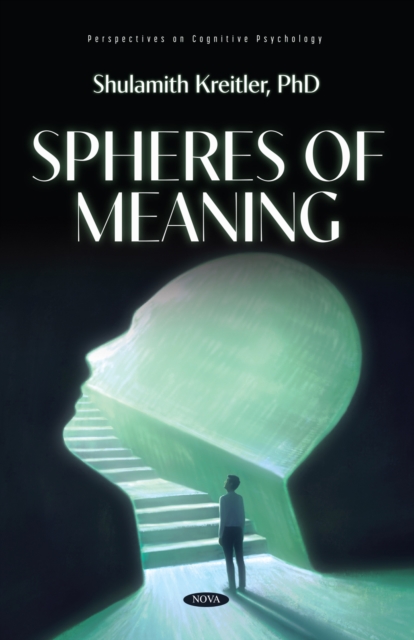
Spheres of Meaning
Spheres of Meaning describes the activation of meaning in real-life domains. After introducing the major theoretical tenets and assessment procedures, the book focuses on the role of meaning in various contexts. Chapter 1 describes in detail the main variables of the meaning system in the form of definitions accompanied by examples and the notations assigned to each variable, and Chapter 2 describes the essentials of the methodology employed in this work. The following chapters explore the application of meaning in education, health, society, communication, culture, art, the experiencing of reality, and consciousness. It is hoped that this book will help meaning to emerge from its state of invisibility long enough and impressively enough to evoke the attention of those who do not look that way habitually, and to convince the disbelievers that meaning is alive, active, and very functional. The time seems ripe for learning about the properties of meaning and of embedding it in the regular set of practical tools designed to benefit science. Hopefully newcomers and those who are already familiar with meaning alike will be inspired by the present volume to uncover new possibilities and yet unexplored domains for the advancement of science and the meaningfulness of life.
eBook

Buildings as macro-cognitive artefacts: Material engagement theory and the architecture of thinking-through-things—The case of Moriyama House
This study redefines the ontological status of architecture through the framework of Lambros Malafouris's Material Engagement Theory (MET). Moving beyond paradigms that treat buildings as passive settings or symbolic forms, it argues that architecture operates as a macro-cognitive artifact—an active, constitutive participant in cognitive life. The investigation centers on Ryue Nishizawa's Moriyama House, a radically fragmented Tokyo residence that serves as an exemplary “theoretical probe” for tracing the dynamics of material engagement in situ.
The analysis is structured around five core MET processes that illuminate the archaeology of cognitive behavior—the layered, historical emergence of thought patterns through material forms: (1) Thinging, or thinking-through-materials; (2) Enactive Signification, where meaning (like “privacy” or “gathering”) is not represented but performed through bodily engagement; (3) Participatory Agency, which co-constitutes action within human-nonhuman intra-actions (4) We-Intentionality, where shared goals materialize through triadic intra-actions among heterogeneous actors; and (5) Metaplasticity, the long-term, reciprocal reshaping of inhabitant habits and architectural wear.
Employing a hybrid methodology of architectural analysis and frame-by-frame deconstruction of the ethnographic film Moriyama-San, the research demonstrates how these processes coalesce to form a cognitive habitat.
Journal Article

Mark Making and Human Becoming
This is a paper about mark making and human becoming. I will be asking what do marks do? How do they signify? What role do marks play in human becoming and the evolution of human intelligence? These questions cannot be pursued effectively from the perspective of any single discipline or ontology. Nonetheless, they are questions that archaeology has a great deal to contribute. They are also important questions, if not the least because evidence of early mark making constitutes the favoured archaeological mark of the ‘cognitive’ (in the ‘modern’ representational sense of the word). In this paper I want to argue that the archaeological predilection to see mark making as a potential index of symbolic representation often blind us to other, more basic dimensions of the cognitive life and agency of those marks as material signs. Drawing on enactive cognitive science and Material Engagement Theory I will show that early markings, such as the famous engravings from Blombos cave, are above all the products of kinesthetic dynamics of a non-representational sort that allow humans to engage and discover the semiotic affordances of mark making opening up new possibilities of enactive material signification. I will also indicate some common pitfalls in the way archaeology thinks about the ‘cognitive’ that needs overcome.
Journal Article

The Signification of African Spirituality in Selected Short Stories of Tanure Ojaide
African writers’ cultural settings are often reflected in their artistic creations. In his writings, Tanure Ojaide constantly re-affirms his identification with, and indebtedness to, his Urhobo traditional heritage. The short story seems to afford him the opportunity to interrogate the visible (physical) and invisible (spiritual) in the lives of his people which he reflects through his fictional characters. This paper therefore, adopts a pragmatic approach as it examines Ojaide’s preoccupation with the place, representation, and implications of spirituality through some stories selected from his four collections of short fiction. The writer projects ideas around African spirituality mainly through the relationship between the living and the dead, the importance of the final resting place for the dead, the existence and operations of supernatural forces capable of oppressive and sexual attacks, and the efficacy of bewitchment on the living. This study will assist in exploring the continued spirituality of Africans as expressed through Christian beliefs and traditional mysticism.
Journal Article


Why is Locke's Linguistic Theory Still Current and Interesting Today?
In the Essay Concerning Human Understanding (1690), Locke set out to offer an analysis of the human mind and its acquisition of knowledge still very current and important today. Locke offered also an empiricist theory according to which we acquire ideas through our experience of the world. The article examines Locke’s views on language and his principal innovation in the field of linguistic theory, represented by the recognition of the power of language with respect to the classification of the world, and its relative independence from reality. In particular the following topics are discussed: a) the polemical contrast with Cartesian philosophy b) the criticism that Locke levels against innatism c) the function of abstraction of the mind d) the concept of semiotics as a theory of thought and its expression e) the radical concept of arbitrariness f) the pragmatic factor intrinsic to Locke’s linguistics described as “communicational scepticism”.
Journal Article