
Catalogue Search | MBRL


Are you sure you want to remove the book from the shelf?

{{itemTitle}}
7,470
result(s) for
"Sikhism"
Sort by:

Celebrating Sikh festivals
\"What do Sikhs believe? How do they celebrate what is important to them? What food do they eat during festival time? How do Sikhs in the UK celebrate? Read this book to find out the answers to these questions and more. Celebrating Sikh Festivals looks at important religious and family days in the Sikh calendar, and gets readers to take part by cooking some of the food central to Sikh celebrations. The book looks at both international and UK examples of Sikh celebrations. Infosearch asks the questions you want answered\"--Publisher's website.
Book
Historical dictionary of Sikhism, Third edition
Sikhism traces its beginnings to Guru Nanak, who was born in 1469 and died in 1538 or 1539. With the life of Guru Nanak the account of the Sikh faith begins, all Sikhs acknowledging him as their founder. Sikhism has long been a little-understood religion and until recently they resided almost exclusively in northwest India. Today the total number of Sikhs is approximately twenty million worldwide. About a million live outside India, constituting a significant minority in the United Kingdom, Canada, and the United States. Many of them are highly visible, particularly the men, who wear beards and turbans, and they naturally attract attention in their new countries of domicile. This third edition of Historical Dictionary of Sikhism covers its history through a chronology, an introductory essay, and an extensive bibliography. The dictionary section has over 1000 cross-referenced entries on key persons, organizations, the principles, precepts and practices of the religion as well as the history, culture and social arrangements. This book is an excellent access point for students, researchers, and anyone wanting to know more about Sikhism.
eBook

Dharma : the Hindu, Jain, Buddhist and Sikh traditions of India
\"Dharma is central to all the indigenous religious traditions of India, which cannot adequately be understood apart from it. Often translated as \"ethics\", \"religion\" or \"religious law\", dharma possesses elements of each of these but is not confined to any single category. Neither is it the equivalent of what many in the West might usually consider to be \"a philosophy\". This much-needed analysis of the history and heritage of dharma shows that it is instead a multi-faceted religious force, or paradigm, that has defined and that continues to shape the different cultures and civilizations of South Asia in a whole multitude of forms, organizing many aspects of life. Experts in the fields of Hindu, Jain, Buddhist, and Sikh studies here bring fresh insights to dharma in terms both of its distinctiveness and its commonality as these are expressed across, and between, the several religions of the subcontinent. Exploring ethics, practice, history, and social and gender issues, the contributors engage critically with some prevalent and often problematic interpretations of dharma, and point to new ways of appreciating these traditions in a manner that is appropriate to and thoroughly consistent with their varied internal debates, practices and self-representations.\"-- Provided by publisher.
Book

Unsettling Sikh and Muslim conflict
This book provides a critical investigation into Sikh and Muslim conflict in the postcolonial setting. Being Sikh in a diasporic context creates challenges that require complex negotiations between other ethnic minorities as well as the national majority. Unsettling Sikh and Muslim Conflict: Mistaken Identities, Forced Conversions, and Postcolonial Formations maps in theoretically informed and empirically rich detail the trope of Sikh-Muslim antagonism as it circulates throughout the diaspora. While focusing on contemporary manifestations of Sikh-Muslim hostility, the book also draws upon historical examples of such conflict to explore the way in which the past has been mobilized to tell a story about the future of Sikhs. This book uses critical race theory to understand the performance of postcolonial subjectivity in the heart of the metropolis.
eBook

Religion and the specter of the West : Sikhism, India, postcoloniality, and the politics of translation
Arguing that intellectual movements, such as deconstruction, postsecular theory, and political theology, have different implications for cultures and societies that live with the debilitating effects of past imperialisms, Arvind Mandair unsettles the politics of knowledge construction in which the category of \"religion\" continues to be central. Through a case study of Sikhism, he launches an extended critique of religion as a cultural universal. At the same time, he presents a portrait of how certain aspects of Sikh tradition were reinvented as \"religion\" during the late nineteenth and early twentieth centuries. India's imperial elite subtly recast Sikh tradition as a sui generis religion, which robbed its teachings of their political force. In turn, Sikhs began to define themselves as a \"nation\" and a \"world religion\" that was separate from, but parallel to, the rise of the Indian state and global Hinduism. Rather than investigate these processes in isolation from Europe, Mandair shifts the focus closer to the political history of ideas, thereby recovering part of Europe's repressed colonial memory.
Book

The socially involved renunciate : Guru Nānak's Discourse to the Nāth yogis
A translation and analysis of Guru Nanak's description of the Sikh path to spiritual liberation. The Socially Involved Renunciate is an in-depth analysis and an original English translation of the Siddh Go??, a fundamental philosophical text of the Sikh tradition. The work reflects the distinctive worldview of Sikhism, the only major Indian religion that does not regard asceticism as a legitimate path to liberation. Composed by Guru N?nak, a medieval, north Indian saint-poet and venerated founder of the Sikh tradition, the Siddh Go?? is a dialogue between Guru N?nak and several N?th yogis who had been pursuing a rigorous path of hath-yoga as renunciates of the material world. Through their dialogue, Guru N?nak teaches the N?th yogis a spiritual path that also includes involvement in the social world and offers a practical way to achieve liberation. In The Socially Involved Renunciate, Kamala Elizabeth Nayar and Jaswinder Singh Sandhu provide background on Sikhism, highlight the ethical teachings expounded in the Siddh Go??, and demonstrate how Guru N?nak reconciles the polarities of the ascetic and householder ideals.
eBook
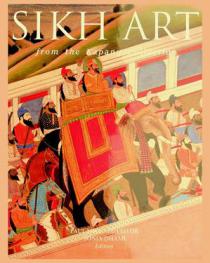
Sikh art from the Kapany collection
This volume brings together leading scholars of Sikhism and of Sikh art to assess and interpret the remarkable art resource known as the Kapany Collection, using it to introduce to a broad public the culture, history, and ethos of the Sikhs. Fifteen renowned scholars contributed essays describing the passion and vision of Narinder and Satinder Kapany in assembling this unparalleled assemblage of great Sikh art, some of which has been displayed in exhibitions around the globe. The Kapanys' legacy of philanthropic work includes establishing the Sikh Foundation (now celebrating its 50th year) and university endowments for Sikh studies. Through this profusely illustrated book's chapters, scholars examine the full range of Sikh artistic expression and of Sikh history and cultural life, using artworks from the Kapany Collection.
Book

Sikhism
Almost from the moment, some five centuries ago, that their religion was founded in the Punjab by Guru Nanak, Sikhs have enjoyed a distinctive identity. This sense of difference, forged during Sikhism’s fierce struggles with the Mughal Empire, is still symbolised by the ‘Five Ks’ (‘panj kakar’, in Punjabi), those articles of faith to which all baptised Sikhs subscribe: uncut hair bound in a turban; comb; special undergarment; iron bracelet and dagger (or kirpan) - the unique marks of the Sikh military fraternity (the word Sikh means ‘disciple’ in Punjabi). Yet for all its ongoing attachment to the religious symbols that have helped set it apart from neighbouring faiths in South Asia, Sikhism amounts to far more than just signs or externals. Now the world’s fifth largest religion, with a significant diaspora especially in Britain and North America, this remarkable monotheistic tradition commands the allegiance of 25 million people, and is a global phenomenon. In her balanced appraisal, Nikky-Guninder Kaur Singh reviews the history, theology and worship of a community poised between reconciling its hereditary creeds and certainties with the fast-paced pressures of modernity. She outlines and explains the core Sikh beliefs, and explores the writings and teachings of the Ten Sikh Gurus in Sikhism’s Holy Scriptures, the Sri Guru Granth Sahib (more usually called just the ‘Granth’). Further chapters explore Sikh ethics, art and architecture, and matters of gender and the place of women in the tradition. The book attractively combines the warm empathy of a Sikh with the objective insights and acute perspectives of a prominent scholar of religion.
eBook

Shirts Today, Skins Tomorrow: Dual Contests and the Effects of Fragmentation in Self-Determination Disputes
While theoretical models of conflict often treat actors as unitary, most self-determination groups are fragmented into a number of competing internal factions. This article presents a framework for understanding the \"dual contests\" that self-determination groups engage in—the first with their host state and the second between co-ethnic factions within groups. Using a new data set of the number of factions within a sample of self-determination groups from 1960 to 2008, the authors find that competition between co-ethnic factions is a key determinant of their conflict behavior. More competing factions are associated with higher instances of violence against the state as well as more factional fighting and attacks on co-ethnic civilians. More factions using violence increases the chances that other factions will do so, and the entry of a new faction prompts violence from existing factions in a within-group contest for political relevance. These findings have implications for both theory and policy.
Journal Article

The Effects of Racial Exclusion and Racial Othering on South Asian American Identity and Population Health
SAAs face an urgent public health crisis with regard to cardiometabolic dysfunction and health risks (e.g., high blood pressure, atherosclerosis, insulin resistance, high visceral fat), exhibiting greater disease burden, earlier age of onset, and higher rates of hospitalization and mortality from these causes than Whites and other racially marginalized groups.6 Similar to other racially marginalized groups, SAAs face barriers to mental health, including cultural stigma, access to culturally sensitive care, and sociocultural stressors.7 Increasing evidence underscores discrimination as a driver of mental and cardiovascular health risks across populations.8 By directly intervening on discrimination exposure in SAAs, it may be possible to disrupt the health disparities in this population. GROUP-LEVEL RACIAL/ETHNIC EXCLUSION AND NONBELONGING Asian Americans are one of the most heterogeneous racial/ethnic groups in the United States, boasting diversity in national origin, citizenship and documentation status, religion, caste, skin color, socioeconomic status, and more.9 Nevertheless, East Asian Americans (EAAs)-with ancestry from China, Japan, Mongolia, North Korea, South Korea, and Taiwan-are overwhelmingly considered in the United States as prototypical, or representative, of the Asian American population as a whole.10-12 Although communities of color may already face substantial disinvestment and marginalization in US society, the positioning of EAAs as normative contributes to the further erasure of SAA communities. Racial/ethnic discrimination and colorism toward SAAs is likely exacerbated by religious discrimination, Islamophobia, and the racialization of SAAs as terrorists.11 SAAs boast significant religious diversity, including Bahaism, Buddhism, Christianity, Hinduism, Islam, Jainism, Judaism, Sikhism, Zoroastrianism, and various Indigenous and folk traditions. [...]although SAAs overwhelmingly classify their group as belonging to Asian America, other Asian Americans are less likely to consider SAAs as members of their in-group.
Journal Article