
Catalogue Search | MBRL


Are you sure you want to remove the book from the shelf?

{{itemTitle}}
531
result(s) for
"Silver Economic aspects."
Sort by:


Silver Nanoparticles for Waste Water Management
Rapidly increasing industrialisation has human needs, but the consequences have added to the environmental harm. The pollution caused by several industries, including the dye industries, generates a large volume of wastewater containing dyes and hazardous chemicals that drains industrial effluents. The growing demand for readily available water, as well as the problem of polluted organic waste in reservoirs and streams, is a critical challenge for proper and sustainable development. Remediation has resulted in the need for an appropriate alternative to clear up the implications. Nanotechnology is an efficient and effective path to improve wastewater treatment/remediation. The effective surface properties and chemical activity of nanoparticles give them a better chance to remove or degrade the dye material from wastewater treatment. AgNPs (silver nanoparticles) are an efficient nanoparticle for the treatment of dye effluent that have been explored in many studies. The antimicrobial activity of AgNPs against several pathogens is well-recognised in the health and agriculture sectors. This review article summarises the applications of nanosilver-based particles in the dye removal/degradation process, effective water management strategies, and the field of agriculture.
Journal Article

The story of silver : how the white metal shaped America and the modern world
This is the story of silver's transformation from soft money during the nineteenth century to hard asset today, and how manipulations of the white metal by American president Franklin D. Roosevelt during the 1930s and by the richest man in the world, Texas oil baron Nelson Bunker Hunt, during the 1970s altered the course of American and world history. FDR pumped up the price of silver to help jump start the U.S. economy during the Great Depression, but this move weakened China, which was then on the silver standard, and facilitated Japan's rise to power before World War II. Bunker Hunt went on a silver-buying spree during the 1970s to protect himself against inflation and triggered a financial crisis that left him bankrupt. Silver has been the preferred shelter against government defaults, political instability, and inflation for most people in the world because it is cheaper than gold. The white metal has been the place to hide when conventional investments sour, but it has also seduced sophisticated investors throughout the ages like a siren. This book explains how powerful figures, up to and including Warren Buffett, have come under silver's thrall, and how its history guides economic and political decisions in the twenty-first century.
BOOK

Preparation of paper-based devices for reagentless electrochemical (bio)sensor strips
Despite substantial advances in sensing technologies, the development, preparation, and use of self-testing devices is still confined to specialist laboratories and users. Decentralized analytical devices will enormously impact daily lives, enabling people to analyze diverse clinical, environmental, and food samples, evaluate them and make predictions to improve quality of life, particularly in remote, resource-scarce areas. In recent years, paper-based analytical tools have attracted a great deal of attention; the well-known properties of paper, such as abundance, affordability, lightness, and biodegradability, combined with features of printed electrochemical sensors, have enabled the development of sustainable devices that drive (bio)sensors beyond the state of the art. Their blindness toward colored/turbid matrices (i.e., blood, soil), their portability, and the capacity of paper to autonomously filter/purge/react with target species make such devices powerful in establishing point-of-need tools for use by non-specialists. This protocol describes the preparation of a voltammetric phosphate sensor and an amperometric nerve agent biosensor; both platforms produce quantitative measurements with currents in the range of microamperes. These printed strips comprise three electrodes (graphite for working and counter electrodes and silver/silver chloride (Ag/AgCl) for the reference electrode) and nanomodifiers (carbon black and Prussian blue) to improve their performance and specificity. Depending on analytical need, different types of paper (filter, office) and configurations (1D, 2D, 3D) can be adopted. The protocol, based on the use of cost-effective manufacturing techniques such as drop casting (to chemically modify the substrate surface) and wax/screen printing (for creating the channels and electrodes), can be completed in <1 h.
This protocol describes the design of a paper-based analytical device with printed electrodes where the reagents are incorporated into the paper. Such a device can be used in conjunction with a portable detector connected to a PC or smartphone.
Journal Article


Alpine ice-core evidence for the transformation of the European monetary system, AD 640–670
The seventh-century AD switch from gold to silver currencies transformed the socio-economic landscape of North-west Europe. The source of silver, however, has proven elusive. Recent research, integrating ice-core data from the Colle Gnifetti drill site in the Swiss Alps, geoarchaeological records and numismatic and historical data, has provided new evidence for this transformation. Annual ice-core resolution data are combined with lead pollution analysis to demonstrate that significant new silver mining facilitated the change to silver coinage, and dates the introduction of such coinage to c. AD 660. Archaeological evidence and atmospheric modelling of lead pollution locates the probable source of the silver to mines at Melle, in France.
Journal Article
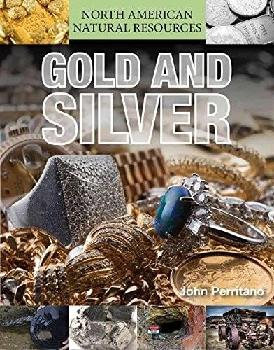
Gold and silver
As two of the rarest metals on Earth, gold and silver have amazed humans for centuries. People have searched the world for silver and gold, hoping to fill their pockets with the shiny metals. And yet during all of human history, only enough gold has been extracted to fill two Olympic-sized swimming pools. And not every aspect of the metals is pretty. Mining gold and silver comes with many environmental consequences.
Book

Nanosilver as a new generation of nanoproduct in biomedical applications
Nanosilver (NS), comprising silver nanoparticles, is attracting interest for a range of biomedical applications owing to its potent antibacterial activity. It has recently been demonstrated that NS has useful anti-inflammatory effects and improves wound healing, which could be exploited in developing better dressings for wounds and burns. The key to its broad-acting and potent antibacterial activity is the multifaceted mechanism by which NS acts on microbes. This is utilized in antibacterial coatings on medical devices to reduce nosocomial infection rates. Many new synthesis methods have emerged and are being evaluated for NS production for medical applications. NS toxicity is also critically discussed to reflect on potential concerns before widespread application in the medical field.
Journal Article


Green-fabricated silver nanoparticles from Quercus incana leaf extract to control the early blight of tomatoes caused by Alternaria solani
Background
Early blight (EB) of Tomatoes, caused by
Alternaria solani
, is a serious fungal disease that adversely affects tomato production. Infection is characterized by dark lesions on leaves, stems, and fruits. Several agrochemicals can be used to control infection, these chemicals may disrupt environmental equilibrium. An alternative technology is needed to address this significant fungal threat. This study was designed to control the growth of EB in tomatoes caused by
A. solani
, using green-fabricated silver nanoparticles (Ag-NPs).
Results
Ag-NPs were synthesized through an environmentally friendly and cost-effective approach using leaf extract of
Quercus incana
Roxb. (
Fagaceae
). The physico-chemical characterization of the Ag-NPs was conducted through UV-visible spectroscopy, scanning electron microscopy, X-ray diffraction analysis, and Fourier transform infrared spectrometry. The Ag-NPs produced were round with a mean diameter of 27 nm. The antifungal activity of these Ag-NPs was assessed through in vitro Petri plate and in vitro leaflet assays against
A. solani
. The green fabricated Ag-NPs exhibited excellent antifungal activity in vitro at a concentration of 100 mg/l against
A. solani
, inhibiting growth by 98.27 ± 1.58% and 92.79 ± 1.33% during Petri plate and leaflet assays, respectively.
Conclusion
In conclusion, this study suggests the practical application of green-fabricated Ag-NPs from
Q. incana
leaf extract against
A. solani
to effectively control EB disease in tomatoes.
Journal Article