
Catalogue Search | MBRL


Are you sure you want to remove the book from the shelf?

{{itemTitle}}
6,330
result(s) for
"Silver coins"
Sort by:

Silver, butter, cloth : monetary and social economies in the Viking age
Silver, Butter, Cloth advances current debates about the nature and complexity of Viking economic systems. It explores how silver and other commodities were used in monetary and social economies across the Scandinavian world of the Viking Age (c. 800-1100 AD) before and alongside the wide scale introduction of coinage. Taking a multi-disciplinary approach that unites archaeological, numismatic, and metallurgical analyses, Kershaw and Williams examine the uses and sources of silver in both monetary and social transactions, addressing topics such as silver fragmentation, hoarding, and coin production and re-use. Uniquely, it also goes beyond silver, giving the first detailed consideration of the monetary role of butter, cloth, and gold in the Viking economy. (Indeed, it is instrumental in developing methodologies to identify such commodity monies in the archaeological record.) The use of silver and other commodities within Viking economies is a dynamic field of study, fuelled by important recent discoveries across the Viking world. The 14 contributions to this book, by a truly international group of scholars, draw on newly available archaeological data from eastern Europe, Scandinavia, the North Atlantic, and the British Isles and Ireland, to present the latest original research. Together, they deepen understanding of Viking monetary and social economies and advance0new definitions of 'economy', 'currency', and 'value' in the ninth to eleventh centuries.
Book

English Silver Coinage
The 6th edition of this numismatic classic offers much more than previous editions, not only in terms of the number of varieties recorded but also in terms of the way in which the data has been recorded and presented. It has been completely renumbered to do away with the confusing letter suffixes used in previous editions, and is now arranged by monarch rather than denomination; all new numbers are cross-referenced to the previous edition.
eBook
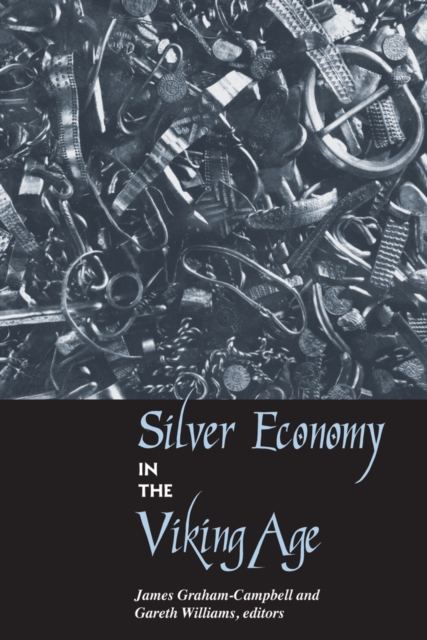
Silver Economy in the Viking Age
In this book contributions by archaeologists and numismatists from six countries address different aspects of how silver was used in both Scandinavia and the wider Viking world during the 8th to 11th centuries AD. The volume brings together a combination of recent summaries and new work on silver and gold coinage, rings and bullion, which allow a better appreciation of the broader socioeconomic conditions of the Viking world. This is an indispensable source for all archaeologists, historians and numismatists involved in Viking Studies.
eBook

Investigating the Sources of Silver in 17th- and 18th-Century Silver Coins from the Rooswijk Shipwreck by Compositional Studies
The colonisation of the Americas and the discovery of its rich ores had a great impact on the world economies, making them quickly become the main suppliers of precious metals in Europe. The compositional studies of several coins (ducatons, eight reales cob8, four reales cob4, eight reales pillar dollar, four reales half pillar dollars, rijderschellings and silver rijders) recovered from the 18th-century Dutch East India Company Rooswijk wreck by micro X-ray fluorescence (µXRF) spectroscopy revealed further knowledge about the silver trade and the silver sources used to produce coins in mints in the Low Countries over a wide timeframe (1618–1739). The results provided trace elemental ‘fingerprints’ of coins minted with silver from known mines, and matching against them revealed the silver sources used in coins, whose mint location could not be identified due to their poor state of preservation. This study proved that, despite the decrease in silver production in European mines in the 17th century and the huge influx of American silver into Europe, in the 18th century, the mints in the Dutch Republic and, to a lesser extent, in the Spanish Netherlands still highly relied on the recycling of older coins and on the import of silver from central European mines.
Journal Article

Sources of early Islamic silver: lead isotope analysis of dirhams
The expansion of the early Islamic state (c. AD 700–900) was underpinned by the minting of silver coins (dirhams) on an enormous scale. While the wider effects of this coinage have been studied extensively, the sources of silver have attracted less attention and research has relied on literary texts pointing to mines in Arabia and Central Asia. Here, the authors use lead isotope and trace element analyses of more than 100 precisely dated silver coins to provide a geochemical perspective on Islamic silver. The results identify multiple new sources, stretching from Morocco to the Tien Shen, and indicate an Abbasid-period mining boom. These source locations have implications for contemporary geopolitics including on the Islamic-Byzantine frontier.
Journal Article
Byzantine plate and Frankish mines: the provenance of silver in north-west European coinage during the Long Eighth Century (c. 660–820)
The late seventh-century introduction of silver coinage marked a transformation in the economy of north-west Europe, yet the source(s) of the silver bullion behind this change remains uncertain. Here, the authors use combined lead isotope and trace element analysis of 49 coins from England, Frisia and Francia to provide new insights into north-European silver sources during the ‘long eighth century’ (c. AD 660–820). The results indicate an early reliance on recycled Byzantine silver plate, followed by a shift c. AD 750 to newly mined metal from Francia. This change indicates the strong role of the Carolingian state in the control of metal sources and economic structures across the North Sea zone.
Journal Article
Alpine ice-core evidence for the transformation of the European monetary system, AD 640–670
The seventh-century AD switch from gold to silver currencies transformed the socio-economic landscape of North-west Europe. The source of silver, however, has proven elusive. Recent research, integrating ice-core data from the Colle Gnifetti drill site in the Swiss Alps, geoarchaeological records and numismatic and historical data, has provided new evidence for this transformation. Annual ice-core resolution data are combined with lead pollution analysis to demonstrate that significant new silver mining facilitated the change to silver coinage, and dates the introduction of such coinage to c. AD 660. Archaeological evidence and atmospheric modelling of lead pollution locates the probable source of the silver to mines at Melle, in France.
Journal Article
A Material Study of Persian-Period Silver Coins and Hacksilber from Samaria
An assembly of fourth-century BCE Samarian silver coins and late-fifth-century BCE Samarian cut silver sheets, Sidonian and Philistian coins from a hacksilber hoard allegedly found in the region of Samaria belonging to the David and Jemima Jeselsohn collection, were characterized by metallurgical analyses. The aims of the research were to identify the items’ composition and manufacturing processes. We affirmed that the Samarian coins were made of silver–copper alloy produced by a controlled process. The microstructural and elemental analyses revealed that the sheets were produced from various materials, including pure silver, silver–copper, and silver–copper–gold alloys, whereas the Sidonian and Philistian coins were made of silver–copper alloy. Continuity in style and production techniques was observed. This information provides a better understanding of the material culture and technological skills in the Persian-period province of Samaria.
Journal Article
Archaeometallurgical Analysis of the Provincial Silver Coinage of Judah: More on the Chaîne Opératoire of the Minting Process
Silver coins were the first coins to be manufactured by mass production in the southern Levant. An assemblage of tiny provincial silver coins of the local (Judahite standard) and (Attic) obol-based denominations from the Persian and Hellenistic period Yehud and dated to the second half of the fourth century BCE were analyzed to determine their material composition. Of the 50 silver coins, 32 are defined as Type 5 (Athena/Owl) of the Persian period Yehud series (ca. 350–333 BCE); 9 are Type 16 (Persian king wearing a jagged crown/Falcon in flight) (ca. 350–333); 3 are Type 24 series (Portrait/Falcon) of the Macedonian period (ca. 333–306 BCE); and 6 are Type 31 (Portrait/Falcon) (ca. 306–302/1 BCE). The coins underwent visual testing, multi-focal light microscope observation, XRF analysis, and SEM-EDS analysis. The metallurgical findings revealed that all the coins from the Type 5, 16, 24, and 31 series are made of high-purity silver with a small percentage of copper. Based on these results, it is suggested that each series was manufactured using a controlled composition of silver–copper alloy. The findings present novel information about the material culture of the southern Levant during the Late Persian period and Macedonian period, as expressed through the production and use of these silver coins.
Journal Article

A two-parameter control system for monitoring chemical composition of silver coins: selecting tools for measuring mass content of components
The article considers the general requirements for quality control of precious metal products. An algorithm for developing a quality control system for silver coins is described, along with the specifics of its application in monitoring the chemical composition of coins containing 79.7 to 92.8 wt. % silver (balance—copper). An algorithm for decision-making based on the results of a two-parameter control has been developed, which includes mathematical models for calculating the control reliability indicators (the probabilities of Type I and Type II errors). Given the required reliability (with a Type I error probability of 0.1), the measurement errors for the mass contents of silver and copper have been calculated. The article describes the dependence of the Type I error probability on the mass content measurement error (standard deviation) with respect to the silver coin alloy components, which can be used to justify the requirements for the measurement accuracy indicators. Based on the criteria, such as “Analyzed elements,” “Measurement range,” and “Error,” it is proposed to use X‑ray fluorescence spectrometers in the control system. The described algorithm for developing the control system and its implementation in the chemical composition control of silver coins will be beneficial for professionals dealing with precious metals and jewelry in specialized institutions and organizations of the material processing industry, as well as banks, jewelry stores, and pawnshops.
Journal Article