
Catalogue Search | MBRL


Are you sure you want to remove the book from the shelf?

{{itemTitle}}
52
result(s) for
"Silver coins -- Europe -- History"
Sort by:

Silver, butter, cloth : monetary and social economies in the Viking age
Silver, Butter, Cloth advances current debates about the nature and complexity of Viking economic systems. It explores how silver and other commodities were used in monetary and social economies across the Scandinavian world of the Viking Age (c. 800-1100 AD) before and alongside the wide scale introduction of coinage. Taking a multi-disciplinary approach that unites archaeological, numismatic, and metallurgical analyses, Kershaw and Williams examine the uses and sources of silver in both monetary and social transactions, addressing topics such as silver fragmentation, hoarding, and coin production and re-use. Uniquely, it also goes beyond silver, giving the first detailed consideration of the monetary role of butter, cloth, and gold in the Viking economy. (Indeed, it is instrumental in developing methodologies to identify such commodity monies in the archaeological record.) The use of silver and other commodities within Viking economies is a dynamic field of study, fuelled by important recent discoveries across the Viking world. The 14 contributions to this book, by a truly international group of scholars, draw on newly available archaeological data from eastern Europe, Scandinavia, the North Atlantic, and the British Isles and Ireland, to present the latest original research. Together, they deepen understanding of Viking monetary and social economies and advance0new definitions of 'economy', 'currency', and 'value' in the ninth to eleventh centuries.
Book
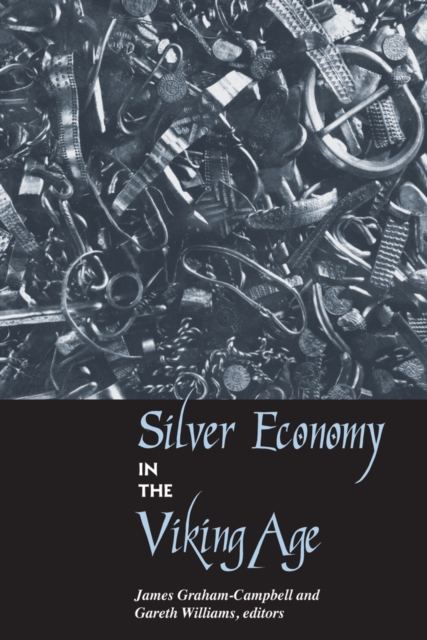
Silver Economy in the Viking Age
In this book contributions by archaeologists and numismatists from six countries address different aspects of how silver was used in both Scandinavia and the wider Viking world during the 8th to 11th centuries AD. The volume brings together a combination of recent summaries and new work on silver and gold coinage, rings and bullion, which allow a better appreciation of the broader socioeconomic conditions of the Viking world. This is an indispensable source for all archaeologists, historians and numismatists involved in Viking Studies.
eBook

Alpine ice-core evidence for the transformation of the European monetary system, AD 640–670
The seventh-century AD switch from gold to silver currencies transformed the socio-economic landscape of North-west Europe. The source of silver, however, has proven elusive. Recent research, integrating ice-core data from the Colle Gnifetti drill site in the Swiss Alps, geoarchaeological records and numismatic and historical data, has provided new evidence for this transformation. Annual ice-core resolution data are combined with lead pollution analysis to demonstrate that significant new silver mining facilitated the change to silver coinage, and dates the introduction of such coinage to c. AD 660. Archaeological evidence and atmospheric modelling of lead pollution locates the probable source of the silver to mines at Melle, in France.
Journal Article

The economics of small change: resolving coinage challenges in medieval Europe
In medieval Europe's coinage systems, introducing small-denomination coins was a significant challenge due to their higher relative production costs, often leading to shortages. To address this issue, economic theory suggests a standard formula: mint small coins as overvalued credit money on the government's account and convert them on demand at a pegged rate. This article explores the alternative methods adopted during different periods to mitigate this issue. In the early and high Middle Ages, mints employed a simple yet effective strategy: dividing larger coins into smaller units, bypassing the cost barrier. Our analysis of coin hoards from this era confirms the success of this method in preventing small change scarcity. Central and northern European minting authorities innovated with unifaced ‘hohlpfennigs’ in the late Middle Ages, utilizing cost-efficient technology. Our analysis demonstrates the absence of hohlpfennig shortages. It elucidates the economic and technological factors influencing this minting method and its eventual decline by the early sixteenth century. These historical insights underscore that small change production was primarily a supply-side challenge, offering valuable lessons for modern economic systems.
Journal Article

Black currency of middle ages and case for complementary currency
Monetary historians argue that two types of currencies were circulating in the middle ages of Europe. The first was the standard historical form of money made up of gold and silver coins, and the second was a set of small pieces of copper and other metallic substances used mainly in towns and townships for local trade as currency. Jetton and tokens are monetized objects that are not official currencies; they were of lower quality of the inferior metallic object, which were used for day-to-day transaction needs. The drive for local monetary decentralization is pointed to build up fiscal autonomy and responsible local monetary institutions. This paper reasons that the monetary regime of the Renaissance was a real and genuine trimetallic currency regime.
Journal Article

A Policy Framework for the Bank of Amsterdam, 1736–1791
This article describes and measures how the Bank of Amsterdam supplied a successful fiat money in a world of specie by offering the unlimited repo of large coins at a near-zero rate. Our data from 1736 to 1791 finds that such liberal access led to volatile loan levels and that the Bank responded with sterilization by means of open market operations. In this way, the Bank held its money stock at a roughly constant level and helped stabilize its value. Profit was another part of the Bank’s policy framework, and the pursuit of seigniorage eventually compromised stabilization.
Journal Article

The Archaeology of Money
Money is one of the most timeless, all-pervading, and arbitrary inventions in human history. Its ubiquity in time and space offers great scope for comparative archaeological research into its varying material manifestations. This article takes a broad approach, ranging from Old World prehistory to twentieth-century ethnography. First, the development of archaeological approaches to coinage and money is outlined. Subsequent sections explore research into the use of objects as currencies in prehistory; the origins of coined money; archaeological sites illustrating the adoption and functions of coinage in and around the classical Mediterranean; and the study of coins as archaeological artifacts in the more recent past and in non-European contexts. Finally, we suggest some potential ways forward, employing comparative archaeological study to enhance our understanding of the complexity of functions performed by monetary objects, both in the past and in the present.
Journal Article

Means of Payment and Degree of Monetization: A Suggestion and an Application to the Case of Portugal
Given that the characteristics of the sets of means of payment available to economic agents at a given moment supply decisive information about the degree of monetization of the economy, this paper first proposes a technique to analyse these characteristics, considering their amplitude, purchasing power and density, and then applies that technique to the evolution of the monetary system of Portugal in the course of its existence as an independent country. The Portuguese case is an interesting standard for international comparisons, because it evolved over a very long time span, and sharply different degrees of monetization may be identified within it: (i) an epoch of low or negligible monetization (12th-15th century); (ii) monetization of a significant and gradually increasing part of the economy (15th19th century); and (iii) almost full monetization (19th century on).
Journal Article
Money, States, and Empire: Financial Integration and Institutional Change in Central Europe, 1400–1520
By analyzing a newly compiled database of exchange rates, this article finds that in Central Europe money markets integrated cyclically during the fifteenth century. The cycles were associated with monetary debasements. Long-distance financial integration progressed in connection with the rise of the territorial state, facilitated by the synergy between princes and emperor, which helped to avoid coordination failures. For Central Europe, theories of state formation and market integration should therefore take interstate actors into account.
Journal Article

Gold, credit, and mortality: distinguishing deflationary pressures on the late medieval English economy
This article uses national and local records of debt and evidence from coins, prices, and wages to discuss the economic effects of the gold coinage that was introduced into England in 1344. It distinguishes between the deflationary effects of gold and those of the falling population on prices and credit, and shows that a coinage dominated by gold reduced the volume of credit and transactions far more than the mortality rate and the total circulation of coin would indicate was likely. It relates these findings to the economic and social changes of the fifteenth century.
Journal Article