
Catalogue Search | MBRL


Are you sure you want to remove the book from the shelf?

{{itemTitle}}
207
result(s) for
"Silverwork"
Sort by:

Emblems and spaces of power during the Argaric Bronze Age at La Almoloya, Murcia
The recent discovery of an exceptionally rich grave at La Almoloya in south-eastern Spain illuminates the political context of Early Bronze Age El Argar society. The quantity, variety and opulence of the grave goods emphasise the technological, economic and social dimensions of this unique culture. The assemblage includes politically and ideologically emblematic objects, among which a silver diadem stands out. Of equally exceptional character is the building under which the grave was found—possibly one of the first Bronze Age palaces identified in Western Europe. The architecture and artefacts from La Almoloya provide new insight into emblematic individuals and the exercise of power in societies of marked economic asymmetry.
Journal Article


Silver
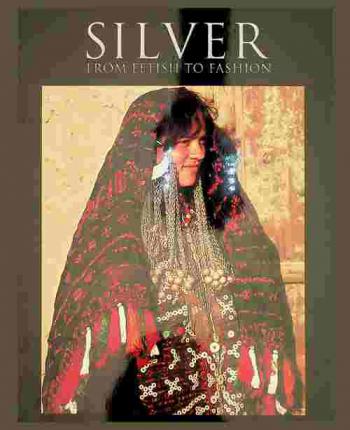
From spoons to bullets to sterling coins, silver permeates our everyday culture and language. For millennia we've used it to buy what we need, adorn our bodies, or trumpet our social status, and likewise it's been useful to vanquish werewolves, vampires, and even our own smelly socks. This book captures all of these facets of silver and more, telling the fascinating story of one of our most hardworking precious metals. As Lindsay Shen shows, while always valued for its beauty and rarity-used to bolster dowries and pay armies alike-silver today is also exploited for its chemistry and can be found in everything from the clothes we wear to the electronics we use to the medical devices that save our lives. Born in the supernovae of stars and buried deep in the earth, it has been mined by many different societies, traded throughout the world, and been the source of wars and the downfall of empires. It is also a metal of pure reflection, a shining symbol of purity. Featuring many glistening illustrations of silver in nature, art, jewelry, film, advertising, and popular culture, this is a superb overview of a metal both precious and useful, one with a rich and eventful history.
eBook

Sijmon Andries Valckenaer
Dirk Jan Biemond emphasizes the influence of the sculptural artistry of Paul van Vianen in silversmithing; for instance, the Amsterdam silversmith Sijmon Andries Valckenaer (1609-1672) worked in the same spirit.
Journal Article

PLATERÍA GUIPUZCOANA: CAJA PARA LLEVAR LOS ÚLTIMOS SACRAMENTOS DE ANTONIO USARRALDE
Within the religious silverware of Guipuzcoa there are some peculiar objects: Boxes meant to be hung from the neck which bear inside a container for hosts and another one for the oil used for the anointing of the sick. This article deals with this piece's ethimology, typology and its spreading, and we add to its short catalogue a particularly well-preserved and complete piece which turned up in an auction in Madrid. Its author is Antonio Usarralde, a silversmith from Tolosa who was active during the second half of the 18th century, working as a hallmarker and marker since 1760 and who produced some dozen pieces, out of which three will be introduced in this article.En la platería religiosa guipuzcoana existen unas piezas peculiares, unas cajas para colgar al cuello cuyo interior contiene un recipiente para Hostias y otro para el óleo de los enfermos. Estudiamos su etimología, tipología y difusión y añadimos a su corto catálogo un ejemplar especialmente bien conservado y completo aparecido en una subasta madrileña. Su autor es el pllatero tolosano Antonio Usarralde, activo en la segunda mitad del siglo XVIII, contraste y marcador desde 1760 y autor de una docena de obras, de las que tres son dadas a conocer en este trabajo.
Journal Article

Drawing by Eighteenth- and Nineteenth-century Silversmiths in Barcelona: Models and Training
Young aspiring artists wishing to join Barcelona's Guild of Silversmiths--like other artistic guilds in Spain--had to undergo an examination to assess their theoretical and technical knowledge and to determine their competence to practice their art with the guarantees conferred by guild membership. In other Spanish cities with active silversmith guilds, such as Seville, Pamplona, Valencia, and Granada, only a few albums of examination drawings have been preserved, leaving an incomplete picture of their local silversmith traditions. By contrast, the Archivo Historico de la Ciudad de Barcelona (AHCB) contains a particularly valuable resource, namely seven volumes of internship books with \"morceau de reception\" (diploma or reception) drawings submitted by local candidates to the silversmith guild. The extant group of reception drawings by master silversmith candidates in Barcelona is noteworthy not only for its quantity and chronological breadth but also for their elaborate compositions and the evidence they reveal of stylistic, typological, and design trends of each period.
Journal Article