
Catalogue Search | MBRL


Are you sure you want to remove the book from the shelf?

{{itemTitle}}
3,492
result(s) for
"Since 1999"
Sort by:

Venezuela reframed : Bolivarianism, indigenous peoples and socialisms of the twenty-first century
\"The role of the indigenous population in the formation of the Bolivarian constitution is one of Latin America's most important untold stories. Considered a beacon of twenty-first century socialism by many, Venezuela is witnessing the paradoxical emergence of 'indigenous capitalisms' as the government and various indigenous actors are driven by notions of development and enfranchisement grounded in the ideology of multiculturalism. Venezuela Reframed shows that a considerable part of indigenous activism, aligned with the Bolivarian governments, has paved the way for development in classical, social-democratic terms. It looks at how, in opposition to sectors of the indigenous population fighting for effective autonomy, many legitimate claims are being usurped to consolidate capitalist relations. Boldly arguing that romanticized notions of cultural indigeneity hide growing class struggle, this book is essential reading not just for those interested in Venezuela, but all those interested in the prospects of democracy, contemporary states and alternatives to capitalism worldwide.\"--Publisher's website.
Book
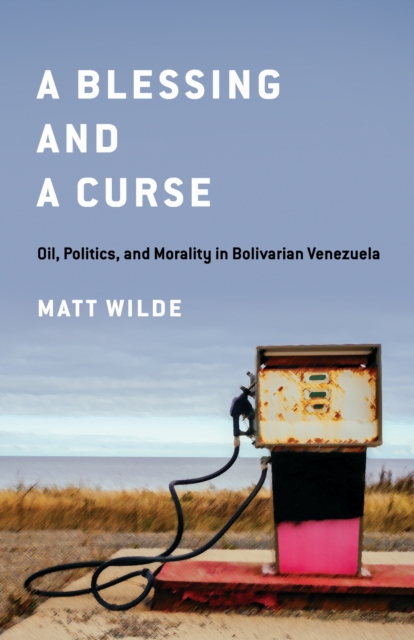
A blessing and a curse : oil, politics, and morality in Bolivarian Venezuela
A Blessing and a Curse examines the lived experience of political change, moral uncertainty, and economic crisis amid Venezuela's controversial Bolivarian Revolution. Drawing on ethnographic research conducted in an urban barrio over the course of a decade, Matt Wilde argues that everyday life in this period was intimately shaped by a critical contradiction: that in their efforts to capture a larger portion of oil money and distribute it more widely among the population, the governments of Hugo Chávez and Nicolás Maduro pursued policies that ultimately entrenched Venezuela in the very position of dependency they sought to overcome. Offering a new synthesis between anthropological work on energy, politics, and morality, the book explores how the use of oil money to fund the revolution's social programs and political reforms produced profound cultural anxieties about the contaminating effects of petroleum revenues in everyday settings. Tracing how these anxieties rippled out into community life, family networks, and local politics, Wilde shows how questions about how to live a good life came to be intimately shaped by Venezuela's contradictory relationship with oil. In doing so, he brings a vital perspective to contemporary debates about energy transitions by proposing a new way of thinking about the political and moral economies of natural resources in postcolonial settings.
eBook


Tours That Bind
Since 1999 hundreds of thousands of young American Jews have visited Israel on an all-expense-paid 10-day pilgrimage-tour known as Birthright Israel. The most elaborate of the state-supported homeland tours that are cropping up all over the world, this tour seeks to foster in the American Jewish diaspora a lifelong sense of attachment to Israel based on ethnic and political solidarity. Over a half-billion dollars (and counting) has been spent cultivating this attachment, and despite 9/11 and the ongoing Israeli-Palestinian conflict the tours are still going strong. Based on over seven years of first-hand observation in modern day Israel, Shaul Kelner provides an on-the-ground look at this hotly debated and widely emulated use of tourism to forge transnational ties. We ride the bus, attend speeches with the Prime Minister, hang out in the hotel bar, and get a fresh feel for young American Jewish identity and contemporary Israel. We see how tourism's dynamism coupled with the vibrant human agency of the individual tourists inevitably complicate tour leaders' efforts to rein tourism in and bring it under control. By looking at the broader meaning of tourism, Kelner brings to light the contradictions inherent in the tours and the ways that people understandtheir relationship to place both materially and symbolically. Rich in detail, engagingly written, and sensitive to the complexities of modern travel and modern diaspora Jewishness, Tours that Bind offers a new way of thinking about tourism as a way through which people develop understandings of place, society, and self.
eBook

We Are the State
Chavistas are the local leaders and activists in Venezuela's Bolivarian Revolution, working to establish democracy through government-sponsored social missions, community self-governance, and popular collectives.We Are the State!tells the story of their grassroots activism. In perspectives gleaned from participant observation with barrio residents in workplaces, communal kitchens, city-wide forums, and grassroots meetings and assemblies, as well as family and recreational events, anthropologist Cristobal Valencia vividly recounts tensions between activists, local officials, and the wealthy opposition.The author offers an anthropological analysis of the state, social movements, and democracy as lived experiences of the poor, gendered, and racialized residents of two parishes in Caracas, Venezuela, and Afro-Venezuelan communities nearby. Ethnographic research reveals the shift in relationships of power and the evolving political practices among the Chavistas, the Chávez government, and the opposition. Examining the subjective experiences of barrio residents in everyday processes of state formation, this book provides a new perspective on the Chavistas, arguing that they are a broad-based social movement and driving force behind a revolution struggling to transfer state power to organized civil society.Through his intense engagement with the constantly changing social, political, and economic dynamics, Valencia dramatically challenges top-down understandings of the state and power in Venezuela. He shows the unequal relationships between sectors of civil society, and he shows state formation as a process enmeshed in the struggles for social justice, demonstrating that the state is a sociopolitical entity that acts through civil society, rather than above it.
eBook
Hugo Chávez and the Bolivarian revolution
The emergence of Hugo Chávez in Venezuela has revived analysis of one of Latin America's most enduring political traditions - populism. Yet Latin America has changed since the heyday of Perón and Evita. Globalisation, implemented through harsh IMF inspired Structural Adjustment Programmes, has taken hold throughout the region and democracy is supposedly the 'only game in town'. This book examines the phenomenon that is Hugo Chávez within these contexts, assessing to what extent his government fits into established ideas on populism in Latin America. The book also provides a comprehensive and critical analysis of Chávez's emergence, his government's social and economic policies, its foreign policy, as well as assessing the charges of authoritarianism brought against him. Written in clear, accessible prose, the book carries debate beyond current polarised views on the Venezuelan president, to consider the prospects of the new Bolivarian model surviving beyond its leader and progenitor, Hugo Chávez.
eBook
Communes and Workers' Control in Venezuela
In Communes and Workers' Control in Venezuela: Building 21st Century Socialism from Below Dario Azzellini offers an account of the Bolivarian Revolution from below with extensive empirical examples and original voices from movements, communal councils, communes and workers.
eBook

Popular Choice and Managed Democracy: The Russian Elections of 1999 and 2000
Twice in the winter of 1999-2000, citizens of the Russian Federation flocked to their neighborhood voting stations and scratched their ballots in an atmosphere of uncertainty, rancor, and fear. This book is a tale of these two elections -one for the 450-seat Duma, the other for President. Despite financial crisis, a national security emergency in Chechnya, and cabinet instability, Russian voters unexpectedly supported the status quo. The elected lawmakers prepared to cooperate with the executive branch, a gift that had eluded President Boris Yeltsin since he imposed a post-Soviet constitution by referendum in 1993. When Yeltsin retired six months in advance of schedule, the presidential mantle went to Vladimir Putin -a career KGB officer who fused new and old ways of doing politics. Putin was easily elected President in his own right. This book demonstrates key trends in an extinct superpower, a troubled country in whose stability, modernization, and openness to the international community the West still has a huge stake.
eBook

LABOR SHARE DECLINE AND INTELLECTUAL PROPERTY PRODUCTS CAPITAL
We study the behavior of the U.S. labor share over the past 90 years. We find that the observed decline of the labor share is entirely explained by the capitalization of intellectual property products in the national income and product accounts.
Journal Article