
Catalogue Search | MBRL


Are you sure you want to remove the book from the shelf?

{{itemTitle}}
5,656
result(s) for
"Since 2002"
Sort by:
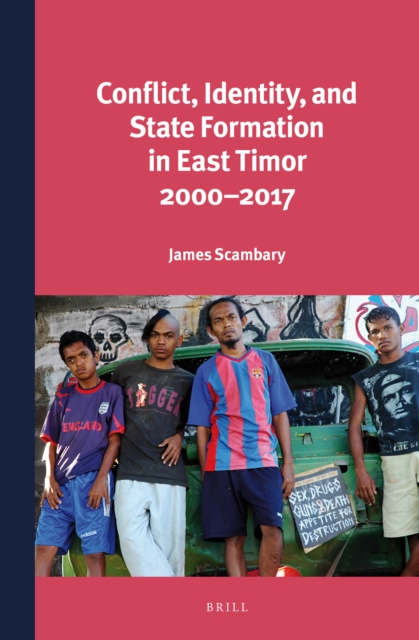
Conflict, Identity, and State Formation in East Timor 2000 - 2017
This book analyses conflict patterns in independent East Timor. It argues that understanding the role of local level actors and the dynamics of sub-national conflict is integral to understanding national level conflict and the contours of contemporary political power.
eBook

CEO, China : the rise of Xi Jinping
Since the election of Xi Jinping as General Secretary, life at the top in China is changing. Under the guise of a corruption crackdown, which has seen his rivals imprisoned, Xi Jinping has been quietly building one of the most powerful leaderships modern China has ever seen. The noted China expert Kerry Brown reveals the hidden story of the rise of the man dubbed the 'Chinese Godfather', investigating the relationship with his revolutionary father, who was expelled by Mao during the Cultural Revolution, his business dealings and allegiances in China's regional power struggles and his role in the internal battle raging between the old men of the Deng era and the new super-rich princelings.
Book
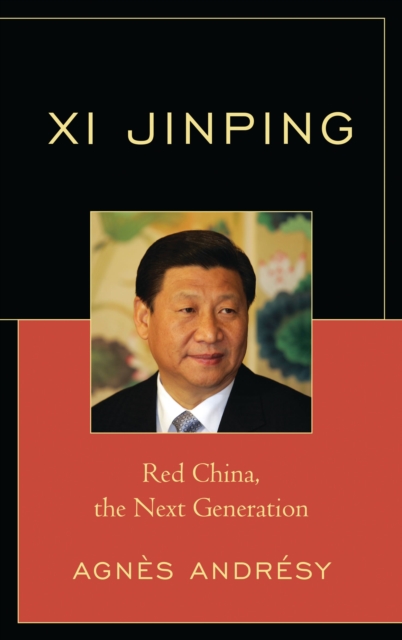
Xi Jinping
This book follows Chinese leader, Xi Jingping's rise to power and the chaotic path of his succession to the head of the Party. As he begins his first term, Xi Jinping knows that many challenges lie ahead, with the absolute imperative to keep China \"as stable as Mount Taishan.\"
eBook


Chinese Politics in the Xi Jinping Era
Chinese politics are at a crossroads as President Xi Jinping amasses personal power and tests the constraints of collective leadership.In the years since he became general secretary of the Chinese Communist Party in 2012, Xi Jinping has surprised many people in China and around the world with his bold anti corruption campaign and his aggressive consolidation of power.Given these new developments, we must rethink how we analyze Chinese politics-an urgent task as China now has more influence on the global economy and regional security than at any other time in modern history.Chinese Politics in the Xi Jinping Eraexamines how the structure and dynamics of party leadership have evolved since the late 1990s and argues that \"inner-party democracy\"-the concept of collective leadership that emphasizes deal making based on accepted rules and norms-may pave the way for greater transformation within China's political system.Xi's legacy will largely depend on whether he encourages or obstructs this trend of political institutionalization in the governance of the world's most populous and increasingly pluralistic country.Cheng Li also addresses the recruitment and composition of the political elite, a central concern in Chinese politics. China analysts will benefit from the meticulously detailed biographical information of the 376 members of the 18th Central Committee, including tables and charts detailing their family background, education, occupation, career patterns, and mentor-patron ties.
eBook


The Perfect Dictatorship
The Chinese system is like no other known to man, now or in history. This book explains how the system works and where it may be moving. Drawing on Chinese and international sources, on extensive collaboration with Chinese scholars, and on the political science of state analysis, the author concludes that under the new leadership of Xi Jinping, the system of government has been transformed into a new regime radically harder and more ideological than the legacy of Deng Xiaoping. China is less strong economically and more dictatorial politically than the world has wanted to believe. By analysing the leadership of Xi Jinping, the meaning of ‘socialist market economy’, corruption, the party-state apparatus, the reach of the party, the mechanisms of repression, taxation and public services, and state-society relations, the book broadens the field of China studies, as well as the fields of political economy, comparative politics, development, and welfare state studies.
eBook


Timor-Leste’s Bill of Rights
The Constitution of the Democratic Republic of Timor-Leste of 2002 contains over 40 human rights provisions in its Bill of Rights. In addition to providing an overview of the process leading up to the adoption of the Constitution, this book brings together information relating to each section of the Bill of Rights, presenting: progressive texts produced during the process of the Constituent Assembly; highlights of the arguments put forward within the Constituent Assembly concerning the draft provisions, including alternative proposals advanced; submissions made by Timorese officials, civil society and international bodies; and the results of consultation with the broader community before and during the constitutional process. It is designed to be useful in particular to judges and legal practitioners called upon to interpret the Constitution, government officials and civil society actors involved in human rights work, as well as students of history and constitutional law in Timor-Leste and internationally.
eBook