
Catalogue Search | MBRL


Are you sure you want to remove the book from the shelf?

{{itemTitle}}
5,936
result(s) for
"Since 2003"
Sort by:

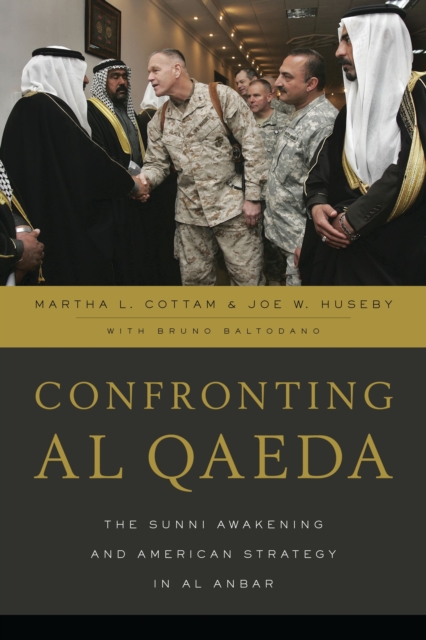
Confronting al Qaeda
Based on in-depth interviews with tribal Sheiks involved in the Awakening and their American military counterparts, Confronting al Qaeda is a study of decision-making processes and the political psychology of the Sunni Awakening in al Anbar. It traces the change in American military strategy that made the Awakening collaboration between the Sunni tribes and the U.S. forces possible. It explains how the evolution of the tribal leaders' perspective and of the American military strategy led to defeat al Qaeda in al Anbar. The process of these changing mutual images is detailed as well as how the cooperation between groups led to further evolution of perceptions. Political and military realities urgently forced these perceptual and social identity shifts initially, but the process of cooperation and engagement accelerated these shifts through increasingly mutually beneficial cooperation and interaction during the battle with al Qaeda in Iraq.
eBook


The Legacy of Iraq
The Legacy of Iraq critically reflects on the abject failure of the 2003 intervention to turn Iraq into a liberal democracy, underpinned by free-market capitalism, its citizens free to live in peace and prosperity. It argues that mistakes made by the coalition and the Iraqi political elite set a sequence of events in motion that have had devastating consequences for Iraq, the Middle East and for the rest of the world. Today, as the nation faces perhaps its greatest challenge in the wake of the devastating advance of the Islamic State of Iraq and Syria (ISIS) and another US-led coalition undertakes renewed military action in Iraq, understanding the complex and difficult legacies of the 2003 war could not be more urgent. Ignoring the legacies of the Iraq war and denying their connection to contemporary events couldmeans that vital lessonsare ignored and the same mistakes made again.
eBook

The caliphate at war : operational realities and innovations of the Islamic State
Innovation is key to military success, as Ahmed S. Hashim explains in his study of how Islamic State functions as a fighting, social media, and administrative entity.
Book

A Revolution in Military Adaptation
During the early years of the Iraq War, the US Army was unable to translate initial combat success into strategic and political victory. Iraq plunged into a complex insurgency, and defeating this insurgency required beating highly adaptive foes. A competition between the hierarchical and vertically integrated army and networked and horizontally integrated insurgents ensued. The latter could quickly adapt and conduct networked operations in a decentralized fashion; the former was predisposed to fighting via prescriptive plans under a centralized command and control. To achieve success, the US Army went through a monumental process of organizational adaptation-a process driven by soldiers and leaders that spread throughout the institution and led to revolutionary changes in how the army supported and conducted its operations in Iraq. How the army adapted and the implications of this adaptation are the subject of this indispensable study. Intended for policymakers, defense and military professionals, military historians, and academics, this book offers a solid critique of the army's current capacity to adapt to likely future adversary strategies and provides policy recommendations for retaining lessons learned in Iraq.
eBook

A cave in the clouds : a young woman's escape from ISIS
\"Badeeah Hassan was just 18 when ISIS invaded her village in Iraq. Torn from her family, her home, and her Yazidi community, she was forced into a brutal human trafficking network and eventually sold to a high-ranking American-born ISIS general. As weeks in captivity turned into months, she drew on memories and stories from her childhood for strength. Her profound sense of faith and brave resilience ultimately led her to escape. Now Badeeah brings her story of war and survival to the world's stage, raising awareness about the acts of genocide against the Yazidi people. Her eye-opening account speaks to the resilience of women, girls, and persecuted groups everywhere--and her voice is one more in a chorus of those hoping to banish violence and darkness forever.\"--Back cover.
Book
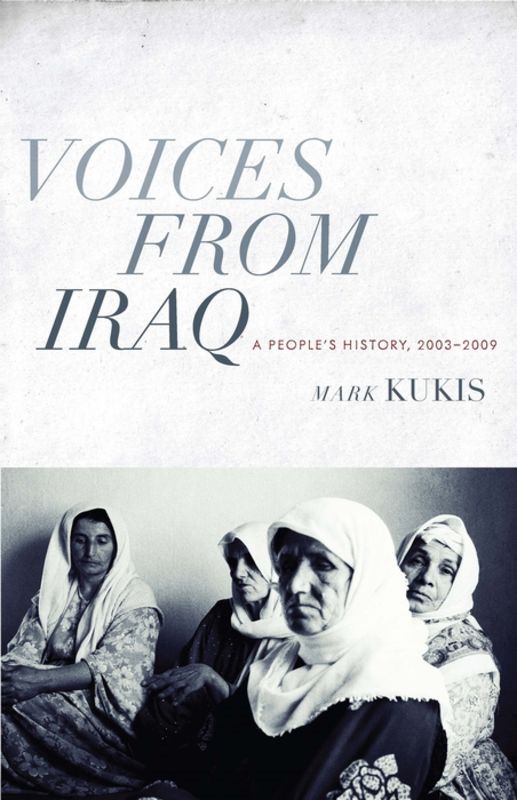
Voices from Iraq
Featuring the testimony of close to seventy Iraqis from all walks of life, Voices from Iraq builds a riveting chronological history unmatched for its insight and revelations. Here is a history of the war in Iraq as told entirely by Iraqis living through the U.S. invasion and occupation. Beginning in 2003, this intimate narrative includes the experiential accounts of civilians, politicians, former dissidents, insurgents, and militiamen. Iraqis offering firsthand stories range from onetime Prime Minister Ayad Allawi to resistance fighters speaking on the condition of anonymity. Divided into five parts, these interviews recount the 2003 invasion; Iraq's gradual slide into chaos from 2004 to 2005; the start of a new order in 2006; the rise of open sectarian violence over the next two years; and the effort since 2008 to reconstruct a society from relative calm. Each section includes interviews grouped into themes, with brief epilogues for the participants. Not since Studs Terkel's The Good War has a book captured so acutely the human consequences of a conflict we are still struggling to understand. Voices from Iraq makes utterly vivid the meaning and legacy of America's campaign in Iraq.
eBook

Pipe dreams : the plundering of Iraq's oil wealth
\"Iraq sits on top of more than 140 billion barrels of oil, making it the owner of the world's fifth largest reserves. When the United States invaded in 2003, the Bush Administration promised that oil revenue would be used to rebuild and democratize the country. But fifteen years later, those dreams have been shattered. The Iraqi economy has flatlined, millions of people are internally displaced, and international institutions have had to provide billions of dollars in assistance to the country every year. Where did all the oil revenue go? Reporter Erin Banco traveled to oil-rich Iraqi Kurdistan--an autonomous region that holds, according to the regional government, some 45 billion barrels of crude--to uncover how widespread corruption, tribal cronyism, kickbacks to political parties, and the war with ISIS have contributed to the plundering of Iraq's oil wealth. The region's economy and political stability have been on the brink of collapse, and local people are suffering. Based on court documents and on exclusive interviews with sources who have investigated energy companies and their dealings with government officials, Pipe Dreams is a cautionary tale that reveals how the dream of an oil-financed, American-style democracy in Iraqi Kurdistan now looks like a completely unrealistic fantasy.\"--Provided by Amazon.com.
Book

Director Appointments
Using 9,801 director appointments during 2003–2014, we document the dramatic impact of connections. Sixty-nine percent of new directors have professional ties to incumbent boards, a group representing 13% of all potential candidates. Consistent with facilitating coordination and reducing search costs, connections help boards bring in gender diversity, new skills, and new industry background. More complex firms and firms in more competitive environments tend to appoint connected directors and experience better market reactions and higher shareholder votes. Connections to incumbent CEOs, however, result in lower announcement returns and shareholder votes. We use death (merger)-induced network loss (gain) as instruments.
Journal Article