
Catalogue Search | MBRL


Are you sure you want to remove the book from the shelf?

{{itemTitle}}
3,860
result(s) for
"Sioux"
Sort by:


The Dakota Way of Life
Ella Cara Deloria was the most prolific Native scholar of the greater Sioux Nation, and the results of her lifelong work comprise an essential source for the study of the greater Sioux Nation culture and language.
eBook

Zitkala-Sa : letters, speeches, and unpublished writings, 1898-1929
\"Zitkala-Sa: Letters, Speeches, and Unpublished Writings, 1898-1929, edited by Tadeusz Lewandowski, offers a fascinating, intimate portrait of the Yankton Sioux writer and activist Gertrude Simmons Bonnin (1876-1938). Gertrude Bonnin, better known by her Lakota name, Zitkala-Sa, was one of the most prominent American Indians of the early 20th century. A talented writer, orator, and musician, she devoted much of her life to the protection of Native peoples. As such, Bonnin corresponded with many other distinguished persons within the early Native rights movement, including Carlos Montezuma, Richard Henry Pratt, and Arthur C. Parker, as well as Fathers Martin Kenel and William H. Ketcham of the Bureau of Catholic Indian Missions. This volume gathers together Bonnin's letters, lesser-known writings and speeches, illuminating her private and public struggles.\"--Provided by publisher.
Book

The Education of Clarence Three Stars
In The Education of Clarence Three Stars Philip Burnham
tells the life story of the remarkable Packs the Dog, a member of
the Minneconjou Lakotas who was born in 1864 east of the Black
Hills. His father, Yellow Knife, died when the boy was five, and
the family eventually enrolled at Pine Ridge Agency with the
Oglalas under an uncle's name, Three Stars. In 1879 Packs the Dog
joined the first class of Indian students to be admitted to the
Carlisle Indian Industrial School. An enthusiastic student,
Clarence Three Stars, as he would come to be known, was one of five
Lakota children who volunteered to stay at Carlisle after the
three-year plan of instruction was finished-though he eventually
left the school in frustration. Three Stars returned to Pine Ridge
and married Jennie Dubray, another Carlisle veteran, and they had
seven children. The life of Lakota advocate Three Stars spanned a
time of dramatic change for Native Americans, from the
pre-reservation period through the Dawes Act of 1887 until just
before the Indian Reorganization Act of 1934. Three Stars was a
teacher, interpreter, catechist, lawyer, and politician who lived
through the federal policy of American Indian assimilation in its
many guises, including boarding school education, religious
conversion, land allotment, and political reorganization. He used
the fundamentals of his own boarding school education to advance
the welfare of the Oglala Lakota people, even when his efforts were
deemed threatening or subversive. His dedication to justice,
learning, and self-governance informed a distinguished career of
classroom excellence and political advocacy on his home reservation
of Pine Ridge.
eBook

American wild
American Wild: it can kill you, or exhilarate you. It's always there, a character in its own right in the great unfolding narrative of American writing. This issue of Granta is dedicated to stories of the wild, from MELINDA MOUSTAKIS on gutting fish in Alaska to CLAIRE VAYE WATKINS on a lost child in a dystopian California. Also: ANTHONY DOERR on a family of pioneers in Idaho, ADAM NICOLSON on tracking wolves in New Mexico and DAVID TREUER on cage fighting and his Ojibwe heritage.
BOOK

Zitkala-Ša
Zitkala-Sa: Letters, Speeches, and Unpublished Writings, 1898-1929, edited by Tadeusz Lewandowski, offers a revealing selection of the American Indian activist's correspondence and lesser-known works.
eBook
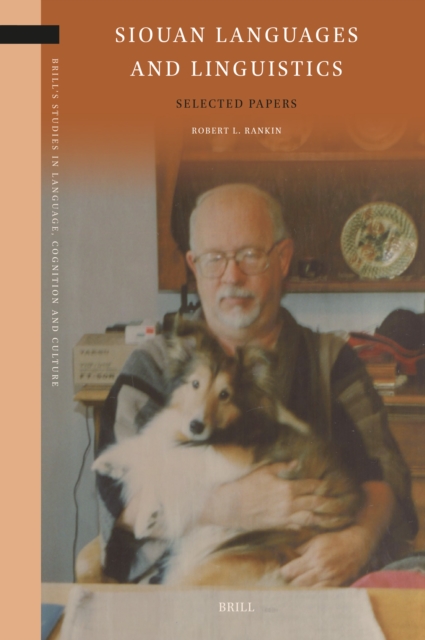
Siouan Languages and Linguistics
This volume includes seventeen papers by Robert L. Rankin. The papers included here focus on comparative-historical work on the Siouan language family, typological features from that family, and more specific language descriptions on Ofo, Kansa and Quapaw.
eBook

Not Without Our Consent
In a 1953 effort to end the authority of local Native American governments, Congress passed Public Law 83-280. Allowing states to apply their criminal and civil laws to Native American country, the law provided an unparalleled opportunity for the state of South Dakota to crush burgeoning Lakota nationalism. _x000B__x000B_Edward Valandra's Not Without Our Consent documents the tenacious and formidable Lakota resistance to attempts at applying this law. In unprecedented depth, it follows their struggle through the 1950s when, against all odds, their resistance succeeded in the amendment of PL 83-280 to include Native consent as a prerequisite to state jurisdiction. The various House and Senate bills discussed in the manuscript are reproduced in five appendices.
eBook

To Come to a Better Understanding
To Come to a Better Understanding analyzes the cultural encounters of the medicine men and clergy meetings held on Rosebud Reservation in St. Francis, South Dakota, from 1973 through 1978. Organized by Father Stolzman, a Catholic priest studying Lakota religious practice, the meetings fit the goal of the recently formed Medicine Men's Association to share its members' knowledge about Lakota thought and ritual. Both groups stated that the purpose of the historic theological discussions was \"to come to a better understanding.\" Though the groups ended their formal discussions after eighty-four meetings, Sandra L. Garner shows how this cultural exchange reflects a rich Native intellectual tradition and articulates the multiple meanings of \"understanding\" that necessarily characterize intercultural encounters. Garner examines the exchanges of these two very different cultures, which share a history of inequitable power relationships, to explore questions of cultural ownership and activism. These meetings were another form of activism, a \"quiet side\" without the militancy of the American Indian Movement. Based on ethnographic fieldwork and archival analysis, this volume focuses on the medicine men participants—who served as translators, interpreters, and cultural mediators—to explore how modern political, social, and religious issues were negotiated from an indigenous perspective that valued experience as critical to understanding.
eBook

Becoming Catawba
The story of Catawba women who experienced sweeping changes to their world but held onto traditional customs that helped them create and preserve a Catawba identity and build a nation
Winner of the Anne B. & James B. McMillan Prize in Southern History
Brooke M. Bauer’s Becoming Catawba: Catawba Indian Women and Nation-Building, 1540–1840 is the first book-length study of the role Catawba women played in creating and preserving a cohesive tribal identity over three centuries of colonization and cultural turmoil. Bauer, a citizen of the Catawba Indian Nation of South Carolina, weaves ethnohistorical methodologies, family history, cultural context, and the Catawba language together to generate an internal perspective on the Catawbas’ history and heritage in the area now known as the Carolina Piedmont.
This unique and important study examines the lives and legacies of women who executed complex decision-making and diplomacy to navigate shifting frameworks of kinship, land ownership, and cultural production in dealings with colonial encroachments, white settlers, and Euro-American legal systems and governments from the mid-sixteenth century to the early nineteenth century. Personified in the figure of Sally New River, a Catawba cultural leader to whom 500 remaining acres of occupied tribal lands were deeded on behalf of the community in 1796 and which she managed until her death in 1821, Bauer reveals how women worked to ensure the survival of the Catawba people and their Catawba identity, an effort that resulted in a unified nation.
Bauer’s approach is primarily ethnohistorical, although it draws on a number of interdisciplinary strategies. In particular, Bauer uses “upstreaming,” a critical strategy that moves toward the period under study by using present-day community members’ connections to historical knowledge—for example, family histories and oral traditions—to interpret primary-source data. Additionally, Bauer employs archaeological data and material culture as a means of performing feminist recuperation, filling the gaps and silences left by the records, newspapers, and historical accounts as primarily written by and for white men. Ultimately, Becoming Catawba effects a welcome intervention at the intersections of Native, women’s, and Southern history, expanding the diversity and modes of experience in the fraught, multifaceted cultural environment of the early American South.
eBook