
Catalogue Search | MBRL


Are you sure you want to remove the book from the shelf?

{{itemTitle}}
24,913
result(s) for
"Slave Trade"
Sort by:

The Atlantic slave trade
\"This survey is a synthesis of the economic, social, cultural, and political history of the Atlantic slave trade, providing the general reader with a basic understanding of the current state of scholarly knowledge of forced African migration and compares this knowledge to popular beliefs. The Atlantic Slave Trade examines the four hundred years of Atlantic slave trade, covering the West and East African experiences, as well as all the American colonies and republics that obtained slaves from Africa. It outlines both the common features of this trade and the local differences that developed. It discusses the slave trade's economics, politics, demographic impact, and cultural implications in relationship to Africa as well as America. Finally, it places the slave trade in the context of world trade and examines the role it played in the growing relationship between Asia, Africa, Europe, and America. This new edition incorporates the latest findings of the last decade in slave trade studies carried out in Europe and America. It also includes new data on the slave trade voyages which have justrecently been made available to the public\"--Provided by publisher.
Book

Freedom's Debt
In the years following the Glorious Revolution, independent slave traders challenged the charter of the Royal African Company by asserting their natural rights as Britons to trade freely in enslaved Africans. In this comprehensive history of the rise and fall of the RAC, William A. Pettigrew grounds the transatlantic slave trade in politics, not economic forces, analyzing the ideological arguments of the RAC and its opponents in Parliament and in public debate. Ultimately, Pettigrew powerfully reasons that freedom became the rallying cry for those who wished to participate in the slave trade and therefore bolstered the expansion of the largest intercontinental forced migration in history.Unlike previous histories of the RAC, Pettigrew's study pursues the Company's story beyond the trade's complete deregulation in 1712 to its demise in 1752. Opening the trade led to its escalation, which provided a reliable supply of enslaved Africans to the mainland American colonies, thus playing a critical part in entrenching African slavery as the colonies' preferred solution to the American problem of labor supply.
eBook

Atlas of the transatlantic slave trade
Between 1501 and 1867, the transatlantic slave trade claimed an estimated 12.5 million Africans and involved almost every country with an Atlantic coastline. In this extraordinary book, two leading historians have created the first comprehensive, up-to-date atlas on this 350-year history of kidnapping and coercion. It features nearly 200 maps, especially created for the volume, that explore every detail of the African slave traffic to the New World.
Book

Extending the Frontiers
Since 1999, intensive research efforts have vastly increased what is known about the history of coerced migration of transatlantic slaves. A huge database of slave trade voyages from Columbus's era to the mid-nineteenth century is now available on an open-access Web site, incorporating newly discovered information from archives around the Atlantic world. The groundbreaking essays in this book draw on these new data to explore fundamental questions about the trade in African slaves. The research findings-that the size of the slave trade was 14 percent greater than had been estimated, that trade above and below the equator was largely separate, that ports sending out the most slave voyages were not in Europe but in Brazil, and more-challenge accepted understandings of transatlantic slavery and suggest a variety of new directions for important further research.
For the most complete database on slave trade voyages ever compiled, visit www.slavevoyages.org.
eBook

Transatlantic slavery : an introduction
Over the four hundred years of transatlantic slavery, at least twelve million Africans were enslaved, in the largest forced migration in human history. Drawing on a wealth of material held by the International Slavery Museum, this introductory book tells their many stories -- from the early days of colonialism to frequent slave uprisings and the various efforts to suppress the slave trade in the Britain, the United States, and beyond. The legacy of slavery is also examined in this book, including enduring contemporary manifestations of this bloody trade. Despite considerable scholarship on the topic, many people remain largely uninformed about the history of the slave trade. Richly illustrated, straightforward, and with a perceptive foreword by Reverend Jesse L. Jackson, this is the perfect book to introduce readers to the subject of transatlantic slavery and will be required reading for all those approaching the subject for the first time.
Book
American Slavers
BThe first telling of the unknown story of America's two-hundred-year history as a slave-trading nation/BBR / BR / A total of 305,000 enslaved Africans arrived in the New World aboard American vessels over a span of two hundred years as American merchants and mariners sailed to Africa and to the Caribbean to acquire and sell captives. Using exhaustive archival research, including many collections that have never been used before, historian Sean M. Kelley argues that slave trading needs to be seen as integral to the larger story of American slavery.BR / BR / Engaging with both African and American history and addressing the trade over time, Kelley examines the experience of captivity, drawing on more than a hundred African narratives to offer a portrait of enslavement in the regions of Africa frequented by American ships. Kelley also provides a social history of the two American ports where slave trading was most intensive, Newport and Bristol, Rhode Island.BR / BR / In telling this tragic, brutal, and largely unknown story, Kelley corrects many misconceptions while leaving no doubt that Americans were a nation of slave traders.
eBook

Making the black Atlantic : Britain and the African diaspora
This text presents a coherent story of the African exile, of its origins, progress and transformation from bondage to freedom, within the broadest context, and with particular reference to Britain's central role.
Book

Final Passages
This work explores a neglected aspect of the forced migration of
African laborers to the Americas. Hundreds of thousands of captive
Africans continued their journeys after the Middle Passage across
the Atlantic. Colonial merchants purchased and then transshipped
many of these captives to other colonies for resale. Not only did
this trade increase death rates and the social and cultural
isolation of Africans; it also fed the expansion of British slavery
and trafficking of captives to foreign empires, contributing to
Britain's preeminence in the transatlantic slave trade by the
mid-eighteenth century. The pursuit of profits from exploiting
enslaved people as commodities facilitated exchanges across
borders, loosening mercantile restrictions and expanding capitalist
networks.
Drawing on a database of over seven thousand intercolonial slave
trading voyages compiled from port records, newspapers, and
merchant accounts, O'Malley identifies and quantifies the major
routes of this intercolonial slave trade. He argues that such
voyages were a crucial component in the development of slavery in
the Caribbean and North America and that trade in the unfree led to
experimentation with free trade between empires.
eBook

The United States and the transatlantic slave trade to the Americas, 1776-1867
\"While much of modern scholarship has focused on the American slave trade�s impact within the United States, considerably less has addressed its effects in other parts of the Americas. A rich analysis of a complex subject, this study draws on Portuguese, Brazilian, and Spanish primary documents�as well as English-language material�to shed new light on the changing behavior of slave traders and their networks, particularly to Brazil and Cuba. Slavery in these nations, Marques describes, contributed to the mounting tensions that would ultimately lead to the US Civil War. Taking a truly Atlantic perspective, Marques outlines the multiple forms of US involvement in this traffic amid various legislation and shifting international relations, exploring the global processes that shaped the history of this participation.\" -- Publisher Summary
Book
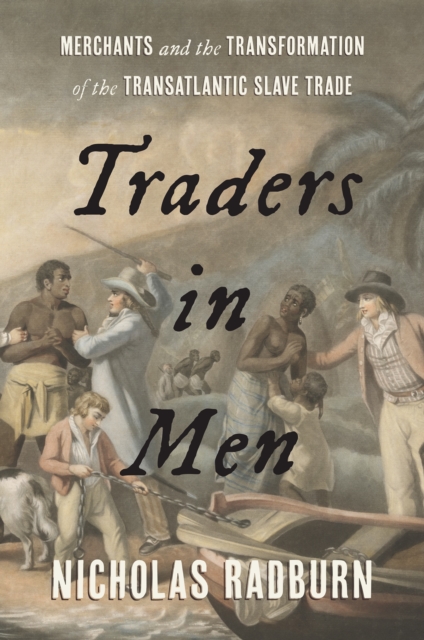
Traders in Men
BA sweeping new history that reveals how British, African, and American merchants developed the transatlantic slave trade/BBR / BR /B\"This is a landmark study given its clear status as easily the best researched and most comprehensive book on the British slave trade to date.\"-David Eltis, coauthor of IAtlas of the Transatlantic Slave Trade/I/BBR / BR /B\"A masterful account of one of the most brutal moments in the history of capitalist modernity. Radburn brilliantly details all aspects of the process of commodification of human beings in the Liverpool slave trade, vividly depicting the long journeys endured by Africans in Africa, across the Atlantic, and in the Americas.\"-Leonardo Marques, Universidade Federal Fluminense/BBR / BR / During the eighteenth century, Britain's slave trade exploded in size. Formerly a small and geographically constricted business, the trade had, by the eve of the American Revolution, grown into a transatlantic system through which fifty thousand men, women, and children were enslaved every year.BR / BR / In this wide-ranging history, Nicholas Radburn explains how thousands of merchants collectively transformed the slave trade by devising highly efficient but violent new business methods. African brokers developed commercial infrastructure that facilitated the enslavement and sale of millions of people. Britons invented shipping methods that quelled enslaved people's constant resistance on the Middle Passage. And American slave traders formulated brutal techniques through which shiploads of people could be quickly sold to colonial buyers. Truly Atlantic-wide in its vision, this study shows how the slave trade dragged millions of people into its terrible vortex and became one of the most important phenomena in world history.
eBook