
Catalogue Search | MBRL


Are you sure you want to remove the book from the shelf?

{{itemTitle}}
26
result(s) for
"Slavenhandel."
Sort by:

Ireland, Slavery and Anti-Slavery: 1612-1865
This book tackles a hitherto neglected topic by presenting Ireland as very much a part of the Black Atlantic world. It shows how slaves and sugar produced economic and political change in Eighteenth-century Ireland and discusses the role of Irish emigrants in slave societies in the Caribbean and North America.
eBook

Many middle passages
This groundbreaking book presents a global perspective on the history of forced migration over three centuries and illuminates the centrality of these vast movements of people in the making of the modern world. Highly original essays from renowned international scholars trace the history of slaves, indentured servants, transported convicts, bonded soldiers, trafficked women, and coolie and Kanaka labor across the Pacific, Indian, and Atlantic Oceans. They depict the cruelty of the captivity, torture, terror, and death involved in the shipping of human cargo over the waterways of the world, which continues unabated to this day. At the same time, these essays highlight the forms of resistance and cultural creativity that have emerged from this violent history. Together, the essays accomplish what no single author could provide: a truly global context for understanding the experience of men, women, and children forced into the violent and alienating experience of bonded labor in a strange new world. This pioneering volume also begins to chart a new role of the sea as a key site where history is made.
eBook

The Westo Indians : slave traders of the early colonial South
A comprehensive study that rescues the Westo from obscurity. The Westo Indians, who lived in the Savannah River region during the second half of the 17th century, are mentioned in few primary documents and only infrequently in secondary literature. There are no known Westo archaeological sites; no artifacts can be linked to the group; and no more than a single word of their language is known to us today. Yet, from the extant evidence, it is believed that the Westos, who migrated from around Lake Erie by 1656, had a profound effect on the development of the colonial South. This volume reproduces excerpts from all 19 documents that indisputably reference the Westos, although the Europeans referred to them by a variety of names. Most of the information was written by Lords Proprietors who never met the Westos, or by a handful of Carolinians who did. But the author is able to chart a highly plausible history of this Native group who, for a period, thrived on the Southern frontier. The narrative traces their northeastern origins and how the Erie conflicts with the Five Nations Iroquois in the Beaver Wars forced them southward, where they found new economic opportunities in the lucrative slave trade. At the height of their influence, between 1659 and 1680, it is believed the Westos captured and sold several thousand Indians from Spanish Florida, often trading them for guns. Eventually, their military advantage over the Indians of the lower South was compromised by the rise of powerful confederacies of native peoples, who could acquire equivalent firearms from the Europeans. Even though the aggressive Westos declined, they had influenced profound change in the Southeast. They furthered the demise of chiefly organization, helped to shift the emphasis from agricultural to hunting economies, and influenced the dramatic decrease in the number and diversity of native polities.
eBook

Fictions of the Black Atlantic in American Foundational Literature
This book is a significant contribution to existing research on the themes of race and slavery in the founding literature of the United States. It extends the boundaries of existing research by locating race and slavery within a transnational and 'oceanic' framework. The author applies critical concepts developed within postcolonial theory to American texts written between the national emergence of the United States and the Civil War, in order to uncover metaphors of the colonial and imperial 'unconscious' in America's foundational writing. The book analyses the writings of canonized authors such as Charles Brockden Brown, James Fenimore Cooper, Edgar Allan Poe, and Herman Melville alongside those of lesser known writers like Olaudah Equiano, Royall Tyler, Frederick Douglass, Martin Delany, and Maxwell Philip, and situates them within the colonial, and 'postcolonial', context of the slave-based economic system of the Black Atlantic. While placing the transatlantic slave trade on the map of American Studies and viewing it in conjunction with American imperial ambitions in the Pacific, Fictions of the Black Atlantic in American Foundational Literature also adds a historical dimension to present discussions about the 'ambivalence' of postcoloniality.
eBook

History of the Liverpool Privateers and Letters of Marque with an Account of the Liverpool Slave Trade, 1744-1812
\"Readers should not forget what is as hard to appreciate today in the case of slave trading as it was over a hundred years ago when Gomer Williams wrote his book - that both were legitimate endeavours in the eyes of domestic and emerging international law, and, more important, neither was viewed as in any way immoral: before the late eighteenth century, slave trading and privateering were seen as indistinguishable from trading in Baltic timber or Canadian furs.\" David Eltis, from the new introduction, 2004.
eBook

Slavery and the Commerce Power
Despite the United States' ban on slave importation in 1808, profitable interstate slave trading continued. The nineteenth century's great cotton boom required vast human labor to bring new lands under cultivation, and many thousands of slaves were torn from their families and sold across state lines in distant markets. Shocked by the cruelty and extent of this practice, abolitionists called upon the federal government to exercise its constitutional authority over interstate commerce and outlaw the interstate selling of slaves. This groundbreaking book is the first to tell the complex story of the decades-long debate and legal battle over federal regulation of the slave trade.David Lightner explores a wide range of constitutional, social, and political issues that absorbed antebellum America. He revises accepted interpretations of various historical figures, including James Madison, Harriet Beecher Stowe, and Abraham Lincoln, and he argues convincingly that southern anxiety over the threat to the interstate slave trade was a key precipitant to the secession of the South and the Civil War.
eBook
The African Slave Trade and its Suppression
A comprehensive bibliography dealing specifically with African slave trade. This volume has been sub-classified for easier consultation and the compiler has provided, where possible, descriptions and comments on the works listed.
eBook
African Voices on Slavery and the Slave Trade
Though the history of slavery is a central topic for African, Atlantic world and world history, most of the sources presenting research in this area are European in origin. To cast light on African perspectives, and on the point of view of enslaved men and women, this group of top Africanist scholars has examined both conventional historical sources (such as European travel accounts, colonial documents, court cases, and missionary records) and less-explored sources of information (such as folklore, oral traditions, songs and proverbs, life histories collected by missionaries and colonial officials, correspondence in Arabic, and consular and admiralty interviews with runaway slaves). Each source has a short introduction highlighting its significance and orienting the reader. This first of two volumes provides students and scholars with a trove of African sources for studying African slavery and slave trade.
eBook
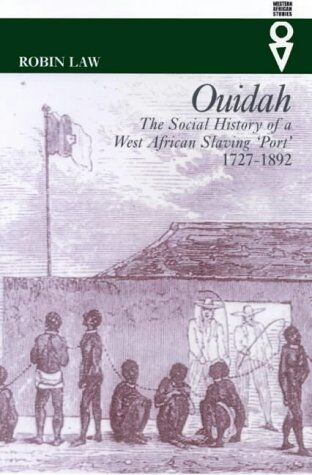
Ouidah
Ouidah, an African town in Dahomey, now Benin, was the principal pre-colonial commercial centre of its region and this is the first detailed study of the town's history and its role in the Atlantic slave trade.Ouidah, an indigenous African town in the modern Republic of Benin, was the principal pre-colonial commercial centre of its region, and the second most important town of the Dahomey kingdom. It served as a major outlet for the export of slaves for the trans- Atlantic trade. Between the seventeenth and the nineteenth centuries Ouidah was the most important embarkation point for slaves in the region of West Africa known to outsiders as the 'Slave Coast'. Exporting over a million slaves, it was second only to Luanda in Angola for the embarkation of slaves in the whole of Africa. The author's central concerns are the organization of the African end of the slave trade, and the impact participation in the trade had on the historical development of the African societies involved. It shifts the focus from the viewpoint of the Dahomian monarchy, represented in previous studies, to the coast. Here is a well documented case study of pre-colonial urbanism, of the evolution of a merchant community, and in particular the growth of a group of private traders whose relations with the Dahomian monarchy grew increasingly problematic over time. North America: Ohio U Press
eBook