
Catalogue Search | MBRL


Are you sure you want to remove the book from the shelf?

{{itemTitle}}
10,840
result(s) for
"Slavic Studies"
Sort by:

Water, Whiskey, and Vodka
A fascinating cultural and linguistic history of the
Slavic languages, exploring the deep connections and distinctions
between them
Water, whiskey, and vodka are three words that seem to have
nothing in common, but each of them comes from the same root.
Water, Whiskey, and Vodka takes a deep dive into the
origins of the Slavic languages, from a common ancestor language
through various cultural and historical shifts to arrive at the
current breadth of languages. The book takes a captivating look at
the unique sociolinguistic context of the Slavic languages and pays
special attention to the cultural subtleties particular to each one
and the people who speak it. Danko Šipka touches on the origins of
the Slavic languages, their linguistic similarities and
differences, word borrowing across them all, and the cultural
importance of languages even within this family of languages.
Water, Whiskey, and Vodka will fascinate
readers-whether or not they speak Slavic languages-interested in
the history and development of one or more Slavic languages.
Writing from the Slavic linguistic tradition, where talking about
language happens in the public sphere, he offers readers a deeper
understanding of various Slavic cultural traditions and historical
events as they are reflected in their languages.
eBook

Reflections on the Czech Slavistics After the First World War: Matija Murko and Jan Máchal
This article compares the positivist thought of two Czech professors of Slavic literature in the 1920s: the Slovenian Matija Murko (1861–1952) and the Czech Jan Hanuš Máchal (1855–1939). Comparative literary history, which in the Central European area focused on minor South Slavic literatures, was in its infancy at this time, and comparative literary historians primarily focused on surveying specific literary periods. The focus of this contribution is Murko’s reflections on South Slavic literature in the period of the Reformation and Counter-Reformation in the book Die Bedeutung der Reformation und Gegenreformation für das geistige Leben der Südslaven (1927). I compare his view and methods with a short chapter on the same period in the monumental monograph by Jan Máchal, Slovanské literatury (1922). In the study, I emphasize their comparative methods, interpreting influences, and marking literary currents in this period. Reflections on the literary movements in two national histories were linked to the development of language, and the scholars tried to present social and historical development of that time and place generally. I focus on their approaches to national and supranational literary history and on their interpretation of personalities and literary works in the literary movement.
Journal Article

Slavia as a Comparative Model. Reflections on a Recent History of Slavic Literatures
The present essay aims to assess the very possibility of tracing a comparative history of Slavic cultures, by highlighting those elements that are potentially common to all these literary traditions. Starting from the examination of Marcello Garzaniti’s recent monograph Storia delle letterature slave. Libri, scrittori e idee dall’Adriatico alla Siberia (secoli ix-xxi) [History of Slavic Literatures: Books, Writers, and Ideas from the Adriatic to Siberia (9th-21st Centuries), Rome 2023], the author evaluates two possible comparative perspectives: constructing a binary structure between two phenomena or groups of phenomena (for example, Slavia Orthodoxa and Slavia Latina), or interpreting the plurality of a class of phenomena in light of some central unifying element, around which the entire series can be arranged. Both these strategies have proved unsatisfactory, as the space of Slavic cultures is an evolutionary system in dynamic equilibrium, not a fixed totality of materials. Thus, it might be appropriate to abandon the very idea of an integral model referring to what is an inevitably open and infinitely plural class of phenomena.
Journal Article
La Slavia come modello comparatistico. Riflessioni circa una recente Storia delle letterature slave
The present essay aims to assess the very possibility of tracing a comparative history of Slavic cultures, by highlighting those elements that are potentially common to all these literary traditions. Starting from the examination of Marcello Garzaniti’s recent monograph Storia delle letterature slave. Libri, scrittori e idee dall’Adriatico alla Siberia (secoli ix-xxi) [History of Slavic Literatures: Books, Writers, and Ideas from the Adriatic to Siberia (9th-21st Centuries), Rome 2023], the author evaluates two possible comparative perspectives: constructing a binary structure between two phenomena or groups of phenomena (for example, Slavia Orthodoxa and Slavia Latina), or interpreting the plurality of a class of phenomena in light of some central unifying element, around which the entire series can be arranged. Both these strategies have proved unsatisfactory, as the space of Slavic cultures is an evolutionary system in dynamic equilibrium, not a fixed totality of materials. Thus, it might be appropriate to abandon the very idea of an integral model referring to what is an inevitably open and infinitely plural class of phenomena.
Journal Article
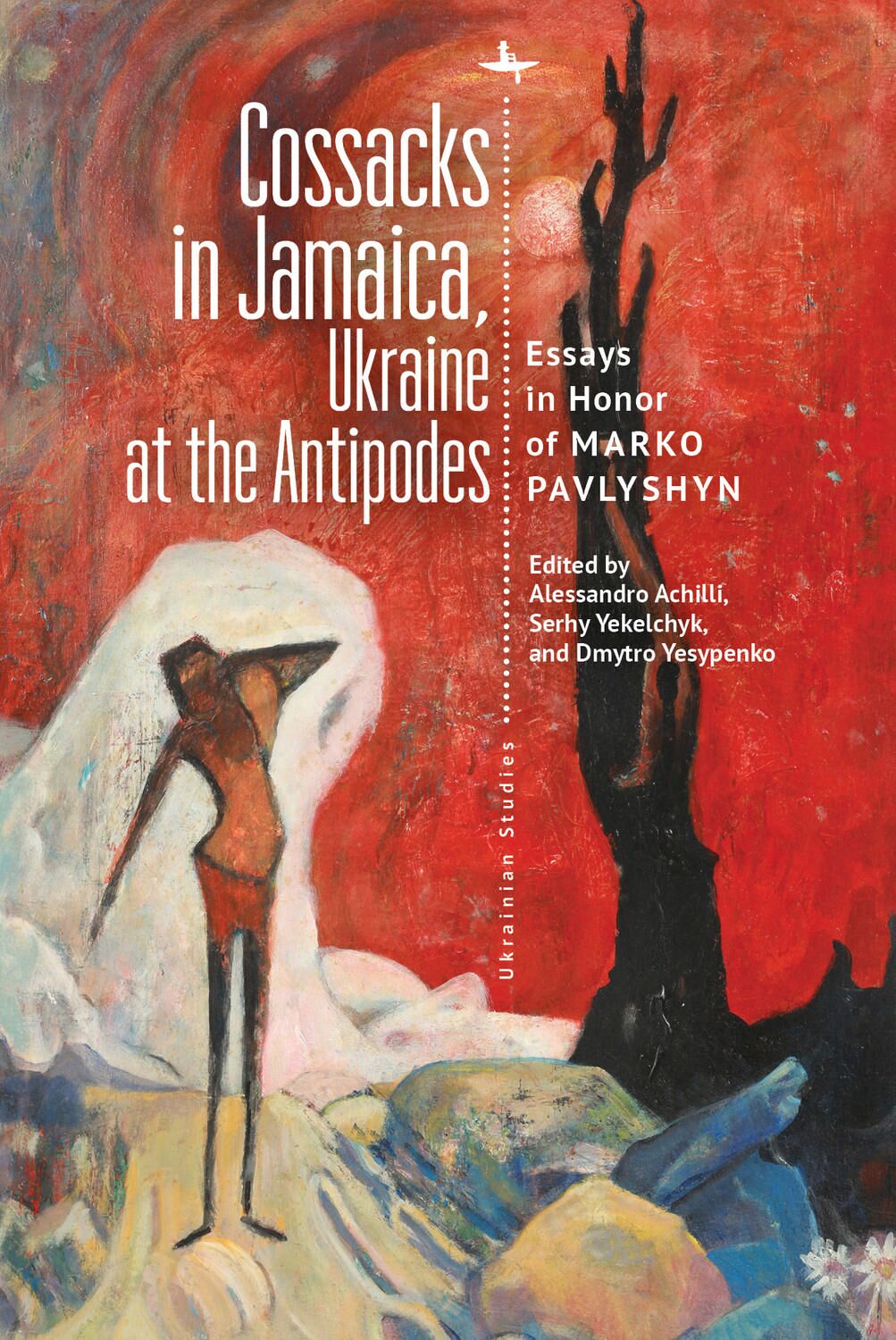
Cossacks in Jamaica, Ukraine at the Antipodes
With these essays, the Ukrainian Studies community worldwide wishes to celebrate Marko Pavlyshyn on his 65th birthday. The many periods and texts analyzed reflect the multifariousness of Marko's scholarship and the interest in literature as an instrument of social communication that he shares with the authors of this book.
eBook
The World of the Huns
An extensive study of the origins and culture of the mysterious Huns and the civilizations affected by their invasions. The first part of the book deals with the political history of the Huns, however, they are not a narrative. The second part of the book consists of monographs on the economy, society, warfare, art, and religion of the Huns. What distinguishes these studies from previous treatments is the extensive use of archaeological material. This title is part of UC Press's Voices Revived program, which commemorates University of California Press's mission to seek out and cultivate the brightest minds and give them voice, reach, and impact. Drawing on a backlist dating to 1893, Voices Revived makes high-quality, peer-reviewed scholarship accessible once again using print-on-demand technology. This title was originally published in 1973.
eBook
Canons and Their Questioning, Canons and Their Fading
This article deals with the problem of teaching the history of literature, specifically with regard to Polish (and Czech) literary history in the context of foreign study, namely in Germany. The authors are concerned with the question of whether it is possible to teach the history of literature to foreign students according to the standards set for Polish (and Czech) students, i.e. through a historical and literary perspective, division into epochs and, above all, with regard to the canon. In view of the fact that undergraduate curricula in Germany provide only a few hours of instruction in literary history, and that German students are not taught the literary canon at school but rather learn to question the normative value of every author or text, the teaching of ‘traditional’ literary history in Germany is problematic. Drawing on their own biographical experience as part of the ‘twilight of the canon generation’, the authors argue that the didactic process requires an awareness both of the need for a canon — as a kind of ‘map’ to navigate the territory of literature — and of its constant questioning, deconstruction, rewriting, and expansion. In the next part of the article, the authors discuss the ‘poststructuralist turn’ in literary historiography and examine selected poststructuralist textbooks on the history of national literatures, especially those that do not abandon the basic assumptions of literary synthesis in their ambition to give new order to the material. Another part of the article discusses the textbook Polnische Literatur im langen 19. Jahrhundert. Grundkonzepte — Author:innen — Textinterpretationen, created by the Leipzig Institute of Slavic Studies in cooperation with the Polish Academy of Sciences, a textbook that aims to present the history of Polish literature 1822–1939 as a history of Polish attitudes towards both cultivating and questioning the Polish canon. The handbook was conceived on the basis of the programs of the B.A. Polish literary courses in Leipzig and its preparation involved the participation of the students as translators and commentators on chapters written in Polish. The conclusion of the article is a plea for a hermeneutical consideration of the didactic relevance of canons as interpretationalcommunicational tools giving students and others the possibility to mediate between the orientation skills a tradition can provide and its critical inquiring, as well as to make different point of views intelligible to one another.
Journal Article
Tra comparatistica e studi postcoloniali. Passato e futuro degli approcci italiani alle intersezioni letterarie slavo-orientali
This contribution reflects on the state of comparative studies devoted to East Slavic literatures in Italy. Between the end of the 20th and beginning of the 21st century, Italian scholars of Slavic studies and the editors of Italian journals have made a number of interesting proposals on the subject. However, hyper-specialization has often hampered efforts to put theory into practice. I foreground some of these important methodological contributions by Italian scholars on comparative Slavic studies and discuss them both in the international context and with reference to other methodologies and research fields, most notably postcolonial studies. After the full-scale invasion of Ukraine by the Russian Federation in February 2022, comparative studies at the crossroads of Belarusian, Russian, and Ukrainian cultures have become a thorny issue. Scholars should seek to strike a balance between a philological approach and the ethical need to respect the different cultural orientations of East Slavic nations.
Journal Article
Dostoevskij Studies in Italy (2013-2022): Assessment and Prospects
The essay provides an assessment of Italian studies on Dostoevskij in the last decade and identifies new avenues for research. The many initiatives organized on the writer’s bicentenary attest to an interest that shows no sign of dying out. The constant development of Dostoevskij studies in Italy in recent decades confirms this interest while revealing a great variety of methodologies and approaches. The essay retraces the phases of recent Italian scholarship on Dostoevskij (2013-2022), highlighting the main aspects of the author’s poetics and stylistics that have been the object of investigation, often from a comparative perspective. An attempt will also be made to highlight prospective approaches to a field of study that continues to stimulate scholars, not only of literary and philosophical disciplines, but also of the sociological sciences and media studies.
Journal Article
Leningrad
Throughout much of this century, cities around the world have sought to gain control over their urban destinies through concerted government action. Nowhere has this process of state intervention gone further than in the Soviet Union. This volume explores the ways in which local and regional political, economic, and cultural leaders in Leningrad determine the physical and socioeconomic contours of their city and region within such a centralized economic and political environment. The author examines four major policy initiatives that have emerged in Leningrad since the 1950s--physical planning innovations, integrated scientific-production associations, vocational education reform, and socioeconomic planning--and that have been anchored in attempts to plan and manage metropolitan Leningrad. Each initiative illuminates the bureaucratic and political strategies employed to obtain economic objectives, as well as the bureaucratic patterns which distinguish market and non-market experiences. The boundaries for autonomous action by local Soviet politicians, planners, and managers emerge through this inquiry. This title is part of UC Press's Voices Revived program, which commemorates University of California Press's mission to seek out and cultivate the brightest minds and give them voice, reach, and impact. Drawing on a backlist dating to 1893, Voices Revived makes high-quality, peer-reviewed scholarship accessible once again using print-on-demand technology. This title was originally published in 1990. Many titles in the Voices Revived program are also newly available as ebooks, offered at a discounted price to support wider access to scholarly work.
eBook