
Catalogue Search | MBRL


Are you sure you want to remove the book from the shelf?

{{itemTitle}}
17,288
result(s) for
"Slavic languages"
Sort by:

Aspects of Slavic linguistics : formal grammar, lexicon and communication
The volume offers a selection of papers on current issues in Slavic languages. It takes stock of the past 20 years of research at the Department of Slavic Studies at Leipzig University. The papers tackle issues of all grammatical subdisciplines in current models of description, compare parts of the grammars of Slavic languages, and explain categories and phrases that do not exist in present-day Indogermanic languages of Western Europe.
Book
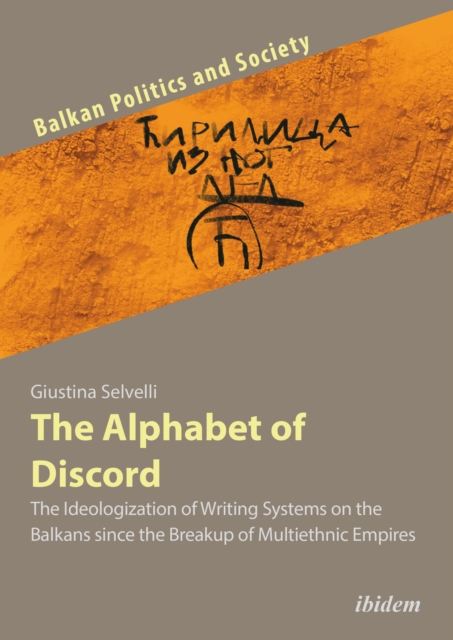
The Alphabet of Discord
What is the relationship between writing systems and nationalism? How can different alphabets coexist in the same country? What is the destiny of the Cyrillic alphabet in Europe?
Giustina Selvelli’s original work provides detailed answers to these far-reaching and potentially divisive questions and many more by examining several intriguing debates on topics of alphabets and national identity in a number of countries from the Balkan area over the course of the last 100 years. Following an encompassing perspective on alphabetic diversity, Selvelli, an expert on Southeast European Studies, reconstructs the ideological context of national discourses connected to the Latin and Cyrillic alphabets, also taking a look at the Arabic and Glagolitic scripts, and interweaving issues on the symbolism of the alphabet with the complex recent history of the region, marked by the parallel influences of the East and the West. She also sheds light on the impact of a range of alphabet policies on ethnolinguistic minorities, proposing a new definition of “alphabetic rights” with special regard to the multiethnic legacy of the former Ottoman and Habsburg empires.
This comprehensive book makes us discover the privileged role that writing systems played in the region’s delicate post-imperial and post-socialist transitions, leaving us captivated by peculiar stories such as that of the utopian “Yugoslav alphabet”.
eBook


Water, Whiskey, and Vodka
A fascinating cultural and linguistic history of the
Slavic languages, exploring the deep connections and distinctions
between them
Water, whiskey, and vodka are three words that seem to have
nothing in common, but each of them comes from the same root.
Water, Whiskey, and Vodka takes a deep dive into the
origins of the Slavic languages, from a common ancestor language
through various cultural and historical shifts to arrive at the
current breadth of languages. The book takes a captivating look at
the unique sociolinguistic context of the Slavic languages and pays
special attention to the cultural subtleties particular to each one
and the people who speak it. Danko Šipka touches on the origins of
the Slavic languages, their linguistic similarities and
differences, word borrowing across them all, and the cultural
importance of languages even within this family of languages.
Water, Whiskey, and Vodka will fascinate
readers-whether or not they speak Slavic languages-interested in
the history and development of one or more Slavic languages.
Writing from the Slavic linguistic tradition, where talking about
language happens in the public sphere, he offers readers a deeper
understanding of various Slavic cultural traditions and historical
events as they are reflected in their languages.
eBook


Interactions of Vowel Quality and Prosody in East Slavic
This book develops an Optimality-theoretic model of the interaction of phonological tone with segmental sonority, arguing that tone can interact directly with vowel quality without mediating factors such as syllable structure or duration. The proposal is tested against rich and complex patterns of vowel reduction in East Slavic dialects. Though the idea that tone constitutes a part of the phonological system of some Slavic languages has been around for decades, the relationship between tone and vowel reduction has not been systematically explored in previous studies. A tone-based model developed in this book unifies many apparently disparate phenomena by proposing a limited set of constraints, whose minimal re-rankings yield the attested East Slavic vocalic patterns. On the descriptive side, this study formulates novel generalisations and presents linguistic data not previously discussed in generative linguistics. This book will be of use to students and scholars interested in phonology, Slavic languages, and the theory of grammar in general.
eBook

IE -KWE ‘AND; IF’ IN SLAVIC LANGUAGES
The article examines the origin and functional development of the Slavic conjunction ače ‘if; although’ (OPol. acz). The marker of the protasis in conditional clauses was the enclitic *-če, which continues the function of IE *-kwe ‘and; if’. Thus, Sl. *-če ‘if’ is an archaism and may be compared with corresponding forms in Indo-Iranian, Hittite, and Latin. The concessive ače ‘although’ evolved from conditional concessive clauses. TheproposedinterpretationalsoshedslightonthegenesisofOCz.leč‘ifonly’.
Journal Article