
Catalogue Search | MBRL


Are you sure you want to remove the book from the shelf?

{{itemTitle}}
21,284
result(s) for
"Small cities"
Sort by:

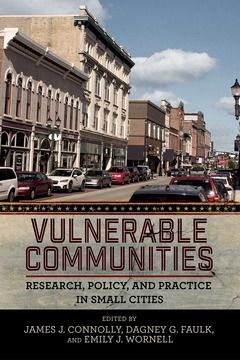
Vulnerable Communities
Vulnerable Communities
examines the struggles of smaller cities in the United
States, those with populations between 20,000 and 200,000.
Like many larger metropolitan centers, these places are confronting
change within a globalized economic and cultural order. Many of
them have lost their identities as industrial or commercial centers
and face a complex and distinctive mix of economic, social, and
civic challenges. Small cities have not only fewer resources but
different strengths and weaknesses, all of which differentiate
their experiences from those of larger communities.
Vulnerable Communities draws together scholars from a
broad range of disciplines to consider the present condition and
future prospects of smaller American cities. Contributors offer a
mix of ground-level analyses and examinations of broader
developments that have impacted economically weakened communities
and provide concrete ideas for local leaders engaged in
redevelopment work. The essays remind policy makers and academics
alike that it is necessary to consider cultural tensions and
place-specific conflicts that can derail even the most well-crafted
redevelopment strategies prescribed for these communities.
eBook

Only love can break your heart : a novel
Struggling to come to terms with the worshipped older brother who disappeared seven years earlier, fifteen-year-old Rocky is seduced by a wealthy older girl in the wake of a mysterious double murder that forces the town to confront past misdeeds.
Book
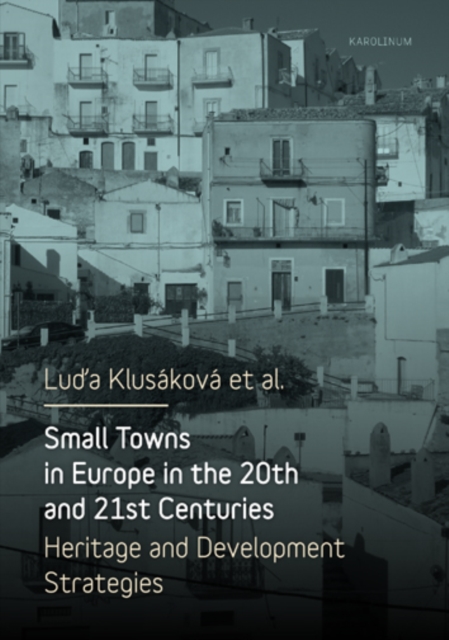
Small Towns in Europe in the 20th and 21st Centuries
Largely unknown small towns, always in the shadow of famous cities, are mostly overlooked by historical research. English, Spanish, Portuguese, Greek, Czech and Russian towns are staged in this volume as examples of a typical European phenomenon. They appear in diverse shapes, influenced by their countries and regions in history. One of possible strategies to overcome difficulties and motivate new development uses cultural heritage as a marketable value. International team of urban historians, sociologists and historians of arts and architects joined at the European Association for Urban History conference in Lisbon in 2014 and decided to present the issue in this volume – composed of five chapters – using a variety of methods and perspectives.
eBook


Agent-based decision-support model for bus route redesign in networks of small cities and towns: case study of Agder, Norway
Small cities and towns often struggle to provide high-quality public transport services to daily commuters. This is reflected in the modal split, where the share of car users dominates. Such a problem requires a modern solution, where transport planners can verify the impact of potential transport network improvements on the travel behavior of the residents before the changes are actually deployed. This study aims to demonstrate the usefulness of employing an agent-based simulation tool in the decision process for redesigning an express service regional bus route connecting a network of small cities and towns. The model was initially developed as a Mobility as a Service simulation solution for suburban areas of European metropolises. The model is adapted and applied to a case study for the region of Agder, Norway, simulating the impact of nine different scenarios on the patronage of a specific bus route. The simulation model proposes to upgrade the classic agent structure to a persona profile designed specifically for the case study. The main objective of this research is to identify the scenario that maximizes patronage while minimizing total route travel time and additional costs. The results suggest that the proposed model can be successfully adapted from suburban metropolitan areas to the realities of the considered case study, and potentially other similar regions. Specifically, out of the nine proposed scenarios, the model identified four promising ones. One of the four scenarios also fits the cost constraints imposed by the transport provider. The model provides a solid approach for analyzing complex transport systems that are practically impossible to consider in detail if the analysis is done without computer support. Thus, the results can be used as a decision support system for public transport planning and operations in networks of small cities and towns.
Journal Article


A small upland city gets a big make-over
Since 1986, the Socialist Republic of Vietnam has undergone tremendous upheavals in urban growth, city planning and market integration. Yet the complex transformations underway in small cities and towns, especially those in uplands regions, and their impacts on residents’ livelihoods, have been relatively ignored to date in the academic literature. Drawing on small cities and everyday politics concepts, we examine the contested relationships between a socialist state bent on completing a major urban make-over for an upland small city, and the reactions and strategies of local residents. From its historical roots as a small border trading post and colonial garrison town in the late 1800s, Lào Cai has now grown to be a key node on the Greater Mekong Sub Regions’ Eastern Corridor. Urban planning has taken a distinctively ‘modern’ turn since the early 1990s, and the contemporary city reflects a curious blend of socialist urban planning ideals, state visions of modernity and the everyday realities of the local population. Great efforts are being made by city officials and developers to copy the urban forms of Vietnam’s large low-land cities, while concurrently ignoring many of the basic needs of the local population, revealing sharp inequalities. Nonetheless, residents are subtly pushing back against the state’s plans via a range of strategies that also highlight the nuances of inhabiting a small upland city.
自1986年以来,越南社会主义共和国在城市发展、城市规划和市场一体化方面经历了巨变。然而,迄今为止,学术文献相对忽略了小城镇中正在发生的复杂变革(特别是高地地区的变革)及其对居民生活的影响。借鉴小城市和日常政治概念,我们研究了一种对抗关系,关系的一方面是一个社会主义国家一心想完成一个高地小城市的重要城市改造,另一方面则是当地居民的反应和策略。从19世纪后期作为小型边境贸易站和殖民地驻军镇的历史根源,老街市(Lào Cai)现已发展成为大湄公河次区域东部走廊的重要中心。自20世纪90年代初以来,城市规划经历了一次独特的“现代化”转变,如今的城市反映了社会主义城市规划理念、政府的现代化理想和当地民众日常生活现实的奇特融合。城市官员和开发商正在努力复制越南大型低地城市的城市形态,同时忽视当地民众的许多基本需求,导致了严重的不平等。尽管如此,居民通过一系列策略巧妙地抵制了政府的计划,这些策略也凸显了小型高地城市生活的那些微妙的与众不同之处。
Journal Article

The absence of mercy : a novel
\"When a brutally murdered teenager is discovered in the woods surrounding a small Ohio town, Dr. Ben Stevenson- the town's medical examiner- must decide if he's willing to put his family's life in danger to uncover the truth. Finding himself pulled deeper into an investigation with devastating consequences, he discovers shocking information that will shatter his quiet community, and force him to confnt a haunting truth.\"--Amazon.com
Book

To e-bike or not to e-bike? A study of the impact of the built environment on commute mode choice in a small Chinese city
The use of electric bikes (e-bikes) is attracting increasing attention from researchers and policymakers as a way to promote sustainable transportation. However, knowledge about the built environment factors that influence e-bike use is lacking. In China, most evidence on e-bikes and travel behavior stems from big cities; there is much less evidence concerning small cities and their adjacent rural areas. Using travel data collected in a small Chinese city (Ganyu), the present research explores the impact of the built environment around residential and work locations on individuals’ commute mode choice, with a particular focus on e-bike use. Consistent with the few previous studies on travel behavior in small Chinese cities, we find that most residents of Ganyu commute only short distances and that the e-bike is the primary mode for their daily commutes. The results of a nested logit model show that e-bike use is more popular among females and low-income groups, and that certain built environment characteristics at the work location promote e-bike use. Moreover, the built environment in different geographical contexts has different influences on commute mode choice. In particular, the presence of city/town roads without bike lanes at work locations promotes e-bike use among rural residents but much less so among urban residents.
Journal Article