
Catalogue Search | MBRL


Are you sure you want to remove the book from the shelf?

{{itemTitle}}
397
result(s) for
"Smallpox Vaccination History."
Sort by:


Bodily matters : the anti-vaccination movement in England, 1853-1907
Bodily Matters explores the anti-vaccination movement that emerged in England in the late nineteenth century and early twentieth in response to government-mandated smallpox vaccination. By requiring a painful and sometimes dangerous medical procedure for all infants, the Compulsory Vaccination Act set an important precedent for state regulation of bodies. From its inception in 1853 until its demise in 1907, the compulsory smallpox vaccine was fiercely resisted, largely by members of the working class who interpreted it as an infringement of their rights as citizens and a violation of their children's bodies. Nadja Durbach contends that the anti-vaccination movement is historically significant not only because it was arguably the largest medical resistance campaign ever mounted in Europe but also because it clearly articulated pervasive anxieties regarding the integrity of the body and the role of the modern state.
Analyzing historical documents on both sides of the vaccination debate, Durbach focuses on the key events and rhetorical strategies of the resistance campaign. She shows that those for and against the vaccine had very different ideas about how human bodies worked and how best to safeguard them from disease. Individuals opposed to mandatory vaccination saw their own and their children's bodies not as potentially contagious and thus dangerous to society but rather as highly vulnerable to contamination and violation. Bodily Matters challenges the notion that resistance to vaccination can best be understood, and thus easily dismissed, as the ravings of an unscientific \"lunatic fringe.\" It locates the anti-vaccination movement at the very center of broad public debates in Victorian England over medical developments, the politics of class, the extent of government intervention into the private lives of its citizens, and the values of a liberal society.
eBook

The fever of 1721 : the epidemic that revolutionized medicine and American politics
\"More than fifty years before the American Revolution, Boston was in revolt against the tyrannies of the Crown, Puritan authority, and auperstition. This is the story of a fateful year that prefigured the events of 1776, ... [examining] the smallpox epidemic of 1721 [that] was the catalyst for the invention of American journalism, the coming-of-age of Benjamin Franklin, and the beginning of American independence\"-- Provided by publisher.
Book
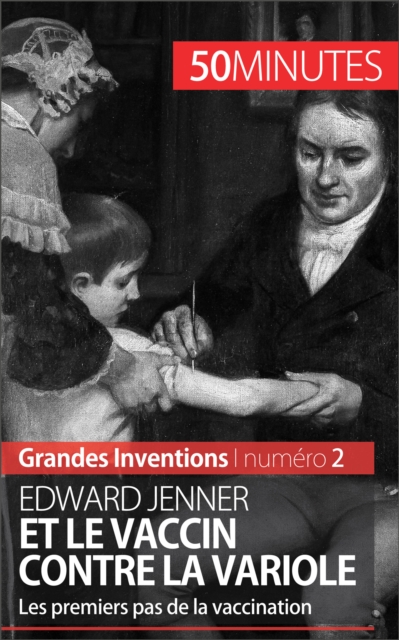
Edward Jenner et le vaccin contre la variole
Découvrez enfin tout ce qu'il faut savoir sur Edward Jenner et le vaccin contre la variole en moins d'une heure! Pendant des siècles, la variole a effrayé l'Europe par son caractère endémique et mortel. Si des mesures sont prises pour s'en prémunir dès les premiers siècles de notre ère, il faut attendre les XVIIIe et XIXe siècles pour que s'amorce une véritable révolution à cet égard. C'est Edward Jenner qui, avant même la découverte par Louis Pasteur du rôle des micro-organismes comme agents infectieux, en invente le vaccin. Moins de deux siècles plus tard, la maladie est éradiquée. Ce livre vous permettra d'en savoir plus sur:
• La vie d'Edward Jenner
• Le contexte de l'époque
• Les temps forts de sa vie
• Les répercussions de son invention Le mot de l'éditeur:
« Dans ce numéro de la collection « 50MINUTES | Grandes Inventions », Mélanie Mettra nous présente l'invention révolutionnaire d'Edward Jenner. Remarquant que ses patients atteints de la vaccine ne contractaient pas la variole, il mène des expériences afin de confirmer son intuition. Il s'attache ensuite à étudier le matériau vaccinable afin que celui-ci soit efficace sans qu'il n'y ait d'effets secondaires, et organise sa conservation et son transport, rendant possible la vaccination à grande échelle. » Stéphanie Dagrain À PROPOS DE LA SÉRIE 50MINUTES|Grandes Inventions
La série « Grandes Inventions » de la collection « 50MINUTES » présente plus de cinquante inventions qui ont bouleversé notre quotidien. Chaque livre a été pensé pour les lecteurs curieux qui veulent faire le tour d'un sujet précis, tout en allant à l'essentiel, et ce en moins d'une heure. Nos auteurs combinent les faits historiques, les analyses et les nouvelles perspectives pour rendre accessibles des siècles d'histoire.
eBook


The Smallpox Report
After the COVID-19 pandemic, vaccination has become synonymous with an opaque biopower that legislates compulsory immunization at a distance. Contemporary illness narratives have become outlets for distrust, misinformation, reckless denialism, and selfish noncompliance. In The Smallpox Report , Fuson Wang rewinds this contemporary impasse between physician and patient back to the Romantic-era origins of vaccination.
The book offers a literary-historical account of smallpox vaccination, contending that the disease’s eventual eradication in 1980 was as much a triumph of the literary imagination as it was an achievement of medical Enlightenment science. Wang traces our modern pandemic-era crisis of vaccine hesitancy back to Edward Jenner’s publication of his treatise on vaccination in 1798, the first rumblings of an anti-vaccination movement, and vaccination’s formative literary history that included authors such as William Wordsworth, William Blake, John Keats, Mary Shelley, and Arthur Conan Doyle. The book concludes with a re-examination of the current deeply contentious public discourse about vaccines that has arisen in the wake of the COVID-19 pandemic. By recovering the surprisingly literary genres of Romantic-era medical writing, The Smallpox Report models a new literary historical perspective on our own crises of vaccine refusal.
eBook

Historical analysis of the first smallpox vaccination campaigns in early 19-century northern Italy: organisation and communication insights for contemporary epidemics' prevention and control
In the annals of public health, smallpox is a watershed, being the first disease eradicated by vaccination. Drawing parallels to contemporary pandemic control measures, we examined the first smallpox vaccination campaigns in early 19th-century northern Italy and the seminal work of Luigi Sacco. Our study delves into this under-explored historical landscape to elucidate lessons that resonate with modern public health dilemmas.
We scrutinised primary sources from the Historical Civic Archive of Pavia, the State Archive of Pavia, and the State Archive of Milan. These archives provided exhaustive data on administrative decrees, local epidemiology, and university-health authority collaborations. Using period-specific keyword searches and expert consultations, we extensively reviewed correspondence, vaccination lists, and academic writings, including Luigi Sacco's seminal Trattato di vaccinazione. The epidemiological investigation focused on the pivotal period of 1816–1828 in Lombardy's 19th-century public health landscape.
Organisational reforms enacted in 1821 succeeded in doubling the number of vaccinations administered in Pavia, stabilising at elevated rates in subsequent years. Despite improvements, incongruities in epidemiological data and vaccinator remuneration persisted. Communication strategies pioneered by Sacco, encompassing academic and religious collaborations, demonstrated their efficacy. Epidemiological data revealed an initial surge in vaccination uptake in 1822, with a declining trend in the following years, notably impacted by logistical and data recording limitations.
Our research underscores three salient dimensions pertinent to contemporary public health paradigms: first, the vital function of local administrative bodies as efficacious service providers, immunisation register keepers, and social safety nets; second, the equilibrium between mandatory vaccination policies and discretionary enforcement as a pragmatic framework for public compliance; lastly, the irrefutable importance of credible communication strategies in fighting vaccine hesitancy. These insights are not merely historical curiosities but cardinal principles for effectively managing modern epidemics and infectious disease threats.
•Luigi Sacco was a pioneer in European smallpox vaccination in early 1800s Lombardy.•Historical analysis reveals similarities in vaccine campaign challenges then and now.•Local district organisation was the key to early widespread vaccine coverage.•Epidemiological data collection was a cornerstone for vaccination success.•Modern communication approaches and flexible mandates were crucial historically.
Journal Article

The earliest report of smallpox oral vaccination by Bahā’ al-Dawlah Rāzī in the 16th century
Smallpox is one of the viral and contagious diseases that were always talked about and deadly epidemics that killed many people for many centuries. Through the analysis of historical and textual material, this paper seeks to investigate the smallpox eradication process. It starts with a brief history of smallpox before listing the common methods of eradicating the illness throughout the 16th century. There was a type of traditional oral smallpox vaccination, reported by Bahā’ al-Dawlah Rāzī, a Persian physician in his book, Khulāsāt al-Tajārib (The Summary of Experiences). This method could be considered the earliest remained report of practical solution to prevent smallpox; at least 3 centuries earlies than smallpox vaccination by Edward Jenner.
Journal Article

Mandate vaccination with care
Governments that are considering compulsory immunizations must avoid stoking anti-vaccine sentiment, argue Saad B. Omer, Cornelia Betsch and Julie Leask.
Governments that are considering compulsory immunizations must avoid stoking anti-vaccine sentiment, argue Saad B. Omer, Cornelia Betsch and Julie Leask.
Filipino children with measles in a Manila hospital
Journal Article

Levels of antibodies against the monkeypox virus compared by HIV status and historical smallpox vaccinations: a serological study
Men who have sex with men and people living with HIV are disproportionately affected in the 2022 multi-country monkeypox epidemic. The smallpox vaccine can induce cross-reactive antibodies against the monkeypox virus (MPXV) and reduce the risk of infection. Data on antibodies against MPXV induced by historic smallpox vaccination in people with HIV are scarce. In this observational study, plasma samples were collected from people living with and without HIV in Shenzhen, China. We measured antibodies binding to two representative proteins of vaccinia virus (VACV; A27L and A33R) and homologous proteins of MPXV (A29L and A35R) using an enzyme-linked immunosorbent assay. We compared the levels of these antibodies between people living with and without HIV. Stratified analyses were performed based on the year of birth of 1981 when the smallpox vaccination was stopped in China. Plasma samples from 677 people living with HIV and 746 people without HIV were tested. A consistent pattern was identified among the four antibodies, regardless of HIV status. VACV antigen-reactive and MPXV antigen-reactive antibodies induced by historic smallpox vaccination were detectable in the people born before 1981, and antibody levels reached a nadir during or after 1981. The levels of smallpox vaccine-induced antibodies were comparable between people living with HIV and those without HIV. Our findings suggest that the antibody levels against MPXV decreased in both people living with and without HIV due to the cessation of smallpox vaccination.
Journal Article